What Are Blockchain Oracles? A Clear Guide to How They Connect Smart Contracts to the Real World
 Nov, 26 2025
Oracle Cost Calculator
Calculate estimated monthly costs for blockchain oracle requests based on your usage volume and chosen network.
How Oracle Costs Work
Oracle costs vary by network and blockchain. Chainlink on Ethereum typically costs $0.45-$2.50 per request, while Polygon is significantly cheaper. Costs depend on data source frequency, verification complexity, and network congestion.
Estimated Oracle Costs
Based on current network conditions and standard pricing models.
Imagine a smart contract that automatically pays out insurance when a flight is delayed. Or one that releases payment to a farmer when weather sensors show a drought. Sounds simple? It would be-if the blockchain could see the real world. But it can’t. Blockchains are isolated systems. They don’t know what’s happening outside their own code. That’s where blockchain oracles come in. They’re the bridge between blockchain smart contracts and real-world data-like prices, weather, flight statuses, or bank transfers.
Why Do Smart Contracts Need Oracles?
Smart contracts are self-executing programs that run when certain conditions are met. They’re built to be trustless and deterministic. That means every node on the network must get the exact same result when running the same code. If one node sees a stock price of $150 and another sees $152, the network breaks. Consensus fails. But real-world data isn’t fixed. Prices change. Weather shifts. Flights get delayed. So how do you feed that into a blockchain without breaking its rules? You can’t just let a smart contract reach out to Google or a weather API. That would make the system unreliable. That’s the oracle problem-a term coined by Ethereum’s co-founder Gavin Wood. Oracles solve it by acting as trusted data messengers.How Do Blockchain Oracles Work?
A blockchain oracle isn’t a single device or server. It’s a system made of two parts:- On-chain component: A smart contract on the blockchain that requests data and receives responses.
- Off-chain component: One or more external nodes that fetch data from real-world sources-like APIs, IoT sensors, or databases-and send it back securely.
- A smart contract needs data-say, the current price of Bitcoin.
- It sends a request to the oracle contract on the blockchain.
- The oracle’s off-chain nodes pull data from multiple sources-Coinbase, Binance, Kraken, etc.
- They verify the data using cryptographic proofs and consensus rules.
- Once enough nodes agree on the correct value, the result is sent back to the smart contract.
- The contract executes-like paying out a bet or releasing funds.
Types of Blockchain Oracles
Not all oracles are the same. They’re built for different jobs:- Inbound oracles: Bring data into the blockchain. Examples: stock prices, sports scores, temperature readings. Used in DeFi, insurance, and supply chain apps.
- Outbound oracles: Send data out from the blockchain. Examples: triggering a bank transfer, locking a smart door, updating a warehouse system.
- Compute-enabled oracles: Do complex calculations off-chain (like running machine learning models) and return the result. Vital for Layer 2 scaling solutions.
- Cross-chain oracles: Move data between different blockchains. Chainlink’s CCIP protocol lets data from Ethereum trigger actions on Solana or Polygon.
Chainlink: The Dominant Oracle Network
As of late 2023, Chainlink controls about 70% of the decentralized oracle market. It’s used by over 1,400 projects, including Aave, Coinbase, and SWIFT. Why? Because it’s reliable. Chainlink’s network pulls data from more than 1,000 independent node operators and 50+ data providers. It uses a reputation system to reward accurate nodes and penalize bad ones. It also aggregates data using median values-so if one node reports $45,000 for Bitcoin and another says $45,200, the system picks the middle value. It’s not perfect. Gas fees on Ethereum can make frequent requests expensive-around $0.45 to $2.50 per call. But for most DeFi apps, that’s a small price to pay for security. Aave, for example, uses Chainlink across 15 blockchains and has locked up $7.2 billion without a single oracle-related hack.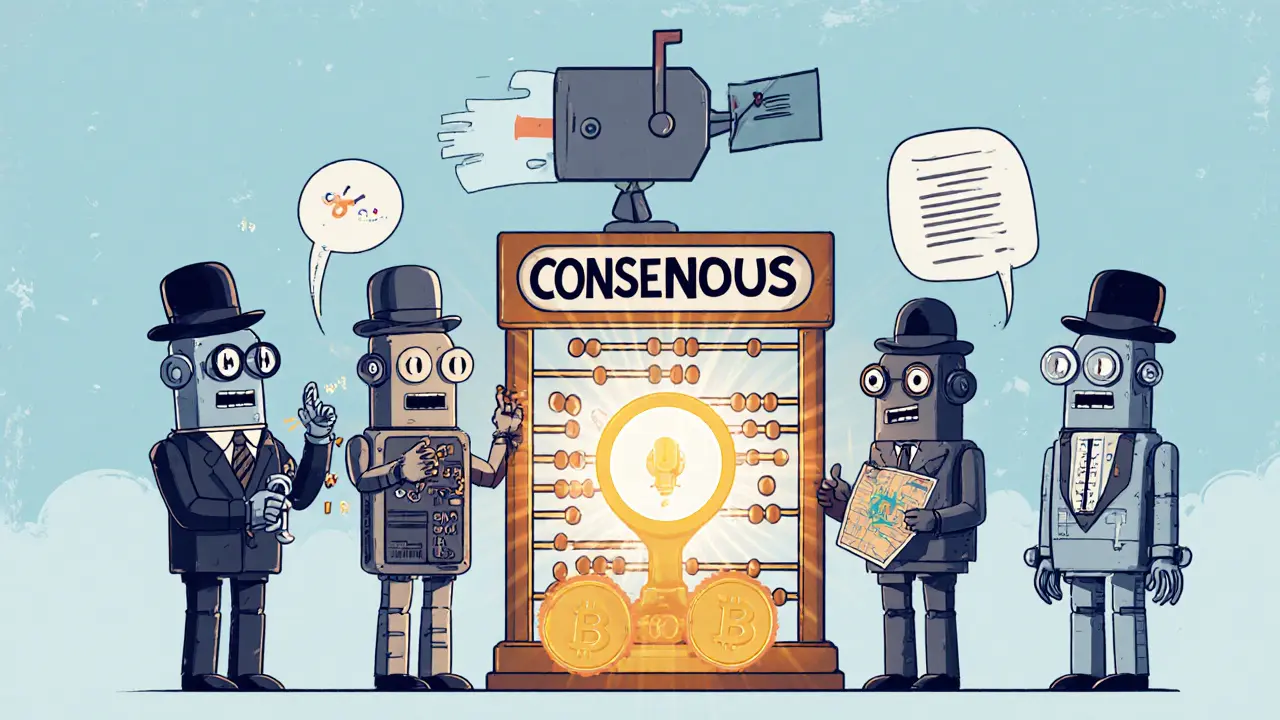
Other Oracle Networks
Chainlink isn’t the only player. Other major networks include:- API3: Lets data providers run their own oracle nodes directly-cutting out middlemen. Popular with enterprises.
- Pyth Network: Focuses on high-frequency financial data. Used by major exchanges and hedge funds. Updates prices every few seconds.
- Band Protocol: Built for Cosmos and other interoperable chains. Strong in Asia and emerging markets.
Real-World Use Cases
Oracles aren’t theoretical. They’re powering real applications right now:- DeFi lending: Aave and Compound use oracles to value collateral. If Bitcoin drops below a threshold, loans are automatically liquidated.
- Insurance: Etherisc uses flight delay data to auto-pay out policies. No claims forms. No paperwork.
- Supply chain: Walmart and IBM track food shipments. Oracles confirm temperature and location data-ensuring safety standards.
- Gaming: Blockchain games use oracles to verify real-world events-like who won a soccer match-to determine in-game rewards.
Challenges and Risks
Oracles aren’t magic. They have limits:- Data quality: Oracles can’t fix bad input. If a weather station sends wrong data, the insurance payout will be wrong.
- Manipulation: In 2022, a price oracle attack on Euler Finance stole $197,000 by flooding the system with fake BTC prices.
- Latency: Real-time data takes time to verify. A stock price update might take 10-30 seconds.
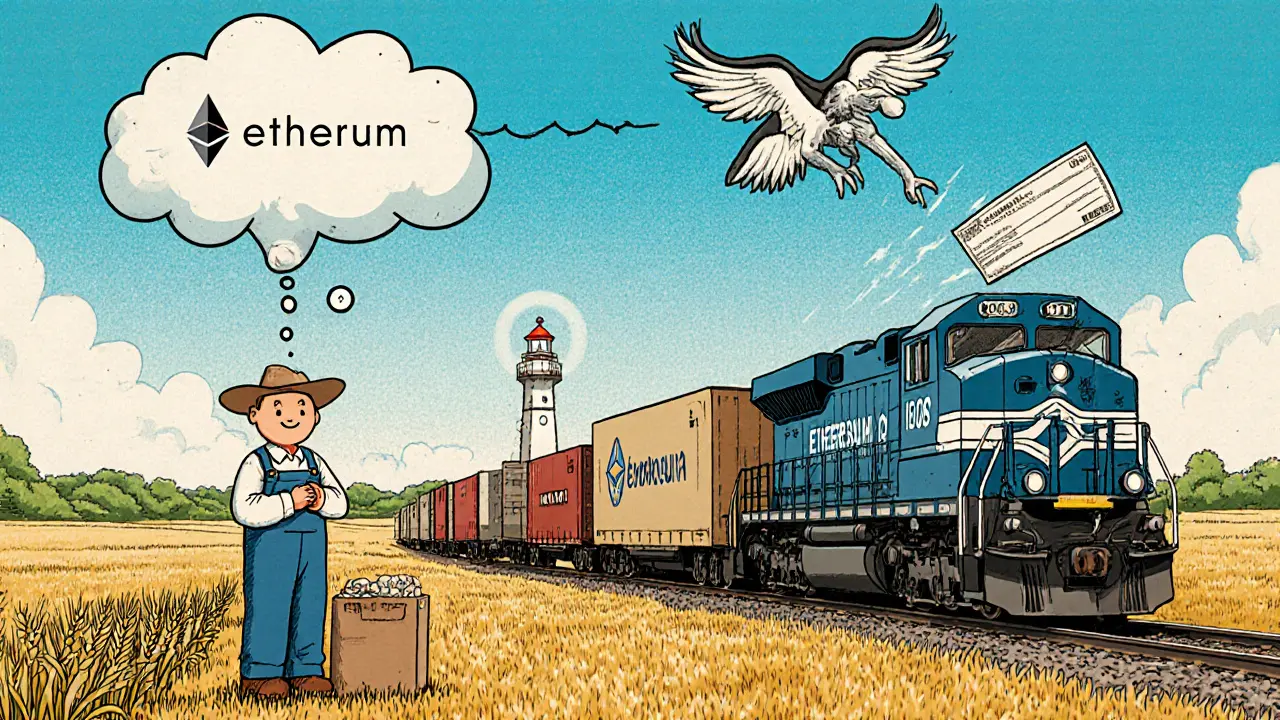
- Cost: Frequent requests on Ethereum add up. Developers optimize by batching requests or using cheaper chains like Polygon.
What’s Next for Oracles?
The future is getting smarter:- DECO protocol: Chainlink’s new tech lets oracles fetch data from HTTPS websites (like bank portals) without exposing private info.
- Standardization: The Oracle Improvement Proposal (OIP) framework is gaining support across 40+ blockchains to unify how oracles work.
- Regulation: The EU’s MiCA law (effective 2024) will require financial oracles to meet strict data validation rules.
Getting Started with Oracles
If you’re a developer:- Learn Solidity basics-smart contract programming.
- Use Chainlink’s documentation. It’s rated 4.7/5 by over 1,200 developers.
- Deploy a test oracle request on Goerli or Sepolia testnet.
- Fund it with test LINK tokens.
- Connect to a price feed like ETH/USD.
Final Thoughts
Blockchain oracles are the unsung heroes of Web3. Without them, smart contracts are stuck in a vacuum. With them, they become powerful tools that interact with the real world-automating payments, enforcing contracts, and enabling new kinds of apps. They’re not flawless. But they’re the best solution we have. And as more businesses adopt blockchain, oracles will only become more critical. Whether you’re building a DeFi app, an insurance tool, or a supply chain tracker-if you need real-world data, you need an oracle.What is the main purpose of a blockchain oracle?
The main purpose of a blockchain oracle is to provide smart contracts with access to real-world data and systems that exist outside the blockchain. Since blockchains are isolated and can’t natively connect to APIs, sensors, or databases, oracles act as secure messengers that fetch, verify, and deliver external information-like stock prices, weather conditions, or flight statuses-so smart contracts can execute based on actual events.
Are blockchain oracles decentralized?
Some are, and some aren’t. Centralized oracles rely on a single provider, which creates a single point of failure. Decentralized oracle networks (DONs), like Chainlink, use dozens or hundreds of independent nodes to collect and verify data. This reduces risk because no single entity controls the outcome. Most serious blockchain applications-especially in DeFi and enterprise-require decentralized oracles for security and reliability.
Can blockchain oracles be hacked?
Yes, but only if poorly designed. In 2022, oracle manipulation attacks caused over $146 million in losses across DeFi protocols. The most common attack is flooding the oracle with fake data from a compromised source. Decentralized networks reduce this risk by aggregating data from multiple sources and using consensus to pick the correct value. Well-built DONs, like Chainlink’s, have not suffered a major breach since 2021.
How do oracles get real-world data?
Oracles retrieve data through various methods: API calls to financial services (like CoinGecko or Bloomberg), web scraping, IoT sensors (temperature, GPS), or even human reporters. The key isn’t the source-it’s the verification. Decentralized oracles pull from multiple sources, compare results, and use cryptographic proofs to ensure accuracy before sending data to the blockchain.
Do I need to pay to use a blockchain oracle?
Yes, usually. Most oracle networks charge a fee to cover node operator costs and incentivize accurate data. Chainlink, for example, uses its native token, LINK, to pay for requests. On Ethereum, a single data request can cost between $0.45 and $2.50 in gas fees. Some networks offer free tiers for testing, but production use requires payment. This ensures the system stays secure and reliable.
What’s the difference between inbound and outbound oracles?
Inbound oracles bring data into the blockchain-for example, feeding the current price of gold into a smart contract. Outbound oracles send data out from the blockchain-for example, triggering a bank transfer or unlocking a physical door after a payment is confirmed. Most applications use both types together to create full automation cycles.
Why is Chainlink the most popular oracle network?
Chainlink is the most popular because it’s the most mature, secure, and widely adopted. It has over 1,000 node operators, supports 11+ blockchains, and has secured over $10 billion in smart contract value. Its documentation is excellent, its uptime is 99.98%, and its community is huge-with over 85,000 members on Discord. While alternatives exist, none match its scale, reliability, or developer support.
Komal Choudhary
November 26, 2025 AT 18:39Susan Dugan
November 28, 2025 AT 13:16Sam Daily
November 29, 2025 AT 14:36Puspendu Roy Karmakar
November 30, 2025 AT 01:08Evelyn Gu
December 1, 2025 AT 02:29Michael Fitzgibbon
December 1, 2025 AT 06:44Angel RYAN
December 3, 2025 AT 04:20Tom MacDermott
December 3, 2025 AT 09:51Kristi Malicsi
December 4, 2025 AT 15:20Rachel Thomas
December 5, 2025 AT 02:29Sierra Myers
December 6, 2025 AT 07:50SHIVA SHANKAR PAMUNDALAR
December 8, 2025 AT 02:45Shelley Fischer
December 9, 2025 AT 18:57Tina Detelj
December 11, 2025 AT 00:15Wilma Inmenzo
December 12, 2025 AT 11:31priyanka subbaraj
December 13, 2025 AT 17:22George Kakosouris
December 15, 2025 AT 15:24