What Are Music NFTs? A Simple Guide to Owning Digital Music on the Blockchain
 Jan, 4 2026
Imagine owning a song like you own a rare vinyl record-except it’s digital, impossible to copy, and comes with proof that you’re the one and only owner. That’s what a music NFT is. It’s not a stream. It’s not a download. It’s actual ownership of a unique piece of music, locked into the blockchain.
What Exactly Is a Music NFT?
A music NFT is a non-fungible token tied to a specific audio file-whether it’s a single track, an entire album, a live recording, or even a remix made just for you. Unlike Spotify or Apple Music, where you pay to listen, a music NFT gives you verifiable ownership. You don’t just get access-you hold the original. Think of it like buying the original painting of a famous artist, while posters of it still hang in every home. These tokens live on blockchains like Ethereum, Solana, or Polygon. Each one has a unique ID and a digital signature that proves it’s real and can’t be forged. Even if someone downloads the song, they don’t own the NFT. Only you do. And that ownership is permanent, recorded forever on the blockchain.How Do Music NFTs Work?
When an artist releases a music NFT, they mint it on a blockchain platform. The NFT doesn’t usually store the audio file directly-instead, it points to it through metadata. The file might be hosted on decentralized storage like IPFS, so it won’t disappear if a server goes down. The NFT itself can include more than just the song. It might come with:- Exclusive artwork or album visuals
- Behind-the-scenes videos
- Access to private Discord channels
- Virtual concert tickets
- Future royalty shares
Why Do Artists Use Music NFTs?
For years, musicians have struggled to make money from streaming. On platforms like Spotify, an artist earns about $0.003 to $0.005 per stream. To make $10,000, they’d need over 2 million plays. Most never hit that. Music NFTs flip that model. Artists sell directly to fans, cutting out labels, distributors, and streaming middlemen. They can set their own prices, keep 80-95% of the sale, and even earn royalties every time their NFT is resold. That’s something no streaming service offers. Take Opulous, for example. It lets fans buy NFTs that give them a cut of future streaming revenue. If the song goes viral, you get paid. No label. No middleman. Just you and the artist.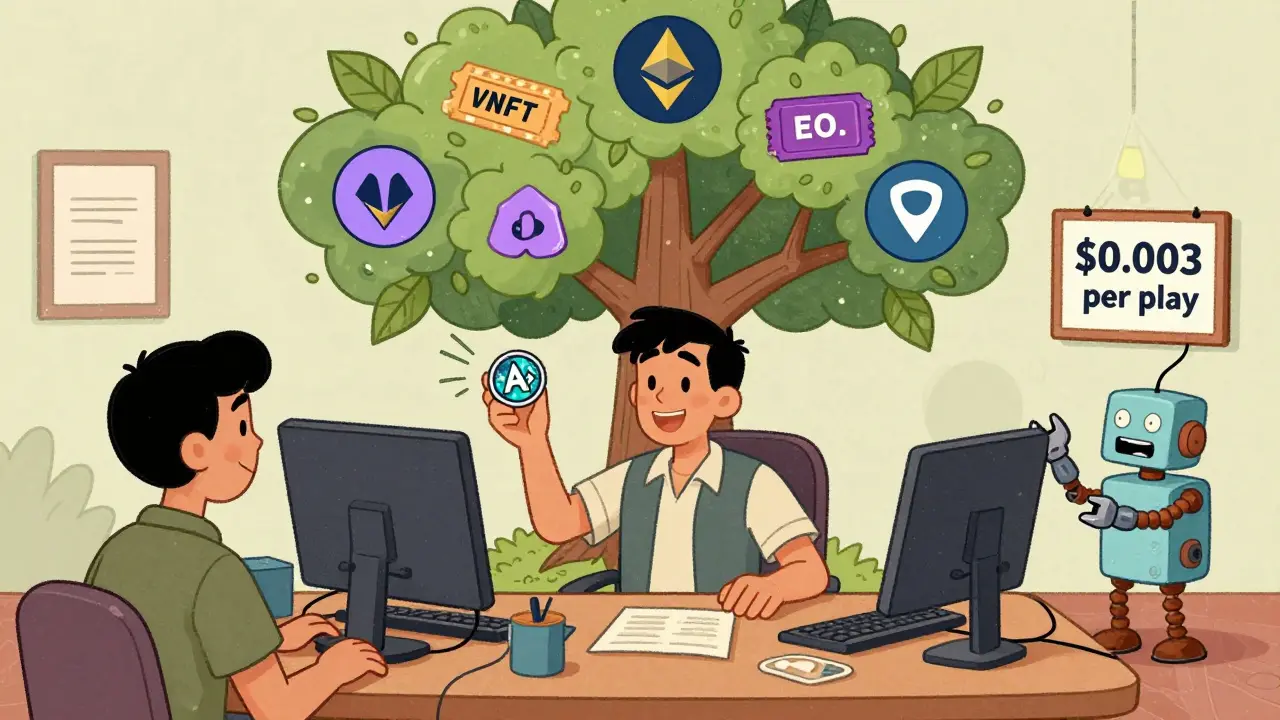
What Do Fans Get Out of It?
Fans aren’t just buying music-they’re investing in artists they believe in. Owning a music NFT feels like being part of something bigger. It’s not just about the song. It’s about being a supporter, a patron, a member of a community. Some NFT owners get early access to new releases. Others get to vote on album art, tour locations, or even song titles. A few artists let NFT holders attend private live-streamed sessions or collaborate on future tracks. And yes, some people buy them hoping the value will rise. If an artist blows up, the NFT could be worth 10x, 100x, or more. That’s speculation-but it’s also how many indie artists get their first real funding. Early fans become investors, and their support helps the artist grow.Music NFTs vs. Streaming: What’s the Difference?
| Feature | Music NFT | Streaming Service | |--------|-----------|-------------------| | Ownership | You own the original digital asset | You rent access to music | | Payment to Artist | Direct, upfront, high percentage | Tiny fraction per play | | Royalties on Resale | Yes, built-in | No | | Extra Perks | Art, tickets, community access | None | | Reproducibility | One-of-a-kind, verifiable | Millions of copies | | Access | Anyone can listen to the song, but only one owns the NFT | Everyone can listen, no ownership | The key difference? With streaming, you’re a listener. With a music NFT, you’re a stakeholder.Challenges and Criticisms
Music NFTs aren’t perfect. Many people still don’t understand them. Buying one requires a crypto wallet, Ethereum or Solana, gas fees, and knowing how to navigate a decentralized marketplace. That’s a big barrier for mainstream fans. There’s also the environmental concern. Early blockchains like Ethereum used a lot of energy-though Ethereum switched to a much greener system in 2022. Today, most music NFTs are built on eco-friendly chains like Polygon or Tezos. And then there’s the hype. Some NFTs are overpriced. Others are scams. Not every music NFT is worth buying. The market is still wild, and not every artist will succeed. But that’s true of any new technology-early adopters take the risks, and the winners pave the way for others.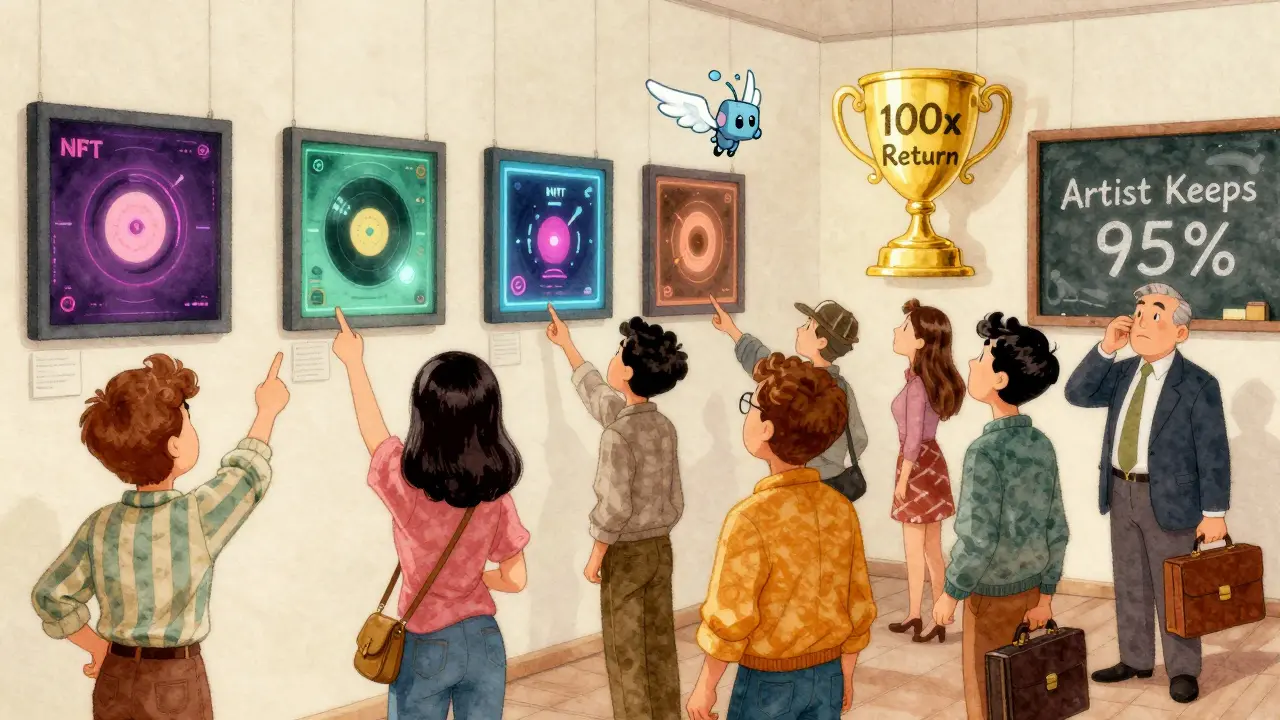
Who’s Doing It Right?
Some big names have embraced music NFTs. Kings of Leon released their album as an NFT in 2021, offering exclusive vinyl and lifetime concert access to buyers. Grimes sold digital art and music bundles for over $6 million in minutes. Even lesser-known artists are finding success-like 17-year-old producer RAC, who sold NFTs that gave fans 50% of future royalties and turned a $50 purchase into a $1,000 return within a year. Smaller platforms like Sound.xyz, Catalog, and Royal are making it easier for indie artists to mint NFTs without needing tech skills. These platforms handle the blockchain stuff so artists can focus on creating.What’s Next for Music NFTs?
The future isn’t about replacing Spotify. It’s about adding something new: ownership. More platforms are starting to link NFTs to streaming data. Imagine if your Spotify plays automatically boosted the value of your NFT. Or if your favorite artist released a new song only to NFT holders first. We’re also seeing NFTs tied to live shows. Buy an NFT, get a ticket. Hold it for a year, get a VIP pass. Own multiple NFTs from the same artist, unlock a backstage meet-and-greet. The real win? Artists regain control. No more contracts that take 80% of earnings. No more labels deciding what gets promoted. Just creators and fans, connected directly through code.How to Get Started
If you’re curious, here’s how to take your first step:- Get a crypto wallet (MetaMask or Phantom work well)
- Buy a little ETH, SOL, or MATIC (enough to cover gas fees)
- Visit a music NFT platform like Sound.xyz, Catalog, or Royal
- Browse artists you already love
- Buy a single-track NFT for under $10 to test the waters
Are music NFTs the same as buying a song on iTunes?
No. Buying a song on iTunes gives you a license to listen to it. You can’t resell it, share ownership, or get royalties from it. A music NFT gives you actual ownership of a unique digital asset. You can sell it, trade it, or even earn a cut if it becomes popular.
Can I still listen to the music if I don’t own the NFT?
Yes. Most music NFTs are designed so anyone can stream or download the song. The NFT is about ownership, not access. Think of it like seeing a Picasso in a museum-everyone can look at it, but only one person owns the original.
Do I need to be rich to buy a music NFT?
No. Many artists release NFTs for $1 to $50. Some even give them away for free to fans who engage with their content. You don’t need thousands-you just need a wallet and a little curiosity.
Are music NFTs a good investment?
Some are, some aren’t. Like any collectible, value depends on demand, artist popularity, and rarity. Don’t buy a music NFT hoping to get rich. Buy it because you love the artist and want to support them. The financial upside is a bonus, not the goal.
What happens if the artist deletes the music file?
Nothing. The NFT still exists on the blockchain, and the music file is usually stored on decentralized networks like IPFS, which aren’t controlled by the artist. Even if the artist disappears, the music stays live and accessible.
Haritha Kusal
January 4, 2026 AT 13:49omg i just bought my first music nft today for $8 and it’s a lo-fi track from this indie artist i’ve been listening to for years 😭 it feels so weird to actually OWN something digital instead of just streaming it. like, i have a piece of her art now?? mind blown.
Mike Reynolds
January 4, 2026 AT 15:12I get what you mean. I’ve been skeptical about NFTs, but after seeing how artists actually make money from them-like, real money, not pennies per stream-I’m kinda sold. It’s not about speculation, it’s about supporting creators directly. Feels right.
dayna prest
January 4, 2026 AT 23:35Oh please. Another ‘blockchain will save music’ fairy tale. You think owning a token makes you a patron? Nah. You’re just buying a JPEG of a waveform with a fancy label. The real art is the sound, and it’s still floating freely on YouTube. You’re paying for a digital autograph, not a revolution.
Brooklyn Servin
January 5, 2026 AT 09:40Okay but let’s be real-this isn’t just about ownership, it’s about REWIRING the entire music economy. 🤯 Artists are finally breaking free from labels that treat them like disposable content factories. And the perks?? Private Discord access, voting on album art, even royalty splits?? That’s not a gimmick-that’s a movement. If you’re not seeing the shift, you’re not looking hard enough. Also, yes, some NFTs are trash. But so are vinyl pressings from 2003. Don’t throw the baby out with the bathwater.
Phil McGinnis
January 5, 2026 AT 13:25It is an affront to the sanctity of artistic expression to commodify music in this manner. The blockchain is a technological aberration, not a cultural advancement. One cannot own a melody any more than one can own a breeze. This is the decay of civilization disguised as innovation.
Ian Koerich Maciel
January 5, 2026 AT 17:05...I must say, the structural implications of decentralized ownership in creative industries are profoundly significant. The shift from licensing to asset-holding represents a paradigmatic transition in intellectual property norms. One must consider the ontological weight of digital scarcity. 🤔
Andy Reynolds
January 6, 2026 AT 06:52Hey everyone-just wanted to say if you’re new to this, start small. I bought a $5 NFT from a local band in Portland. Got a handwritten lyric PDF + a voice note from the singer saying thanks. That’s it. No crypto bros, no hype. Just real connection. You don’t need to go all-in. Just show up.
Alex Strachan
January 7, 2026 AT 13:24So you’re telling me I can now pay $50 to own a song that 10 million people can still stream for free? 😂 Sounds like the ultimate flex. Congrats, you’re the only person on Earth who owns a Spotify link.
Rick Hengehold
January 8, 2026 AT 15:08Stop overcomplicating it. You own the NFT. That’s it. No more, no less. If you like the artist, buy it. If you don’t, don’t. No guilt. No hype. Just simple support.
Antonio Snoddy
January 9, 2026 AT 04:18Think about it-when you buy a music NFT, you’re not just purchasing audio. You’re purchasing a moment in time. A timestamp in the soul of the artist. The blockchain doesn’t just record ownership-it records intention. The gas fee? That’s the cost of human connection in a digital age. The artist poured their soul into the track. You poured your dollars into their dream. That’s not commerce. That’s communion. 🌌
Ryan Husain
January 9, 2026 AT 20:03While the technical infrastructure of NFTs remains complex, the underlying principle-direct artist-fan economic alignment-is both elegant and necessary. The traditional gatekeepers have failed to fairly compensate creators. This model, despite its growing pains, represents a legitimate corrective mechanism. One must remain cautious, but not dismissive.
Rajappa Manohar
January 11, 2026 AT 03:14i buy one nft for $3 and now i have a song from this guy who i heard on youtube. its cool. but i still use spotify for everything else lol
Jacky Baltes
January 13, 2026 AT 00:08There’s a quiet beauty in the idea that a piece of art can be both universally accessible and uniquely owned. It doesn’t diminish the public experience-it deepens the personal one. The blockchain becomes a quiet witness to human connection, not a marketplace.
Willis Shane
January 14, 2026 AT 00:00It’s not about ownership. It’s about control. The artist controls the terms. The fan controls the value. The blockchain controls the integrity. The labels? They’re irrelevant. This isn’t a trend. It’s the end of their monopoly.
dina amanda
January 15, 2026 AT 02:29THIS IS A GOVERNMENT TRACKING TOOL. THEY’RE USING NFTS TO MONITOR WHAT MUSIC YOU LISTEN TO AND BUILD A PSYCHOGRAPHIC PROFILE. THEY’LL USE IT TO PUSH YOU INTO BUYING MORE STUFF. DON’T FALL FOR IT. THEY’RE USING CRYPTO TO SLIP SURVEILLANCE INTO YOUR LIFE.
SUMIT RAI
January 16, 2026 AT 14:34Wait so if I own a music NFT, does that mean I can sue someone for playing it at a party? 😏
Andrea Stewart
January 18, 2026 AT 03:11For anyone thinking of trying this: start with Catalog or Sound.xyz. Avoid Ethereum gas fees-use Polygon. Look for artists who offer actual perks, not just JPEGs. And if the NFT doesn’t come with a clear explanation of what you’re buying? Walk away. This space is full of wolves in blockchain clothing.
Josh Seeto
January 18, 2026 AT 17:46‘Buy a song, get royalties’? Cool. So what happens when the artist gets famous and the NFT’s worth $10k? Do you get 5% of that? Or do you just get a .wav file and a pat on the back? This isn’t investing-it’s emotional labor disguised as finance.
surendra meena
January 19, 2026 AT 02:51OH MY GOD I JUST BOUGHT A MUSIC NFT AND NOW I’M A LEGEND!!! I OWN THE SONG THAT 2 PEOPLE LISTENED TO AND NOW I’M RICH!!! I’M THE ONLY ONE WHO CAN PLAY IT AND EVERYONE ELSE IS JEALOUS!!! I’M A GENIUS!!!
Brooklyn Servin
January 19, 2026 AT 11:12And to the guy who said ‘you’re just buying a JPEG’-you’re missing the point entirely. The JPEG is the *receipt*. The real value is in the community, the access, the future royalties. You wouldn’t call a signed vinyl a ‘JPEG’ either, would you? 😒