What Are NFTs in Cryptocurrency? A Clear Breakdown of Ownership, Use Cases, and Real-World Value
 Jan, 10 2026
When you buy a digital artwork or a virtual sneaker online, how do you know it’s really yours? That’s where NFTs come in. Unlike regular digital files you can copy and paste endlessly, NFTs are unique digital certificates stored on a blockchain that prove you own one specific version of something - whether it’s a piece of art, a song, a video clip, or even a virtual plot of land. They turned the idea of digital ownership upside down, and now they’re part of how people buy, sell, and interact with online culture.
What Makes an NFT Different from Regular Digital Files?
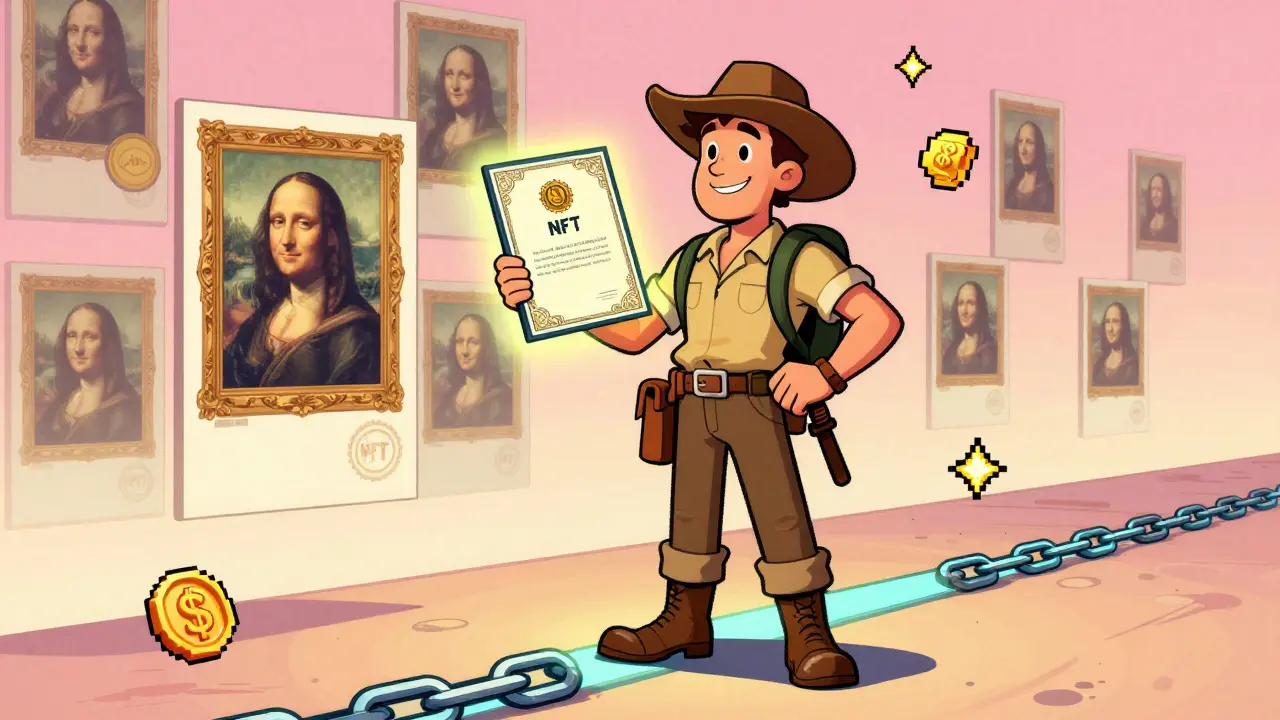
You can download a JPEG of the Mona Lisa a thousand times. But there’s only one original painting in the Louvre. NFTs work the same way for digital stuff. If you buy an NFT of a digital artwork, you’re not buying the file - you’re buying proof that you own the original version. That proof is recorded on a blockchain, which is a public, unchangeable ledger. No one can fake it, delete it, or alter the ownership history. Each NFT has a unique ID and metadata attached to it. This metadata tells you who created it, when it was made, and sometimes even includes the actual digital file or a link to it (often stored on decentralized networks like IPFS). Even if someone else copies the image, your NFT is the one with the verified chain of ownership. It’s like having the signed certificate of authenticity for a rare baseball card - except it’s digital, global, and always accessible.How Are NFTs Built? The Role of Smart Contracts and Blockchains
Most NFTs live on the Ethereum blockchain, using standards like ERC-721 or ERC-1155. These aren’t just technical terms - they’re rules that make NFTs work. ERC-721 says each token is one-of-a-kind. ERC-1155 lets one contract handle multiple types of tokens, which is useful for games where you might own 10 different items, each with their own rarity. The magic happens through smart contracts - self-executing code on the blockchain. When you buy an NFT, the smart contract automatically transfers ownership from the seller to you. It also handles royalties. If the original artist set a 5% royalty, every time that NFT is resold, 5% goes straight to them - no middleman needed. This is huge for creators. Musicians, artists, and game developers can earn money every time their work changes hands, something that rarely happened in the digital world before. Other blockchains like Solana, Polygon, and Flow also support NFTs. They’re often faster and cheaper than Ethereum, which is why many new projects are moving there. Gas fees on Ethereum can spike to $50 or more during busy times. On Solana, the same transaction might cost less than a cent.Where Are NFTs Actually Used? Beyond Just Crypto Art
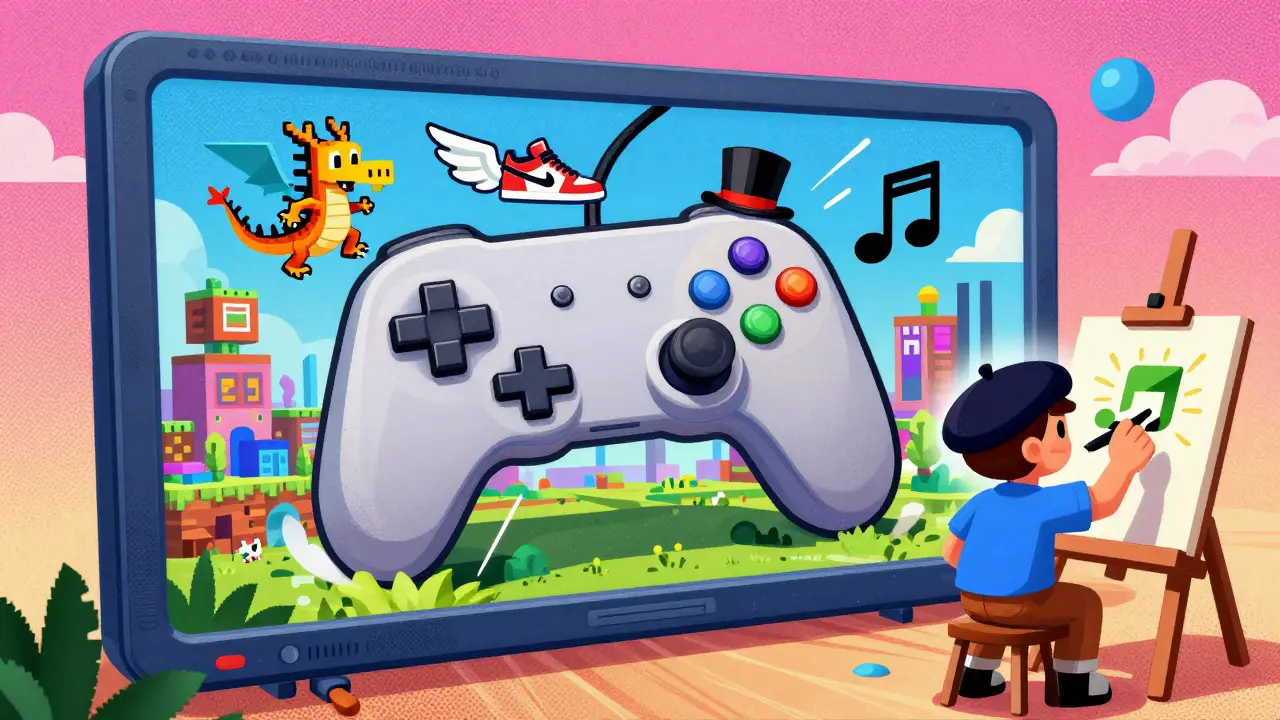
People first heard about NFTs through digital art sales - like Beeple’s $69 million collage. But that was just the beginning. Today, NFTs have real uses across industries:- Gaming: In games like Axie Infinity or Splinterlands, your characters, weapons, and land are NFTs. You can sell them outside the game, trade them with others, or even use them in different games if the developers allow it. This is called true digital ownership - something traditional games have never let you do.
- Digital Fashion: Brands like Nike and Gucci sell virtual sneakers and jackets as NFTs. You can wear them in virtual worlds like Decentraland or Roblox. Some people even buy them to show off in social media profiles.
- Music and Media: Musicians release albums or exclusive tracks as NFTs. Fans who buy them might get access to behind-the-scenes content, VIP concert tickets, or even a share of future profits.
- Real Estate and Identity: Some companies are testing NFTs for property deeds or digital IDs. Imagine proving you own your home or verifying your identity without handing over your passport to a bank.
- Collectibles: NBA Top Shot lets fans buy and trade highlight clips as NFTs. There are thousands of these digital cards, with some selling for tens of thousands of dollars because they’re rare.
Why the Market Crashed - And What’s Coming Next
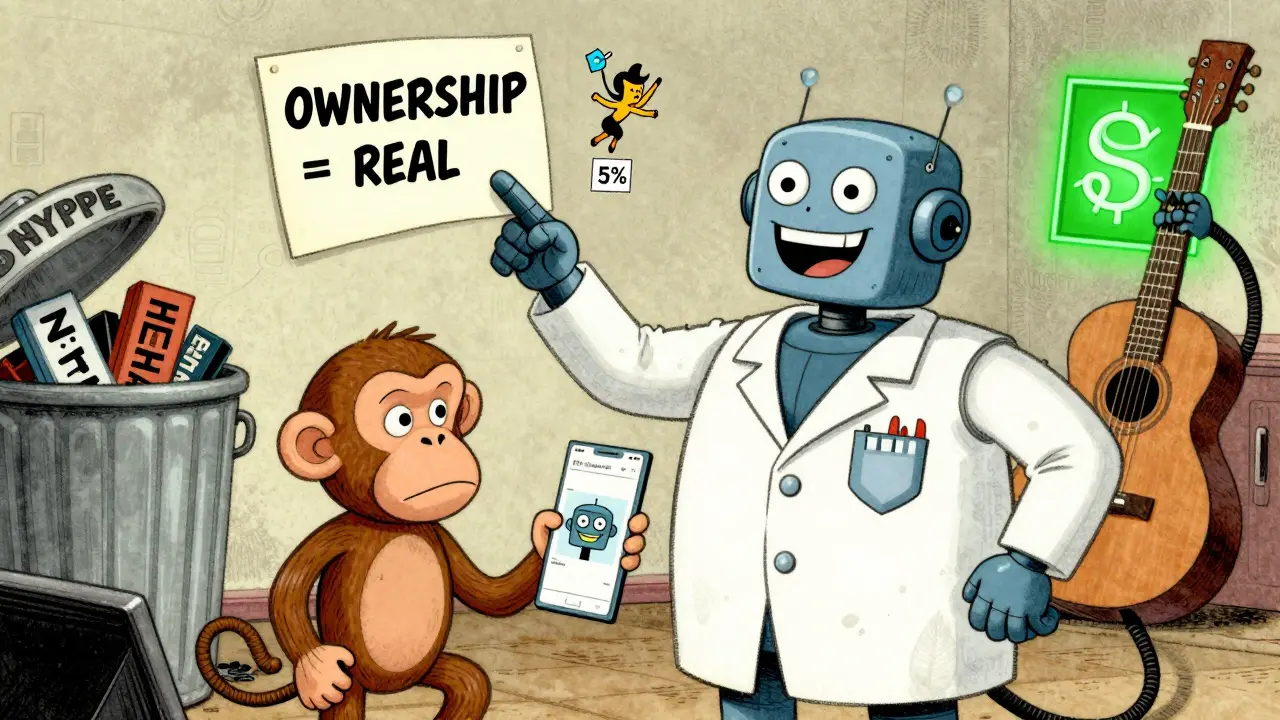
In 2021 and 2022, NFTs exploded. People were buying them like lottery tickets. Some sold for millions. Then it all slowed down. By 2024, trading volumes dropped by more than 70% from their peak. Why? Many NFTs were just speculative - no real use, no utility, just hype. When the crypto market cooled off, so did demand for useless digital collectibles. But that doesn’t mean NFTs are dead. It means the market is maturing. Now, the focus is shifting to utility. People care less about buying a JPEG of a monkey and more about what that NFT actually gives them. Is it a ticket to an event? Access to a private Discord? A share in a future product? Those are the NFTs that are surviving - and growing. AI is also changing the game. Platforms like Art Blocks use algorithms to generate unique digital art in real time. Each NFT is different, created on the spot when you buy it. That’s not just art - it’s interactive, evolving digital content. AI is also helping creators design better NFTs faster, and helping buyers find valuable ones by analyzing past sales and trends.The Downsides: Risks You Can’t Ignore
NFTs aren’t risk-free. Here’s what you need to watch out for:- No legal ownership rights: Buying an NFT doesn’t mean you own the copyright. You can’t legally print and sell the art on T-shirts unless the creator gives you permission. Most NFT sales only give you the right to display it.
- Royalties aren’t guaranteed: Even though smart contracts can pay creators a cut on resale, many marketplaces like LooksRare and X2Y2 have made royalties optional. Some buyers refuse to pay them. That means artists can lose future income - even if the code says they should get it.
- High costs and complexity: Setting up a wallet, buying crypto, paying gas fees, and navigating marketplaces can be overwhelming. A beginner might spend hours just trying to buy their first NFT.
- Scams and fraud: Fake NFT marketplaces, phishing links, and rug pulls (where developers disappear with money) are common. Always check the official website and verify the contract address before buying.
- Environmental concerns: Early NFTs on Ethereum used a lot of energy. While Ethereum switched to a greener system in 2022, some blockchains still rely on energy-heavy methods. Solana and Polygon are much more efficient.
Who’s Buying NFTs Today - And Why
The buyers aren’t just rich investors anymore. Regular people are getting involved for practical reasons:- Artists who want to earn royalties every time their work sells.
- Gamers who treat their in-game items like real assets they can cash out.
- Collectors who value rarity and provenance - just like they do with physical stamps or coins.
- Brands experimenting with digital loyalty programs tied to NFTs.
What Should You Do With NFTs?
If you’re curious, start small. Don’t rush into buying expensive NFTs. Learn how wallets work. Try a free NFT from a reputable project. Use platforms like OpenSea or Magic Eden - they have good tutorials and support. Think about what you want. Are you buying for investment? For fun? To support a creator? Only buy if you understand what you’re getting. If you’re just hoping to flip it for profit, you’re playing a risky game. NFTs aren’t magic. They’re tools. And like any tool, they’re only as good as how you use them. The hype is fading. But the real value - true digital ownership, creator empowerment, and new ways to interact with art and games - is just getting started.Are NFTs the same as cryptocurrency?
No. Cryptocurrency like Bitcoin or Ethereum is fungible - meaning each unit is identical and interchangeable. One Bitcoin is always equal to another Bitcoin. NFTs are non-fungible - each one is unique and can’t be swapped for another. NFTs often use cryptocurrency to buy and sell, but they’re not currency themselves.
Can I just screenshot an NFT and own it?
No. Taking a screenshot is like taking a photo of the Mona Lisa - you have a copy, not the original. The NFT is the verified ownership record on the blockchain. Anyone can copy the image, but only one person holds the official token that proves they own the original version.
Do I need to pay taxes on NFTs?
Yes. In most countries, including the U.S. and New Zealand, selling or trading an NFT for profit is considered a taxable event. You pay capital gains tax based on the difference between what you paid and what you sold it for. Keep records of all transactions - including gas fees - because they can affect your tax liability.
What’s the difference between ERC-721 and ERC-1155?
ERC-721 is for one-of-a-kind NFTs - like a single piece of digital art. ERC-1155 allows one smart contract to handle multiple types of tokens, including both unique items and multiple copies of the same item. That’s useful in games where you might own 5 of the same sword and 1 rare dragon. ERC-1155 is more efficient and cheaper to use.
Are NFTs a good investment?
Most NFTs are not good investments - they’re speculative. Only a small percentage hold long-term value. Focus on NFTs with real utility: access to communities, exclusive content, or integration into games and platforms. If you’re buying just because it’s trending, you’re likely to lose money. Treat NFTs like collectibles, not stocks.
Can NFTs be stolen or lost?
Yes. If someone gets access to your wallet’s private key, they can steal your NFTs. Never share your recovery phrase. Also, if you send an NFT to the wrong address or a dead wallet, it’s gone forever. Blockchain transactions are irreversible. Always double-check addresses before confirming a transfer.
What happens if the website hosting an NFT disappears?
If the NFT only links to a file on a regular website, that image could disappear. But if the file is stored on decentralized networks like IPFS or Arweave, it’s much more permanent. Always check whether the NFT’s media is stored on-chain or off-chain. The safest NFTs store the actual file on IPFS, not just a link to a company’s server.
Can I create my own NFT for free?
Some platforms like OpenSea and Magic Eden offer "lazy minting," which lets you create an NFT without paying upfront gas fees. You only pay when someone buys it. But you still need a crypto wallet and some cryptocurrency to cover transaction fees when the sale happens. True free minting is rare and often comes with hidden costs or restrictions.
Emily Hipps
January 11, 2026 AT 04:46NFTs aren’t magic-they’re just digital receipts with attitude. I bought a pixelated ape last year just to see what all the fuss was about. Turned out, I got a Discord invite and a free sticker. Worth it. 😊
Frank Heili
January 11, 2026 AT 08:05People still don’t get the difference between ownership and copyright. You don’t own the art when you buy an NFT-you own the token that proves you bought it first. That’s it. No more, no less. If you want to print it on a mug? Ask the artist. Most are cool with it if you’re respectful. But legally? You’re just a proud owner of a blockchain receipt.
Jacob Clark
January 12, 2026 AT 19:48Ohhhhh, here we go again-another ‘NFTs aren’t dead’ article. 🙄 I saw the same hype in 2021, then watched people cry because their Bored Ape dropped from $200K to $2K. And now? Now they’re saying ‘it’s about utility’ like that’s some new revelation. Bro. The utility is that you get to flex a JPEG on your Twitter. That’s it. The rest is vaporware wrapped in smart contract glitter.
And don’t get me started on royalties-marketplaces ignore them because they want your volume, not your ethics. Artists? They’re getting screwed again. Again. Again.
Meanwhile, Solana’s gas fees are 0.0001 SOL and Ethereum’s still charging $40 to mint a cat. Who’s the real innovator here? Not the ‘utility’ crowd. The cheap ones.
Becky Chenier
January 14, 2026 AT 16:49I appreciate the balanced take. NFTs have real potential, but the hype cycle made it hard to see the signal through the noise. I’ve seen friends lose money, and others build sustainable income streams through digital art and game assets. It’s not a get-rich-quick scheme-it’s a new kind of creative economy. Like YouTube in 2006. Messy. Unregulated. Full of scams. But also full of opportunity.
Staci Armezzani
January 16, 2026 AT 11:16If you're new to NFTs, start with a free mint on a reputable project. OpenSea has a ‘Learn’ section. Try minting a free NFT from a small artist-just to feel how the wallet connects, how the transaction works. Don’t buy anything expensive yet. Play around. Learn gas fees. Understand IPFS vs centralized links. Once you’ve done that once, the rest makes sense. I’ve mentored five friends through this-none of them lost money. All of them now get royalties from their own digital doodles.
It’s not about flipping. It’s about participation.
Don Grissett
January 17, 2026 AT 10:42So you’re telling me… I paid $10,000 for a JPEG of a monkey… and I can’t even stop someone from printing it on a T-shirt? And the artist gets 5% every time it sells… but only if the marketplace feels like it? And Ethereum’s fees are insane? And I need a wallet and crypto and a PhD in blockchain just to buy it? And now you’re saying it’s ‘mature’?!
NOPE. NFTs are a pyramid scheme dressed in Web3 pajamas. The only ones winning are the devs who sold early and the rug-pull artists who vanished with $50M. The rest of us? We’re the last ones holding the bag… and the JPEG.
And don’t even get me started on AI-generated NFTs-those aren’t art, they’re algorithmic spam. I’m done.
Katrina Recto
January 17, 2026 AT 16:35I used to think NFTs were stupid. Then I met a single mom in Ohio who makes digital portraits and earns $2k/month in royalties. She bought her kid a laptop with it. That’s the real story. Not the million-dollar apes. The quiet wins.
Veronica Mead
January 19, 2026 AT 01:26It is both lamentable and profoundly concerning that society has come to equate digital provenance with intrinsic value. The commodification of ephemeral data, under the guise of ownership, represents a pathological regression in cultural valuation. One cannot own an idea, nor a pixel, nor a cryptographic hash-only the illusion thereof. The blockchain, while immutable, is not a moral arbiter. To conflate technical authentication with cultural legitimacy is to mistake the map for the territory.
One must ask: What have we become, when a JPEG of a cartoon monkey commands greater social capital than a symphony or a sonnet?
Mollie Williams
January 19, 2026 AT 03:55There’s something poetic about NFTs-the way they force us to confront what we mean by ‘owning’ something in a world where everything is copied, shared, remixed. The Mona Lisa isn’t valuable because it’s a painting-it’s valuable because it’s *the one*. The original. The first. The one that survived centuries of war, theft, and neglect. NFTs are our modern version of that: a digital heirloom, a timestamped whisper saying, ‘This was mine, and I didn’t just copy it.’
But maybe… maybe we’re clinging too hard to ownership. What if the future isn’t about owning the art, but about co-creating it? About letting the code evolve? About the art changing with you? Maybe the real revolution isn’t in proving you own it… but in letting it belong to everyone, and still being part of it.
Surendra Chopde
January 19, 2026 AT 13:51India has its own NFT artists now. One guy from Jaipur sells traditional miniature paintings as NFTs. Buyers get a video of him painting it. He’s now teaching kids in rural schools digital art. No Wall Street. No hype. Just craft. That’s the future.
Tiffani Frey
January 19, 2026 AT 14:11Important note: If the NFT’s image is hosted on a company’s server (like ‘nftcompany.com/art.jpg’), and that company shuts down? The image vanishes. Always check if the metadata points to IPFS or Arweave. Look for the ‘ipfs://’ prefix. If it’s just a regular URL? It’s not permanent. It’s a digital time bomb. I’ve seen collectors lose entire collections because the host went bankrupt. Don’t be that person.
Tre Smith
January 20, 2026 AT 19:18Let’s be brutally honest: 98% of NFTs are trash. The ‘utility’ argument is a desperate rebranding after the bubble burst. Gamers don’t care about owning a sword-they care about winning. Artists don’t want royalties-they want exposure. Brands don’t want NFTs-they want buzz. And the only people still buying are the ones who think they’re buying the next Bitcoin. Spoiler: They’re not. This isn’t innovation. It’s digital hoarding with a side of FOMO.
And don’t even mention AI art NFTs. That’s just plagiarism with a blockchain tattoo.
Ritu Singh
January 21, 2026 AT 22:19Did you know the entire NFT market is controlled by a secret cabal of crypto billionaires who use it to launder money through fake wallets? The ‘royalties’? A distraction. The ‘utility’? A smokescreen. The blockchain? A tool for surveillance. The real value isn’t in the art-it’s in the data they collect from your wallet. Every click. Every purchase. Every gas fee. They’re building your digital soulprint. And you’re paying them to do it.
Wake up. This isn’t Web3. It’s Web4.0 of control.
kris serafin
January 23, 2026 AT 00:32Just bought my first NFT today-free mint from a local musician. Got a behind-the-scenes video and a custom Discord role. Felt cool. Didn’t cost me a dime except 0.002 ETH in gas. That’s it. No drama. No hype. Just support. 🎵✨
Jordan Leon
January 23, 2026 AT 07:27Ownership is a social construct. The blockchain merely formalizes it. The deeper question is not whether NFTs are valid, but whether we should be assigning such weight to digital provenance in the first place. The value of art has always resided in its context, its creation, its resonance-not in a cryptographic signature. Perhaps NFTs are less about ownership and more about our collective need to assign permanence to the impermanent.
Rahul Sharma
January 23, 2026 AT 21:12In India, many artists are using NFTs to sell traditional crafts globally. One woman from Kerala sells hand-embroidered patterns as NFTs. Buyers get the digital file + physical embroidery kit. She now employs 12 women. No middlemen. No bank fees. Just blockchain and trust. This is real impact.
Gideon Kavali
January 24, 2026 AT 04:02Let me be crystal clear: NFTs are a foreign, un-American abomination. We built this country on real property, real art, real sweat-not some digital ghost signed by a computer. The fact that Americans are paying thousands for JPEGs while our factories close? It’s disgraceful. The Chinese are laughing. The Russians are buying. And we’re letting our kids think a monkey picture is worth more than a college degree. This isn’t progress. It’s national surrender.
And don’t you dare say ‘freedom’-freedom isn’t owning a JPEG. Freedom is owning your home. Your land. Your future. Not a token on a blockchain run by faceless Europeans.
Emily Hipps
January 25, 2026 AT 21:04Love this. I just sold a digital flower I drew to a grandma in Ohio. She said it made her feel less alone. That’s the real NFT. Not the ape. The connection.