What is Aquari (AQUARI) crypto coin? A practical guide to the environmental cleanup token
 Jan, 16 2026
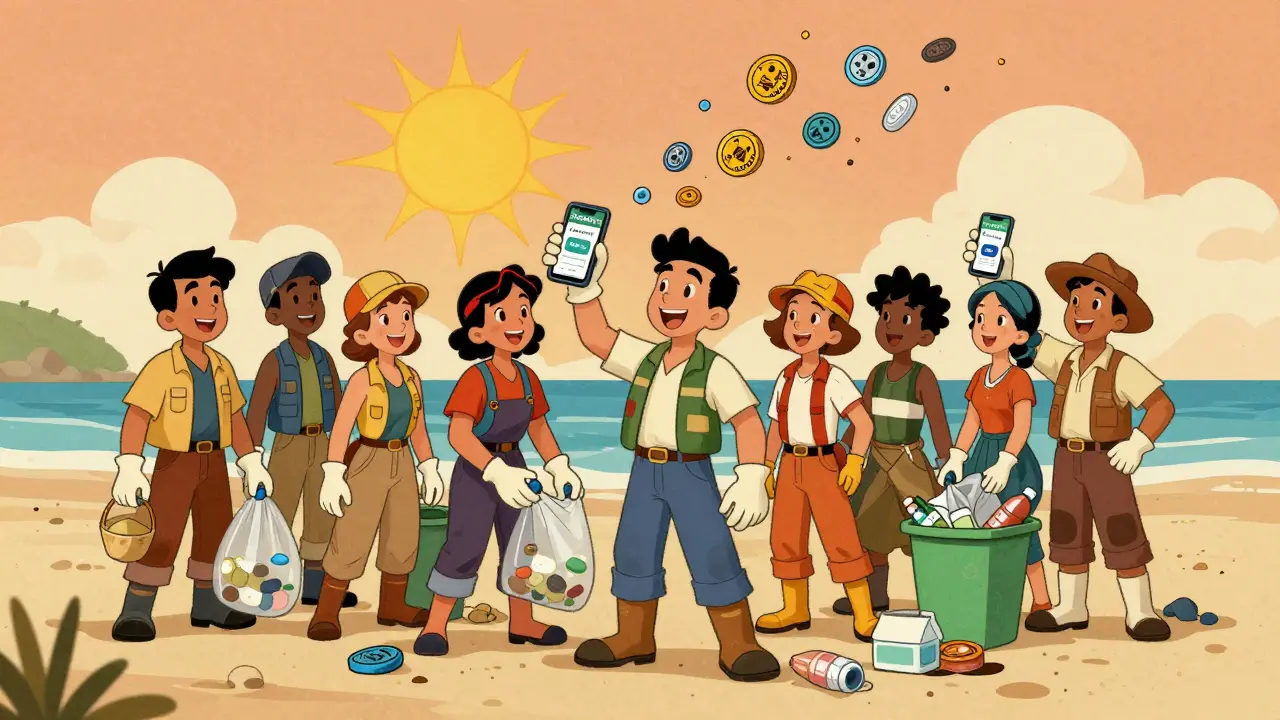
Aquari (AQUARI) isn’t just another crypto coin. It’s a blockchain project built around a simple, powerful idea: pay people to clean up the planet. Instead of waiting for donations or volunteers, Aquari turns environmental work into paid gigs. If you’ve ever picked up trash on a beach or helped clear a local park, Aquari lets you get paid for it - in crypto.
How Aquari Works: Clean Up, Get Paid
The Aquari platform connects three groups: cleanup workers, supporters, and communities. Cleanup workers - often locals in areas with poor waste management - use the Aquari mobile app to find nearby cleanup tasks. Once they complete a job, they upload photos and location data. The system verifies the cleanup, and then pays them in AQUARI tokens. Supporters - people who want to help but can’t physically clean up - can subscribe monthly to fund these efforts. Their money goes directly to workers, not to a nonprofit’s overhead. This model is different from carbon credit tokens like Toucan Protocol’s BCT, which track emissions reductions at a global level. Aquari focuses on micro-payments to real people doing real work. In Jakarta, one user reported earning 150 AQUARI tokens (about $2.30 at the time) for four hours of beach cleanup. Payment arrived within 24 hours after verification.The AQUARI Token: What It’s Used For
The AQUARI token is a utility token. That means it doesn’t represent ownership or voting rights. It’s a digital voucher used inside the Aquari ecosystem. You use it to:- Get paid for cleanup work
- Subscribe to support cleanup efforts
- Access job listings and verification tools in the app
Current Price and Market Data
As of October 2025, AQUARI trades around $0.015366 per token. That sounds low, but remember: this isn’t Bitcoin. It’s a niche token tied to a very specific use case. The 24-hour trading volume is only $1,727.73 - barely enough to move the needle. Most of that volume happens on a single exchange, which is a red flag for liquidity. Market cap numbers are confusing. If you multiply the price by the circulating supply, you get about $1.5 million. But major exchanges like Binance and BeInCrypto show a $0 market cap. That mismatch suggests the platform’s token supply isn’t fully recognized or listed across exchanges. It’s a warning sign for anyone thinking of investing.Price Volatility and Sentiment
AQUARI has been volatile. Over the past 30 days, its price swung by 5.88%. Weekly gains have hit 9.20%, far outpacing the broader crypto market. But experts warn this isn’t organic demand. With so little trading volume, even small buy orders can spike the price artificially. CoinGecko’s David Park called it “artificial price movement,” not real market confidence. Sentiment tools like CoinCodex show a Fear & Greed Index of 70 (Greed), and some algorithms predict prices could hit $0.47 by November 2025 - a 3,164% jump. But these forecasts rely on historical patterns, not real-world adoption. The same tools also predict a 5,892% surge to $0.91 in 12 months - but only if Aquari delivers on its promised upgrades.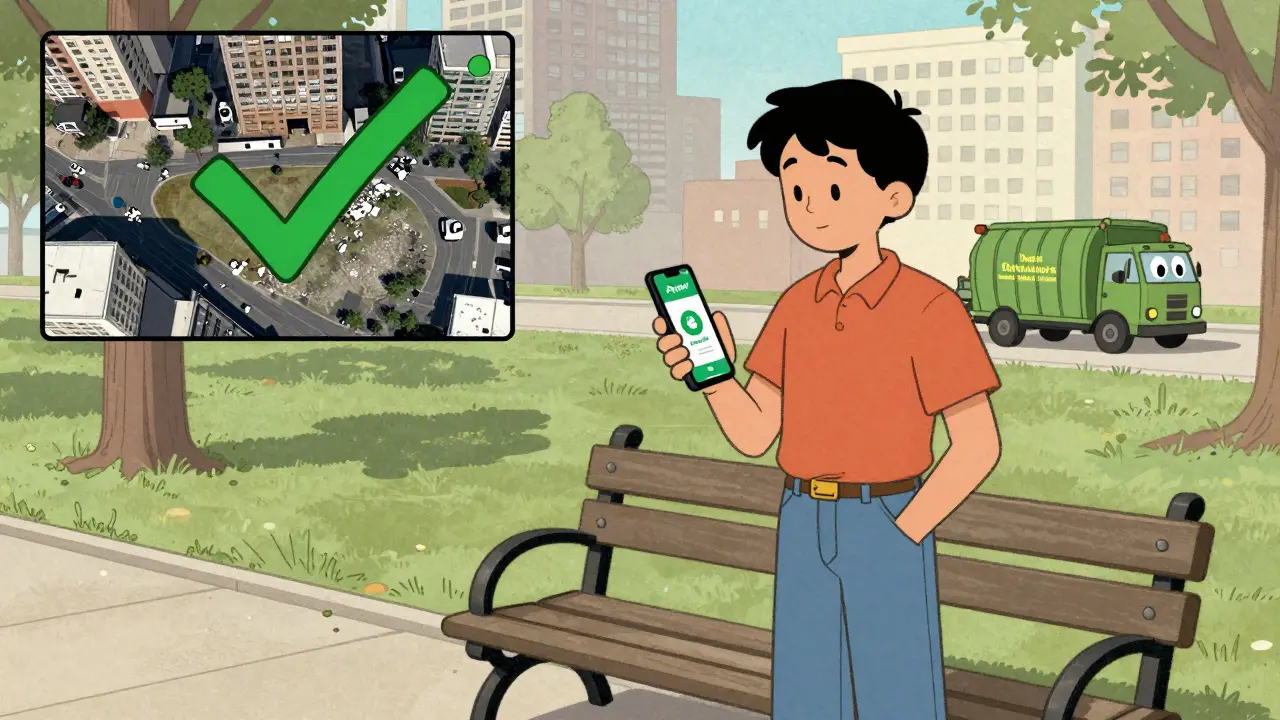
The App Experience: Easy to Start, Hard to Trust
Getting started is simple. Download the Aquari app, create an account, connect a crypto wallet (like MetaMask), and you’re ready. The interface is clean. Cleanup jobs show up on a map. You pick one, show up, take photos, and submit. But users report problems. App Store ratings sit at 3.7/5. Common complaints:- Location tracking fails during cleanup
- Verification photos get rejected multiple times
- Payments delayed by days
Who’s Using Aquari?
Most users are in Southeast Asia (62%) and Latin America (28%). These regions have large informal waste collection sectors, where people already pick up trash to sell for recycling. Aquari fits right in - it just adds a digital payment layer. Globally, only about 8,500 people are active on the platform. That’s tiny compared to established players like Plastic Bank, which partners with big brands like Henkel and SC Johnson. Aquari doesn’t have corporate backing yet - but it might soon.Big News: Partnership with Waste Management Inc.
In October 2025, Aquari announced a pilot with Waste Management Inc. (WM), one of the largest waste handlers in the U.S. The plan: test Aquari’s system in 15 American cities. This is a major shift. Instead of focusing only on emerging markets, Aquari is now trying to enter regulated, high-income economies. If this works, it could mean:- More jobs for cleanup workers in the U.S.
- Greater credibility for the token
- Better integration with official waste systems
What’s Next? Upcoming Upgrades
Aquari’s roadmap includes two big changes:- Satellite verification (launching November 15, 2025): Instead of relying on user photos, the system will use satellite imagery to confirm cleanup activity. This could cut down on fraud and verification delays.
- Switching to Polygon blockchain: The current chain is slow and unclear. Polygon offers faster, cheaper transactions and better developer tools. This could make the app smoother and attract more users.
Is Aquari a Good Investment?
Let’s be clear: if you’re looking for a crypto to hold for 10 years, Aquari isn’t it. The market is too small. The liquidity is too thin. The price is too volatile. But if you care about environmental impact - and you want to see real money go to real people cleaning up streets and beaches - then Aquari has value. It’s not a stock. It’s not a bond. It’s a tool. You can use it to fund cleanup work, or get paid for doing it yourself. The biggest risk? The lack of verified impact data. No one outside Aquari’s app can prove how much trash has actually been removed. Until third parties audit this, the whole system feels theoretical.Who Should Try Aquari?
- Cleanup workers in Southeast Asia, Latin America, or pilot cities in the U.S. - you can earn cash for work you’re already doing.
- Supporters who want to fund environmental action without donating to nonprofits - your monthly subscription goes directly to workers.
- Curious crypto users who want to explore impact tokens - but only with money you can afford to lose.
- Investors looking for quick profits - avoid. Low volume = easy manipulation.
- Regulators - watch this. The SEC is already looking at impact tokens. Aquari might get flagged for needing a money transmitter license.
Final Thoughts
Aquari isn’t trying to beat Bitcoin. It’s trying to fix a broken system: paying people to clean up the planet. That’s worth supporting - even if the crypto side is messy. The token’s price may crash tomorrow. But if you use the app to fund a cleanup, or join one yourself, you’re already winning. The real value isn’t in the price chart. It’s in the trash that’s gone, the beach that’s clean, and the person who got paid for doing it.If you want to try it, download the app. Do one cleanup. See how it works. Don’t buy tokens hoping for a moonshot. Use them like a digital tip jar - for real, tangible change.
Is Aquari (AQUARI) a real cryptocurrency or a scam?
Aquari is a real project with a working app, verified users, and real cleanup jobs being paid for. It’s not a scam in the traditional sense - people are getting paid. But it’s highly risky. Low trading volume, unverified market cap, and inconsistent exchange listings raise red flags. It’s a legitimate experiment, not a proven investment.
How do I earn AQUARI tokens?
Download the Aquari app, create an account, and connect a crypto wallet. Find a cleanup job near you, complete the task, upload photos and location data, and wait for verification. Once approved, AQUARI tokens are sent to your wallet within 24-48 hours. You can also earn by referring others or subscribing to support cleanup efforts.
Can I buy AQUARI on Binance or Coinbase?
Binance currently lists AQUARI with a $0 circulating supply and no trading volume, meaning you can’t buy or sell it there. It’s available on smaller exchanges like MEXC and BitMart, but liquidity is extremely low. Don’t expect to easily buy or sell large amounts. Always check the exchange’s trading pair before depositing funds.
What’s the difference between Aquari and carbon credit tokens?
Carbon credit tokens like BCT track emissions reductions at a global scale - they’re used by companies to offset pollution. Aquari pays individual workers to physically remove waste. It’s micro-level, human-focused, and immediate. You don’t need to be a corporation to participate. You just need a phone and a willingness to clean up.
Is Aquari regulated by any government?
No formal regulation exists yet. But the U.S. SEC has signaled that tokens paying people for environmental services may require money transmitter licenses. The EU’s MiCA regulations, coming in 2026, will likely require full transparency on environmental impact claims. Aquari is at risk of falling out of compliance unless it starts publishing third-party verified data on cleanup results.
Can I use Aquari in my country?
The app is available worldwide, but cleanup jobs are only listed in regions where the project is active - mainly Southeast Asia and Latin America. The U.S. pilot with Waste Management Inc. will expand access to 15 cities in late 2025. If you’re outside these areas, you can still support cleanup efforts by subscribing, but you won’t be able to find local jobs.
Shaun Beckford
January 16, 2026 AT 09:28This project is either the most brilliant hack of capitalism since Bitcoin or the most audacious greenwash since Tesla’s ‘Sustainable Energy’ ad campaign. Paying people $2.30 to clean a beach? That’s not empowerment - it’s wage suppression wrapped in blockchain glitter. And don’t get me started on the ‘satellite verification’ fantasy. They think satellites can tell the difference between a pile of cigarette butts and a kid’s abandoned sandcastle? Pathetic.
Chris Evans
January 18, 2026 AT 05:32Let’s deconstruct the ontological framework here: Aquari doesn’t merely tokenize labor - it reifies ecological agency into a commodified, algorithmically mediated experience. The token isn’t currency; it’s a semiotic placeholder for human dignity in late-stage capitalism. But here’s the paradox: if the value of AQUARI is derived from physical cleanup, yet the verification layer is opaque and centralized, then the entire system collapses into a performative simulacrum - a digital ghost of environmentalism. We’re not saving beaches. We’re NFT-ing them.
Hannah Campbell
January 18, 2026 AT 20:11So let me get this straight - you pay someone $2.30 to pick up trash so you can feel good about yourself while you scroll TikTok? And you think this is ‘impact’? LOL. I’ve seen more real cleanup in my grandma’s backyard than in all of Aquari’s ‘verified’ jobs combined. Also, satellite verification? Please. The app can’t even track location right. This isn’t innovation - it’s a crypto pyramid scheme with a beach towel.
Rod Petrik
January 19, 2026 AT 16:29They’re using satellites to track trash? That’s a cover. The real plan is to map every beach in the world for future drone surveillance. You think this is about cleaning? Nah. This is how the government gets data on where people gather - then they shut it down. And the ‘pilot with Waste Management Inc.’? That’s not a partnership - it’s a takeover. They’re buying the app so they can charge you to clean your own neighborhood. Wake up. This is surveillance capitalism with a recycling bin.
Pramod Sharma
January 20, 2026 AT 23:50Real impact > price charts. If you clean a beach and get paid, you win. No need to overthink. Just do it.
Jason Zhang
January 22, 2026 AT 05:25Let’s be real - this is the crypto equivalent of a lemonade stand run by a nonprofit with a bad app. The idea is cute, the execution is a dumpster fire, and the market cap is a joke. But hey, at least someone’s trying. I’d rather see this than another memecoin that just burns people’s money. Still, if your wallet’s on fire, don’t throw AQUARI on it.
Katherine Melgarejo
January 23, 2026 AT 14:54So I download this app, walk to the beach, pick up 12 bottles, take a pic, and wait 3 days for $2.30? Meanwhile my Uber Eats order arrives in 18 minutes. This isn’t a revolution - it’s a very slow tip jar with extra steps. Also, why does the app look like it was designed in 2015? 😅
Patricia Chakeres
January 24, 2026 AT 18:18Of course it’s a scam. Why would a blockchain project focused on ‘real people’ not be listed on Binance? Because it’s not real. They’re laundering crypto through poor communities in Indonesia and calling it ‘impact.’ The SEC is already sniffing around. And that ‘satellite verification’? That’s just a way to spy on the Global South while pretending to help. This is colonialism with a white paper.
kristina tina
January 25, 2026 AT 01:31I downloaded Aquari last week after reading this post. I did a cleanup near my neighborhood park - took me 45 minutes, picked up 37 cigarette butts, 12 plastic wrappers, and a broken umbrella. Got paid in 36 hours. The app glitched twice, but the payment came. I didn’t do it for the money - I did it because I’m tired of walking past trash. If you’re skeptical, just try it. One job. No investment needed. You might be surprised.
Ashlea Zirk
January 26, 2026 AT 06:18While the underlying concept of incentivizing localized environmental stewardship is commendable, the operational architecture remains critically underdeveloped. The absence of third-party verification protocols, coupled with the reliance on user-submitted geotagged imagery, introduces significant systemic vulnerabilities. Furthermore, the tokenomics, while theoretically aligned with utility, lack transparency in distribution mechanisms and fail to account for inflationary pressures arising from subscription-based inflows. Until auditable impact metrics are published - preferably via ISO 14001-compliant frameworks - the project remains a speculative construct rather than a verifiable ecological intervention.
Bryan Muñoz
January 27, 2026 AT 01:51They’re using satellites to track trash?? 😳 That’s not tech - that’s the government using you to map every beach, park, and riverbank for future drone strikes or surveillance. And the ‘Waste Management Inc.’ deal? That’s not a partnership - that’s a buyout. WM is gonna use this to shut down real trash collectors and replace them with app-based slave labor. This isn’t crypto - it’s a dystopian trap. I’m not touching it. 🚫
Bharat Kunduri
January 28, 2026 AT 14:16Why the hell is this even a thing? People in india clean up for free because they sell the plastic. This just adds a middleman and a bad app. And why no one talk about how the devs are probably just rug pulling? The price went up 9% last week? Bro that’s 2 people buying with 500 bucks each. This is a joke.
Tony Loneman
January 29, 2026 AT 14:33Oh wow, another ‘impact token’ that’s just a crypto pump disguised as a charity. Let me guess - the team holds 40% of the supply and the ‘community’ is just a Discord server with 300 bots? And satellite verification? That’s not innovation - that’s a PR stunt. The real innovation is how they convinced people this isn’t a scam. I’ve seen more legitimate environmental work in a single high school club than in this entire project. You’re not changing the world. You’re just feeding the crypto grift.
Lauren Bontje
January 30, 2026 AT 03:39Let’s not pretend this isn’t a foreign takeover of American environmentalism. First, they target poor countries, then they come to the U.S. with ‘pilots’ and take over public spaces. Waste Management Inc. is a corporate monster. They don’t care about beaches - they care about control. And you’re letting them monetize your local park with a crypto app? This isn’t activism. It’s colonization with a mobile interface.
Stephanie BASILIEN
January 31, 2026 AT 23:32While I appreciate the altruistic intent behind Aquari’s mission, I must emphasize the profound epistemological instability inherent in its verification model. The reliance on geotagged photographs, without cross-referenced metadata validation or blockchain-based immutable audit trails, renders the entire system susceptible to manipulation. Furthermore, the lack of regulatory clarity - particularly under MiCA and SEC guidelines - renders token utility legally precarious. Until standardized, independently audited impact reporting is implemented, I would classify this as a high-risk, low-credibility experiment, not a scalable solution.
kristina tina
February 2, 2026 AT 18:10Just wanted to reply to @kristina tina - I did the same thing! I did a cleanup last weekend. The app rejected my first 3 photos because the trash wasn’t ‘clearly visible.’ I had to take 3 more from different angles. Took 2 days. But when the tokens came? I felt proud. Not because of the $2.10 - because I actually did something. If you’re scared to try it, just do one job. No investment. Just show up.
Ashlea Zirk
February 4, 2026 AT 14:48Thank you for sharing your experience. Your anecdote underscores the critical gap between theoretical design and operational reality. While your personal outcome was positive, the fact that three verification attempts were required highlights a systemic flaw in the user experience - one that disproportionately burdens low-income participants who rely on timely payouts. This is not merely a UX issue; it is an ethical one. A project claiming to empower the marginalized must ensure equitable access to its benefits - not gatekeep them behind opaque algorithms and arbitrary rejections.
Hannah Campbell
February 6, 2026 AT 03:16So now you’re a hero for picking up trash and getting paid $2.30? Congrats. I’ll stick to my $15/hr job that doesn’t require me to take 17 photos of a cigarette butt. This whole thing is a joke.