What is Black Unicorn Corp. (MOON) crypto coin?
 Feb, 18 2026
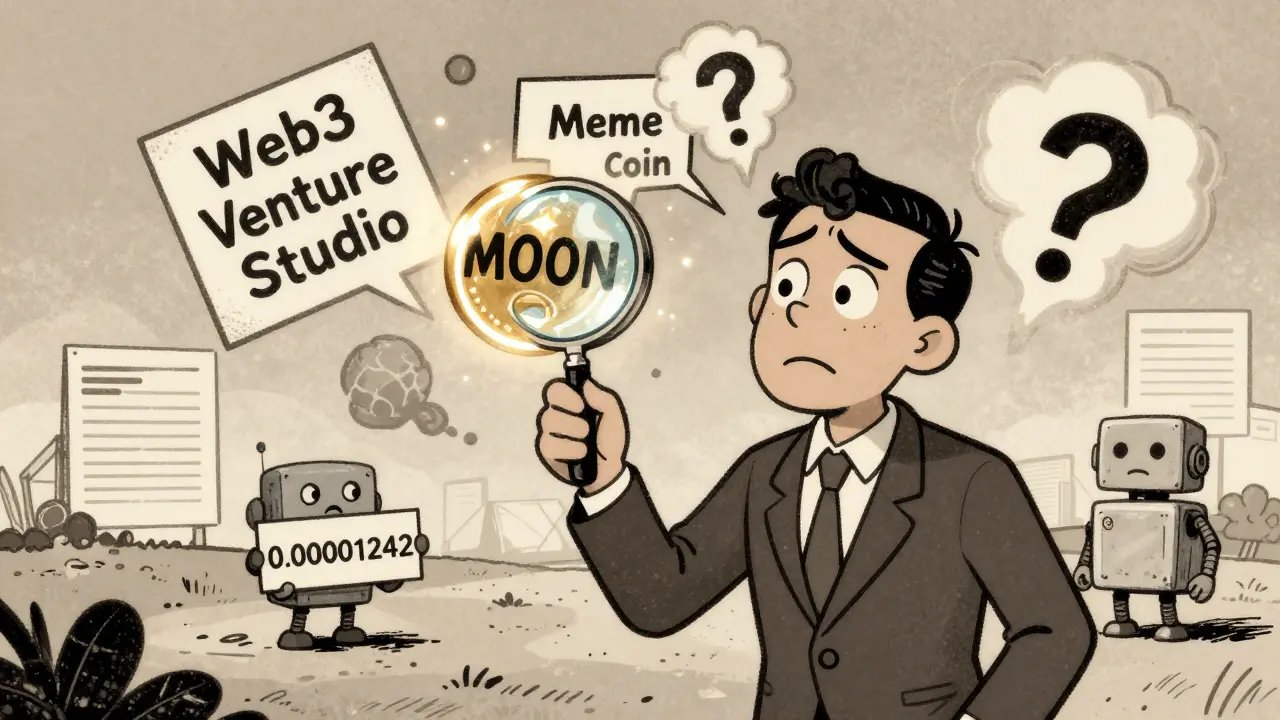
Black Unicorn Corp. (MOON) is a cryptocurrency token that launched on December 14, 2024, and it’s one of the most confusing projects in the crypto space right now. On paper, it claims to be a Web3 venture studio that helps startup projects get off the ground. But in practice, it behaves like a classic meme coin with almost no trading activity, no verifiable team, and zero real-world results. If you’re wondering whether MOON is a serious investment or just another empty promise, here’s what you need to know.
It’s an ERC-20 token on Ethereum
MOON runs on the Ethereum blockchain as an ERC-20 token. That means it uses the same system as thousands of other tokens - no special tech, no unique infrastructure. Its smart contract address is 0xb6c0189080a6441caf056b856dd4d795b909c460, and you can view it on Etherscan. But here’s the problem: while Ethereum supports serious projects like Chainlink and Uniswap, MOON doesn’t add anything new to the network. It doesn’t enable smart contracts, doesn’t power decentralized apps, and doesn’t interact with any major DeFi protocols. It’s just a token floating in the ether with no real function.
Two completely different stories
Where MOON gets weird is in how different platforms describe it. CoinPaprika calls it a "pioneering Web3 venture studio" that incubates startups, offers legal help, and funds innovation. Meanwhile, CoinMarketCap, Etherscan, and Uniswap all label it a "meme-inspired cryptocurrency" or "utility-focused memecoin." That’s not a minor difference - it’s a full contradiction. One says it’s building the future of blockchain startups. The others say it’s a digital joke with a fee redistribution gimmick.
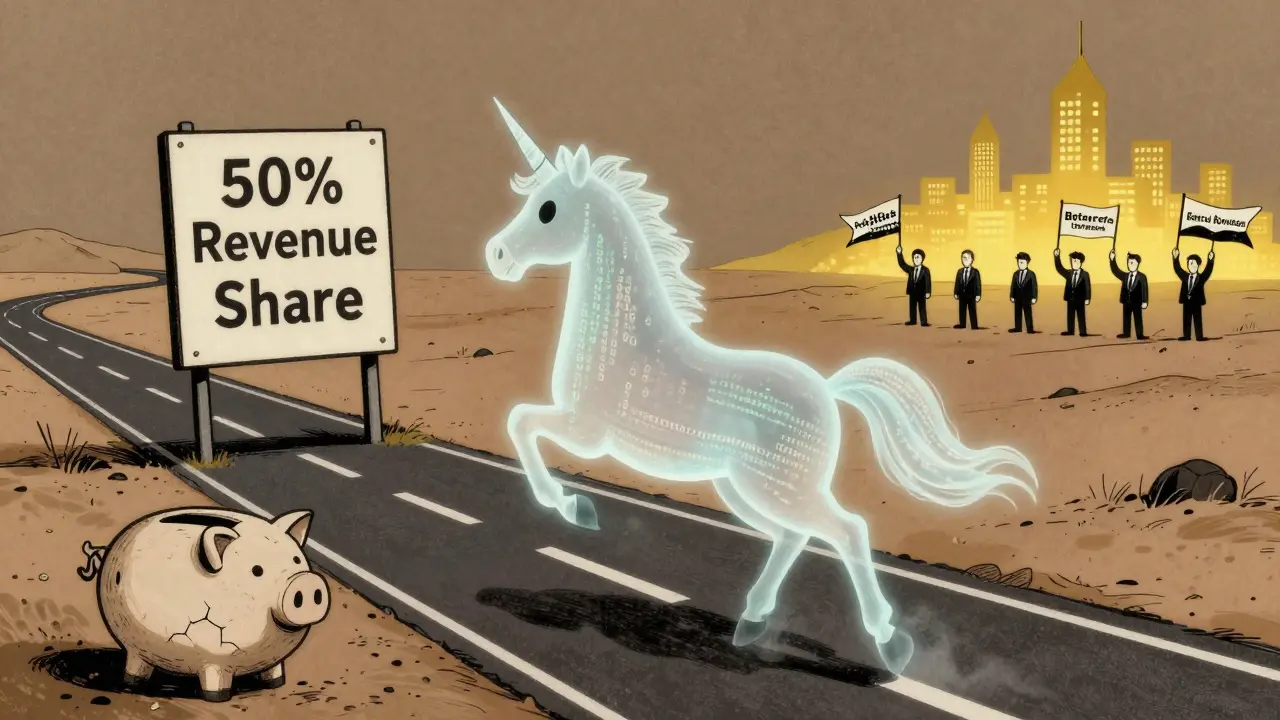
There’s no whitepaper. No GitHub repo. No public team members. No LinkedIn profiles. No press releases from real tech news sites. Just a few exchange listings and a vague claim that "50% of revenues" go back to holders. But where do these revenues come from? No one says. Not even a hint.
Trading volume? Almost zero
As of February 2026, MOON’s 24-hour trading volume is either $0 or $8.57 - depending on which site you check. CoinMarketCap says $0. CoinCodex says $8.57. Either way, it’s meaningless. For comparison, even the smallest legitimate altcoins trade at least $1 million per day. MOON doesn’t even hit $10.
This means if you buy $100 worth of MOON, you likely won’t be able to sell it without crashing the price. There’s no liquidity. No market depth. No buyers. Just a handful of people holding onto it because they think it might "go to the moon" - ironically, the exact thing the token’s name plays on.
Price and market performance
MOON trades around $0.00000768 to $0.00001242. That’s less than one-hundredth of a cent. It’s ranked #8574 on CoinMarketCap - way below even the most obscure tokens. Its 7-day price drop was -1.10%, worse than the overall crypto market. The 14-day RSI is 35.27, which suggests it’s not oversold, but it’s also not gaining momentum. The Fear & Greed Index says "Greed," but that’s probably because a few people are still buying, hoping for a pump.
One analysis on CoinCodex predicts MOON could drop another 25% and even suggests short-selling it could make you 30% profit. That’s not a prediction - it’s a warning.
What about the "revenue sharing" claim?
The project says a percentage of transaction fees gets redistributed to holders. Sounds nice, right? But here’s the catch: there are no transactions. If no one is trading MOON, there are no fees to redistribute. It’s like claiming your car gives you free gas - if you never drive it, the claim means nothing.
Compare this to Binance’s BNB burn system, which has returned over $2.5 billion to holders since 2017. That’s real. That’s transparent. MOON? No data. No audits. No proof.
Community? Barely exists
There’s no active Reddit thread. No meaningful discussion on CoinMarketCap’s community section. The Telegram group linked from exchange pages has fewer than 50 members - and most are bots or referral spammers. On Reddit, a user named u/CryptoSkeptic2024 summed it up: "MOON looks like another pump-and-dump scheme masquerading as a venture studio. Zero proof of any actual projects they’ve incubated." Bitget promotes "Learn2Earn" and "Assist2Earn" programs where you can earn MOON by watching videos or inviting friends. That’s not adoption - that’s a pyramid scheme dressed up as a reward system.
Why does this even exist?
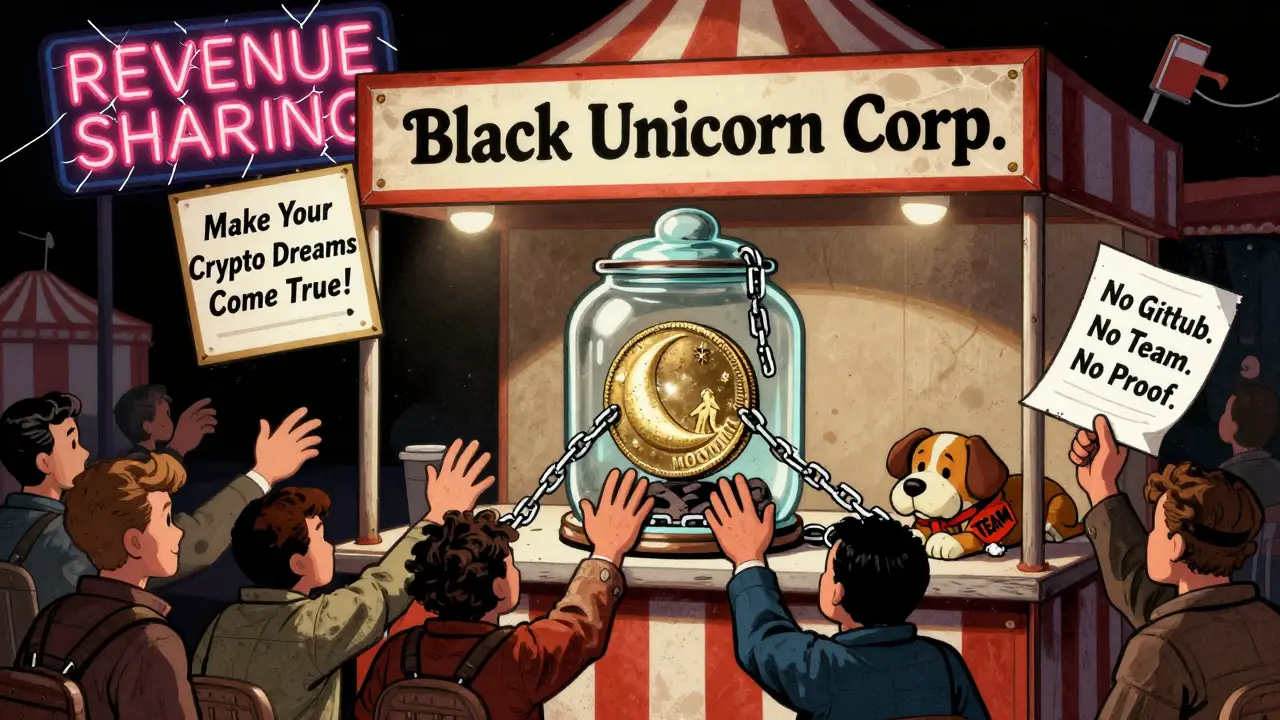
MOON fits into a growing category of crypto projects that exploit two things: confusion and hope. They use buzzwords like "Web3," "venture studio," and "revenue sharing" to sound legitimate. But they avoid all accountability. No audits. No team. No roadmap with dates. No partnerships. Just a token with a cute name and a vague promise.
It’s not unique. There are dozens of tokens like this - all launched in late 2024 and early 2025. They rely on social media hype, referral bonuses, and FOMO to keep prices artificially high for a few days. Then they vanish.
Should you buy MOON?
If you’re looking for a serious investment, the answer is no. MOON has none of the hallmarks of a credible crypto project: verifiable team, real use case, active development, or trading volume. It’s not a startup. It’s not a utility token. It’s not even a meme coin with a following like Dogecoin or Shiba Inu.
It’s a speculative gamble with zero upside and massive risk. The only people who benefit are those who bought early and sold to someone else - which is exactly how pump-and-dump schemes work.
What’s the bottom line?
Black Unicorn Corp. (MOON) is a token built on empty claims. It doesn’t incubate startups. It doesn’t generate revenue. It doesn’t have a community. And it doesn’t trade. It exists only as a digital placeholder with a name that plays on wishful thinking.
If you’re curious about real Web3 incubators, look at Binance Labs, Coinbase Ventures, or ConsenSys. They have track records. They have public portfolios. They have audits and team members you can verify.
MOON has none of that. And in crypto, where trust is everything, that’s fatal.
Is Black Unicorn Corp. (MOON) a legitimate crypto project?
No. MOON lacks verifiable team members, audits, partnerships, or any evidence of real-world activity. While it claims to be a Web3 venture studio, there are no public incubated projects, no whitepaper, and no development activity. Its market behavior matches low-liquidity meme coins designed for speculation, not utility.
Can I trade MOON on major exchanges?
MOON is listed on small exchanges like Bitget and Uniswap, but not on major platforms like Binance, Coinbase, or Kraken. Even on these smaller exchanges, trading volume is near zero - often under $10 per day. This makes it nearly impossible to buy or sell meaningful amounts without extreme slippage.
Why does MOON have conflicting descriptions across platforms?
Some platforms, like CoinPaprika, repeat the project’s own marketing claims without verification. Others, like CoinMarketCap and Etherscan, base their descriptions on on-chain behavior - which shows minimal trading and no smart contract interactions beyond transfers. This mismatch reveals how little real data exists about MOON’s actual function.
Is MOON a meme coin or a venture studio?
It’s primarily a meme coin. The venture studio claim appears to be marketing fluff with no supporting evidence. No startups have been publicly announced, no funding rounds have been documented, and no team members have been identified. The project’s low trading volume and reliance on referral programs confirm its reliance on hype rather than substance.
What happened to the price of MOON after launch?
MOON launched in December 2024 with minimal attention. Within weeks, its price dropped over 80% from initial trading levels. Since then, it has hovered near $0.00001 with no sustained rallies. Technical indicators show bearish sentiment, and analysts predict further decline. There’s no evidence of recovery or renewed interest.
Are there any risks in holding MOON?
Yes. The biggest risk is being stuck with a token you can’t sell. With near-zero liquidity, you may not find buyers even if you want to exit. There’s also no security audit, so the smart contract could have hidden flaws or backdoors. And since the team is anonymous, there’s no recourse if the project disappears.
Can I earn MOON without buying it?
Some exchanges like Bitget offer "Learn2Earn" programs where you can earn small amounts of MOON by completing quizzes or referring others. But these programs are designed to create artificial demand and encourage recruitment, not genuine adoption. Earning MOON this way doesn’t make it valuable - it just spreads the token to more people who may later be unable to sell it.
Is MOON regulated by any financial authority?
No. MOON is not registered with any financial regulator, including the U.S. SEC or New Zealand’s Financial Markets Authority. Tokens like MOON, with vague utility claims and no transparency, are increasingly targeted by regulators for being misleading or unregistered securities. Holding MOON carries regulatory risk, especially if authorities crack down on low-liquidity tokens.
If you’re still considering MOON, remember this: in crypto, the projects that survive are the ones that build. MOON doesn’t build. It just talks. And in a market full of noise, silence speaks louder than hype.
Andrew Edmark
February 18, 2026 AT 13:10Nikki Howard
February 19, 2026 AT 14:49jennifer jean
February 20, 2026 AT 10:30george chehwane
February 21, 2026 AT 03:03Charrie VanVleet
February 22, 2026 AT 05:25Scott McCrossan
February 24, 2026 AT 01:16Rajib Hossaim
February 24, 2026 AT 01:53Ruby Ababio-Fernandez
February 24, 2026 AT 11:36AJITH AERO
February 24, 2026 AT 13:03Lauren Brookes
February 25, 2026 AT 15:05Chris Thomas
February 27, 2026 AT 04:57James Breithaupt
February 27, 2026 AT 21:49Alex Williams
February 28, 2026 AT 00:36Sarah Shergold
March 1, 2026 AT 02:24Dominica Anderson
March 1, 2026 AT 03:53Lisa Parker
March 3, 2026 AT 00:42