What Is BOG Crypto? Understanding Bog Coin and Bogged Tokens
 Jun, 22 2026
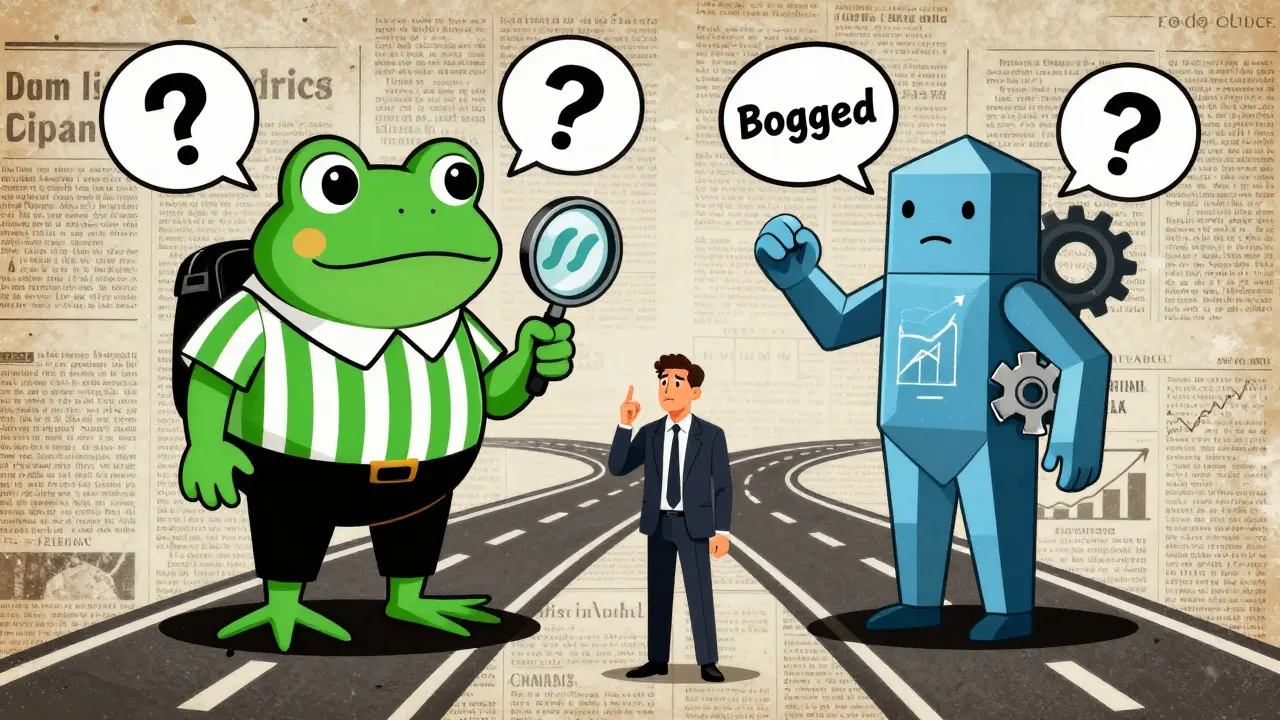
You type "BOG" into a search bar or a crypto exchange, and suddenly you are staring at two completely different assets. One is a frog-themed meme coin trying to honor internet art history. The other is a utility token for a decentralized finance tool. Both share the same ticker symbol: BOG. If you are looking to buy, hold, or simply understand what this asset is, the first thing you need to know is that there is no single answer. You are dealing with a case of ticker collision, where two unrelated projects use the same three-letter code.
This confusion is dangerous in crypto. Buying the wrong contract address means your money goes to an asset you never intended to own. To navigate this, we need to separate these two entities clearly. We will look at Bog Coin, which is an Ethereum-based meme token inspired by Matt Furie’s early artwork, and Bogged (BOG), which is a utility token associated with the Bogged Finance DeFi ecosystem. We will also touch on why data aggregators sometimes show conflicting information, such as Solana-based listings that may be misindexed.
Bog Coin: The Meme Token Behind the Frog
When most people ask about "Bog (BOG)" in the context of viral trends, they are usually referring to Bog Coin. This is not a protocol with complex governance or revenue-sharing models. It is a pure play on culture and nostalgia. The project positions itself as a tribute to the earliest frog drawings by artist Matt Furie. For those familiar with internet culture, Furie is the creator of Pepe the Frog from his comic series *Boys Club* and Hoppy from *Night Rider*. Bog Coin claims to honor these origins before the characters became global memes.
The technical backbone of Bog Coin is the Ethereum blockchain, which serves as the foundational network for ERC-20 tokens and smart contracts. Specifically, it operates as an ERC-20 fungible token. This standard ensures that each unit of BOG is identical to every other unit, allowing it to be traded seamlessly across wallets and exchanges that support Ethereum. Because it lives on Ethereum, interacting with Bog Coin requires you to have ETH in your wallet to pay for gas fees-the transaction costs required to process operations on the network.
The tokenomics of Bog Coin are deliberately absurd, fitting the meme genre perfectly. The total supply, maximum supply, and circulating supply are all reported as 420.69 trillion BOG. In crypto meme culture, numbers like 420 and 69 are inside jokes. By minting over 400 trillion tokens, the creators ensured that the price per individual token would be infinitesimally small. This allows traders to buy millions or billions of tokens for a few dollars, creating a psychological illusion of owning a massive amount of currency. However, because 100% of the supply is already in circulation, there is no future inflation risk from new token issuance, but also no scarcity mechanism to drive up value through supply shock.
Bogged (BOG): The DeFi Utility Counterpart
On the other side of the ticker collision is Bogged, often referred to as Bogged Finance. Unlike Bog Coin, which relies on humor and community sentiment, Bogged presents itself as a functional utility token within a decentralized finance (DeFi) ecosystem. According to data from platforms like Coinbase and Bitget, this token is designed to provide trading tools and analytics for decentralized exchanges. Its goal is to offer a secure, transparent platform for financial transactions, emphasizing peer-to-peer efficiency and privacy through cryptographic techniques.
The market metrics for Bogged tell a story of a micro-cap asset struggling for visibility. Reports indicate a circulating supply of approximately 13.87 million BOG against a maximum supply of 15 million BOG. With a market capitalization hovering around $74,000, it sits far below the threshold of mainstream adoption. For context, major DeFi protocols often have market caps in the hundreds of millions or billions of dollars. Bogged’s low valuation suggests limited liquidity and a niche user base. While some sources describe it as having "broad market potential," the current on-chain reality shows minimal trading volume and low recognition among general investors.
Data inconsistencies further complicate the picture for Bogged. Some aggregators list its circulating supply as zero while still calculating a fully diluted valuation, indicating that their data feeds are out of sync with the actual blockchain state. This fragmentation is common for smaller tokens that do not have dedicated teams maintaining their listings on every major tracker. If you are interested in Bogged for its utility, you must verify the current active supply directly on the blockchain explorer rather than relying solely on third-party dashboards.
Why Data Aggregators Show Conflicting Information
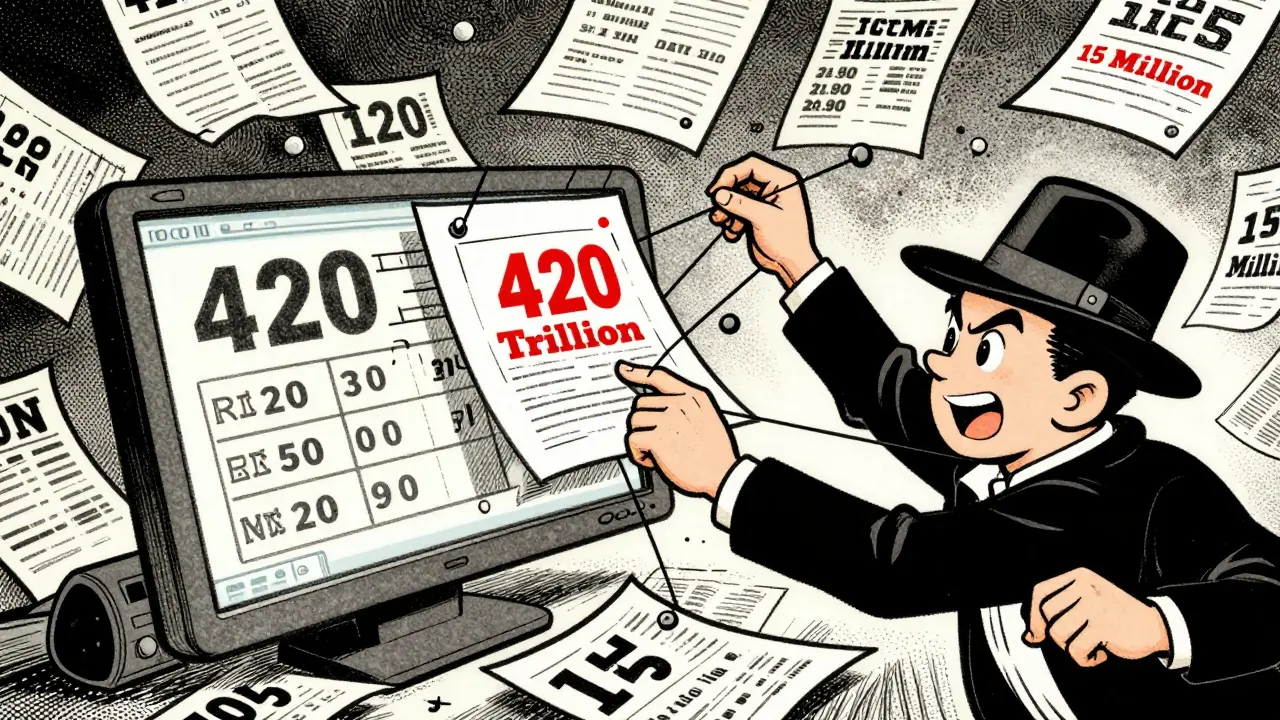
If you check multiple sites, you might see a third version of BOG entirely. Platforms like LiquidityFinder sometimes list a "Bog (BOG)" launched in 2024 on the Solana blockchain, known for high-speed transactions and low fees compared to Ethereum with a supply nearing 900 trillion tokens and zero circulation. This entry likely represents a misindexed asset or a different token sharing the same ticker. Ticker symbols are not unique identifiers in the crypto world; only the contract address is.
This lack of uniqueness creates significant risk. When you see "BOG" on a chart, you must check the underlying chain. Is it Ethereum? Solana? Binance Smart Chain? Each chain has its own ecosystem, risks, and fee structures. An Ethereum-based BOG transaction will cost significantly more in gas fees than a Solana-based one, but the latter might be a scam copycat. Always cross-reference the contract address provided by official project channels with the address listed on trusted aggregators like CoinGecko or CoinMarketCap.
| Feature | Bog Coin (Meme) | Bogged (DeFi Utility) |
|---|---|---|
| Blockchain | Ethereum | Multi-chain / Primarily DEXs |
| Type | Meme Token | Utility Token |
| Total Supply | 420.69 Trillion | 15 Million |
| Circulating Supply | 420.69 Trillion | ~13.87 Million |
| Primary Value Driver | Community Sentiment & Hype | Protocol Usage & Analytics Tools |
| Market Cap Range | Micro-cap (~$70k-$100k USD equivalent) | Micro-cap (~$74k USD) |
| Liquidity | Very Low (<$300 daily volume) | Low |
How to Buy BOG Safely
Because neither Bog Coin nor Bogged is listed on major centralized exchanges like Binance or Coinbase for direct fiat purchase, you cannot simply click "Buy" with a credit card. You must use a decentralized exchange (DEX). This process involves several steps that require basic technical knowledge.
- Set Up a Web3 Wallet: Download a non-custodial wallet like Trust Wallet or MetaMask. These apps allow you to store private keys and interact with smart contracts. Never share your seed phrase with anyone.
- Fund Your Wallet: Purchase ETH (for Bog Coin) or SOL (if dealing with Solana variants) on a centralized exchange and transfer it to your Web3 wallet address. Ensure you leave enough extra cryptocurrency to cover network gas fees.
- Connect to a DEX: Navigate to a decentralized exchange compatible with the target chain, such as Uniswap for Ethereum. Connect your wallet to the interface.
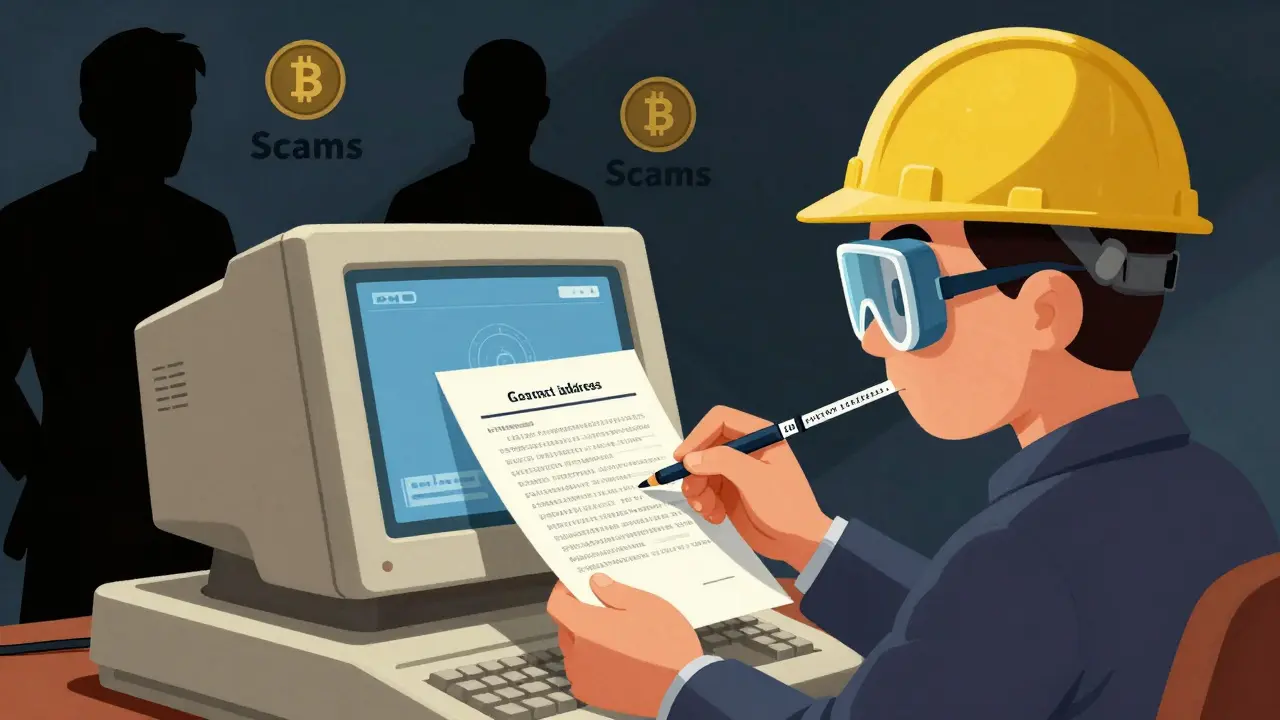
- Import the Correct Contract Address: This is the most critical step. Do not search for "BOG" by name alone, as scams often create fake tokens with popular names. Copy the verified contract address from the official project website or a trusted aggregator like CoinGecko. Paste this address into the DEX token selector.
- Execute the Swap: Set your slippage tolerance appropriately. Due to low liquidity, prices can fluctuate wildly during the transaction. Confirm the swap and wait for the transaction to finalize on the blockchain.
Risks and Realistic Expectations
Investing in either version of BOG carries extreme risk. Both assets are classified as micro-caps with thin order books. For Bog Coin, the 24-hour trading volume is often under $300. This means if you try to sell a large position, you could crash the price yourself due to lack of buyers-a phenomenon known as high slippage. There is no institutional backing, no audited whitepaper with concrete milestones, and no guaranteed utility.
Bogged faces similar challenges. While it has a utility narrative, its market cap of roughly $74,000 indicates very low adoption. The discrepancy between different data providers regarding its supply highlights the lack of professional maintenance for its public profile. In both cases, the value is driven almost entirely by speculation. If interest wanes, liquidity can dry up completely, leaving holders unable to sell their tokens at any reasonable price.
Treat these assets as high-risk speculative bets, not investments. Only allocate funds you are prepared to lose entirely. The crypto market is volatile, and meme coins or obscure DeFi tokens are the most volatile segment of all. Always do your own research (DYOR) and verify every detail on-chain before committing capital.
Is BOG crypto a good investment?
BOG is considered a high-risk, speculative asset rather than a traditional investment. Both Bog Coin and Bogged are micro-cap tokens with very low liquidity and no established track record of long-term value retention. They should only be approached by experienced traders who understand the risks of losing their entire principal.
What is the difference between Bog Coin and Bogged?
Bog Coin is an Ethereum-based meme token focused on internet culture and Matt Furie’s art, with a supply of 420.69 trillion. Bogged is a utility token associated with the Bogged Finance DeFi ecosystem, featuring a much smaller supply of 15 million and aimed at providing trading tools and analytics.
Can I buy BOG on Binance or Coinbase?
No, neither Bog Coin nor Bogged is currently listed on major centralized exchanges like Binance or Coinbase for direct purchase. You must use a decentralized exchange (DEX) and a Web3 wallet to swap ETH or another base currency for BOG using the specific contract address.
Why are there different supply numbers for BOG online?
The ticker "BOG" is used by multiple unrelated projects. Bog Coin has a supply of 420.69 trillion, while Bogged has a max supply of 15 million. Additionally, some data aggregators may misindex assets or list outdated information, leading to confusion. Always verify the contract address to ensure you are looking at the correct token.
Is Bog Coin related to Pepe the Frog?
Bog Coin claims to honor the early frog drawings by Matt Furie that inspired characters like Pepe the Frog. However, it is not officially affiliated with the Pepe brand or the PEPE token. It is a separate meme token that uses similar cultural references.
What blockchain does BOG run on?
Bog Coin runs on the Ethereum blockchain as an ERC-20 token. Bogged is associated with DeFi tools and may operate on multiple chains depending on the specific implementation, but primary data points suggest Ethereum compatibility for its main utility functions. Always check the specific contract address to confirm the chain.
Filbert Reeves
June 24, 2026 AT 02:41the whole ticker collision thing is just a setup for the next rug pull you see that? its not an accident its a coordinated effort by the deep state crypto syndicate to confuse retail investors so they buy the wrong contract address and lose their life savings into thin air. i have been tracking these patterns for years and every time there is a meme coin with a frog or a dog theme it is followed by a utility token with the same letters to siphon liquidity from the unsuspecting masses. they want you to think you are buying bogged finance but really your money goes into a black hole controlled by shadowy figures in basel. do not trust the aggregators because they are fed false data by the central bank of digital currency. i tried to trade solana based bog once and my wallet got drained instantly which proves my theory about the blockchain being rigged against the little guy. stay woke and keep your coins in cold storage under your mattress where the feds cannot track them via quantum computing surveillance drones.
Eric Scheinberg
June 25, 2026 AT 14:26It is imperative to understand the distinction between asset classes before engaging in any transaction. The article correctly identifies the divergence between Bog Coin as a cultural artifact and Bogged as a functional utility instrument. One must exercise extreme diligence when verifying contract addresses on decentralized exchanges. Failure to do so results in irreversible loss of capital. The market cap discrepancies highlight the inefficiencies inherent in unregulated micro-cap markets. Investors should prioritize verified sources such as official project documentation over third-party aggregator listings. This approach mitigates risk significantly.
John Doe
June 26, 2026 AT 09:17I feel like this post is trying to save people from making huge mistakes but honestly it feels like shouting into the void. Everyone who buys these things knows the risks and they do it anyway because they are desperate for a miracle. It is tragic how many people lose everything chasing a meme frog while ignoring real opportunities. The emotional toll of watching friends go broke on these tokens is hard to bear. We need more education not just warnings. People need to understand why they are drawn to these scams in the first place. It is not just greed it is hope misplaced in the wrong direction.
Skm Shubham
June 27, 2026 AT 10:57You are all idiots for even reading this garbage. If you need an article to explain what BOG is you are already too dumb to be in crypto. The fact that you are asking questions means you will get rekt. Stay out of the market unless you are a whale. These micro caps are designed to bleed you dry. Do not expect sympathy when you lose your rent money.
Rob Aronson
June 28, 2026 AT 07:59The slippage tolerance settings on DEXs are critical here 📉. Most users set it to 1% and then wonder why their tx fails or gets front-run by bots. For low liquidity assets like Bogged you might need to bump it up to 5-10% depending on the pool depth. Also check the gas tracker before swapping on ETH mainnet. Use Layer 2 solutions if possible to reduce costs. Always verify the token decimals in your wallet interface. A mismatch there can lead to display errors that look like you lost everything when you actually just have a UI bug. Stay safe out there 🛡️.
Danna Charris
June 28, 2026 AT 14:41Only amateurs chase tickers. Professionals look at contract addresses exclusively. If you are confused by two tokens sharing a symbol you are not ready for DeFi. Stick to blue chips until you learn better. This article is basic stuff for beginners who lack sophistication.
Fede Faith
June 30, 2026 AT 04:58Hey everyone let me break this down simply. The key takeaway is always check the chain. Ethereum vs Solana makes a huge difference in fees and speed. I recommend using a portfolio tracker that supports multi-chain assets so you can see both versions clearly. Do not panic if you see conflicting data on CoinGecko versus CoinMarketCap. Just cross reference with Etherscan or Solscan directly. It takes a few extra seconds but saves you from costly mistakes. You got this! 💪
Josh Dodson
July 2, 2026 AT 03:44good read guys. i always forget to check the supply numbers. 420.69 trillion is wild lol. thanks for reminding us to use metamask properly. dont share seed phrases ever. easy mistake to make when rushing trades.
Kumaran sowkarpet
July 3, 2026 AT 08:17In India we have seen many such cases where local projects copy global names. It is important to support genuine innovation. The community should be vigilant against fake tokens. Please share this knowledge with your friends. Together we can build a safer ecosystem. Namaste 🙏
Mauricio Contreras Loredo
July 3, 2026 AT 17:25Oh great another article telling us not to gamble our life savings away. Thanks for nothing. I bet the author made a mint writing this while sitting on his couch. Real traders don't read articles they watch the charts. But sure keep telling people to DYOR while the whales dump on them. Classic.
sreeja boora
July 4, 2026 AT 15:28This content is irrelevant to serious investors. We focus on stablecoins and major protocols. Meme coins are a distraction from real economic value creation. Please stop promoting such frivolous assets.
Grace Newman
July 6, 2026 AT 09:28I suspect the confusion between Bog Coin and Bogged is intentional misinformation spread by government agencies to destabilize public confidence in decentralized finance. Have you considered that the contract addresses themselves might be monitored by intelligence services? The timing of these releases coincides with legislative hearings on crypto regulation. It is not a coincidence. Wake up sheeple.
Annemarie Fitzgerald
July 7, 2026 AT 08:26to be honest the whole concept of value in crypto is a social construct built on sand. why do we care about frogs or utility tokens when the system itself is flawed. maybe the answer lies in returning to barter systems. i find myself questioning reality every time i open my wallet app. is any of this real or just a simulation we are trapped in. nobody seems to know anymore.
Abby Sivertsen
July 7, 2026 AT 22:27I grew up trading stocks and this whole crypto thing is exhausting. Why can't they just list it on NYSE? The constant fear of getting scammed is stressful. I miss the days when you could call a broker and talk to a human. Now you are alone with a smart contract that might eat your money. It is scary out there.
Benjamin Eisen
July 8, 2026 AT 08:07Great summary. I was wondering if the gas fees on eth are worth it for such small amounts. Maybe layer 2s are the way to go. Thanks for explaining the slippage part. I always mess that up. Any tips on finding reliable dapps?
Kenneth Riley
July 9, 2026 AT 16:00you people are clueless. the real play is shorting these tokens before they rug. i have been doing it for months and making bank. but you wont listen because you are too busy holding bags. laughable. the market is efficient enough to punish fools like you. accept your fate.
ravi mahla
July 11, 2026 AT 13:50Haha nice try with the educational tone. But let's be real, most of you here are just looking for the next 100x gem. Stop pretending you care about security. We all know the game. Just pump it and dump it. See you at the top... or bottom. 😂
Mark Brunschwiler
July 12, 2026 AT 23:51I feel empty inside every time I check my portfolio. The red candles stare back at me. Is there any meaning to this suffering? Or are we just monkeys throwing bananas at a wall hoping one sticks? I need someone to tell me it will be okay. Please. My soul is tired.
Terry Hyland
July 14, 2026 AT 01:26This is immoral. Encouraging people to buy unknown tokens is unethical. You are enabling gambling addiction. There is no moral high ground in crypto. It is all sin and corruption. Repent before it is too late.
Tim Lefebvre
July 14, 2026 AT 15:54hey good info. i always mix up the chains too. thanks for the reminder to check the contract address. saves a lot of headache. also love the table comparison. very helpful for quick reference. keep posting stuff like this.
Monica Pathammavong
July 14, 2026 AT 22:08Obviously the data aggregators are lying to you. They have insider deals with the projects to inflate volume. I checked the blockchain myself and the numbers don't match. You need to stop trusting these platforms. They are corrupt. I know better than all of you combined. Don't believe the hype.
JEVON HALL
July 16, 2026 AT 07:32Just a heads up folks. Make sure you double check the token symbol on your wallet after importing. Sometimes the name displays incorrectly due to cache issues. I had this happen last week with a different token. Took me hours to figure out why my balance looked weird. Hope this helps someone avoid the stress 😅.