What is Castle of Blackwater (COBE) Crypto Coin? Game, Tokenomics & Price Analysis
 Jun, 21 2026
You’ve probably seen the tagline: "The social deduction game that pays to betray." It’s catchy, it’s provocative, and it points directly to Castle of Blackwater, a project trying to merge the tension of games like Among Us with the financial incentives of Web3. At the heart of this ecosystem is the COBE cryptocurrency token. But before you rush to buy or play, you need to understand exactly what COBE is, how it functions inside the game, and whether the current market reality matches the hype.
This isn’t just another generic meme coin. COBE is designed as a utility asset for a specific niche: 2D multiplayer social deduction. If you are wondering if this micro-cap token has legs, we need to look past the marketing slogans and examine the tokenomics, the gameplay loop, and the hard data on supply and price history.
What Exactly Is Castle of Blackwater?
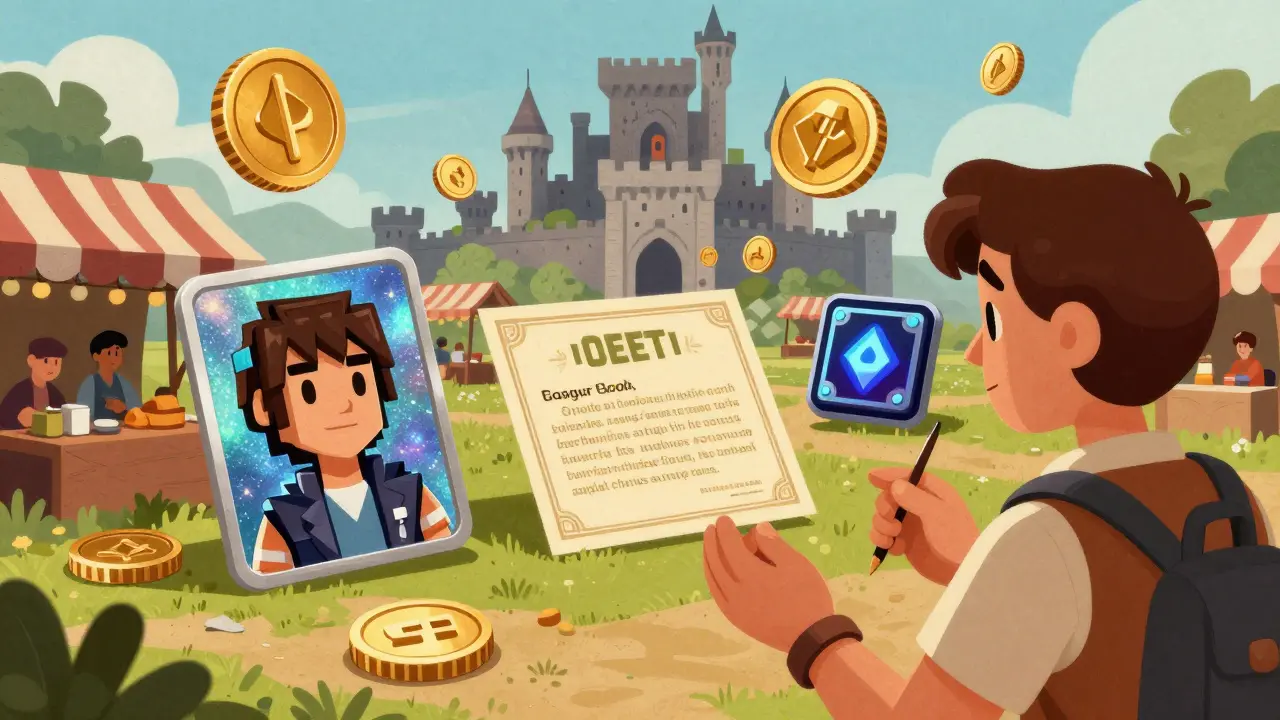
To understand the value of the COBE token, you first have to understand the product it fuels. Castle of Blackwater is a browser-based, 2D action-packed social deduction game. Think of it as a magical twist on classics like Town of Salem or Mafia, but built for up to 15 online players in a single session.
The core mechanic relies on deception. Players join a magical castle setting filled with lies and mystery. Some players are loyal citizens; others are traitors working to sabotage the group. The "Web3 twist" mentioned in their marketing refers to the integration of blockchain assets. Unlike traditional free-to-play games where cosmetics are locked behind centralized servers, here, certain high-value items-characters, land plots, and top-tier skins-are tied to the COBE economy.
The game positions itself in the "play-to-earn" (P2E) adjacent space, though more accurately, it is a "pay-to-play-with-premium-assets" model. You use COBE to access better tools or aesthetics that might give you a strategic edge or simply flex status within the server. This creates a direct link between player engagement and token demand. If people want to play seriously or look good while playing, they need COBE.
COBE Token Utility: Why Does It Have Value?
In the crypto world, tokens without utility often crash to zero once the speculative frenzy dies. So, what does COBE actually do? According to listings on major aggregators like CoinGecko and CoinMarketCap, COBE serves three primary functions within the Castle of Blackwater ecosystem:
- Premium Currency: It is the primary medium of exchange for high-end digital goods. While basic gameplay might be accessible, acquiring unique character avatars requires spending COBE.
- Land Ownership: The game features virtual real estate. Purchasing and owning land within the game’s map structure involves using COBE, potentially allowing for future monetization strategies by landowners.
- Cosmetics: Top-tier visual customizations are gated behind COBE purchases. In social deduction games, appearance can sometimes signal experience or status, creating a soft competitive advantage.
This utility model is crucial because it attempts to create organic demand. Instead of relying solely on traders betting on price movement, the project hopes that gamers will naturally accumulate and spend COBE to enhance their experience. However, the success of this model depends entirely on player retention. If the game becomes boring or buggy, the demand for these premium items evaporates, taking the token price with it.
Tokenomics: Supply, Allocation, and Vesting
Understanding the numbers is vital for any crypto investment. Let’s break down the anatomy of the COBE token supply. The total maximum supply is capped at 100 million COBE. This fixed cap prevents infinite inflation, which is a positive sign compared to tokens with no supply limits.
However, not all 100 million tokens are in circulation. Current data from sources like CryptoRank and ChainBroker indicates a circulating supply hovering between 7.4 million and 7.8 million tokens. This means roughly 92% of the total supply is still locked, reserved, or allocated to other categories such as team rewards, ecosystem development, and treasury funds.
| Allocation Category | Percentage | Amount (COBE) |
|---|---|---|
| Private/Pre-sale | 2.00% | 2,000,000 |
| Public Sale (IEO) | 6.30% | 6,300,000 |
| Remaining (Team/Ecosystem/Treasury) | 91.70% | 91,700,000 |
| Total Supply | 100% | 100,000,000 |
The heavy allocation to non-public categories raises a key question about vesting schedules. When those 91.7 million tokens unlock, they could flood the market, causing significant downward pressure on the price. Currently, detailed vesting cliffs and release dates for the team and treasury portions are not fully transparent in public summaries, which is a risk factor investors must monitor closely.
Price History and Market Performance
If you’re looking at COBE today, you’re looking at a highly volatile micro-cap asset. The token launched via an Initial Exchange Offering (IEO) in late March 2024. During that public sale, the price was set at $0.20 per COBE. With only 4.3 million tokens circulating at launch, the initial market cap was around $860,000, but the Fully Diluted Valuation (FDV) was calculated at $20 million based on the total supply.
Since then, the price has experienced extreme swings. At its peak, COBE hit an all-time high (ATH) of approximately $0.82. However, recent snapshots show the price trading significantly lower, often in the range of $0.0017 to $0.03. This represents a drop of over 97% from its highs in some periods.
Why such volatility? Several factors contribute:
1. Low Liquidity: As a micro-cap ranked between #2500 and #3300 globally, daily trading volume can fluctuate wildly-from as low as $2 on quiet days to over $75,000 during spikes. Low liquidity means small buy or sell orders can move the price dramatically.
2. Speculative Nature: Most holders are likely speculating on future game adoption rather than using the token for immediate utility.
3. Market Sentiment: The broader crypto market conditions heavily influence small-cap gaming tokens. When Bitcoin dominance rises, altcoins like COBE often bleed value.
Currently, COBE is listed on several major tracking platforms including Binance (spot data), Coinbase, LiveCoinWatch, and Investing.com. Its presence on these reputable aggregators adds a layer of legitimacy, ensuring that price data is standardized and accessible, even if the underlying asset remains risky.
Technical Infrastructure: Ethereum ERC-20
From a technical standpoint, COBE is straightforward. It operates as an ERC-20 token on the Ethereum blockchain. This means it doesn’t run on its own dedicated chain or a complex Layer-2 solution. Instead, it leverages Ethereum’s security and infrastructure.
For users, this implies a few things:
- Wallet Compatibility: You can store COBE in any standard Ethereum-compatible wallet like MetaMask, Trust Wallet, or Ledger.
- Transaction Fees: Transferring COBE incurs Ethereum gas fees. Depending on network congestion, sending a small amount of COBE could cost more in gas than the value of the tokens themselves. This is a common friction point for micro-cap ERC-20 tokens.
- Security: The token inherits Ethereum’s proof-of-stake security. However, smart contract risks remain. While no major hacks have been reported in the available data, always verify contract addresses through official channels to avoid phishing scams.
The decision to stay on mainnet Ethereum rather than launching on a cheaper chain like Polygon or Solana suggests the developers prioritized established security and broad compatibility over low transaction costs. For a game where transactions might not happen every second, this is a reasonable trade-off, but it does limit accessibility for players with very small budgets due to gas fees.
Investment Risks and Considerations
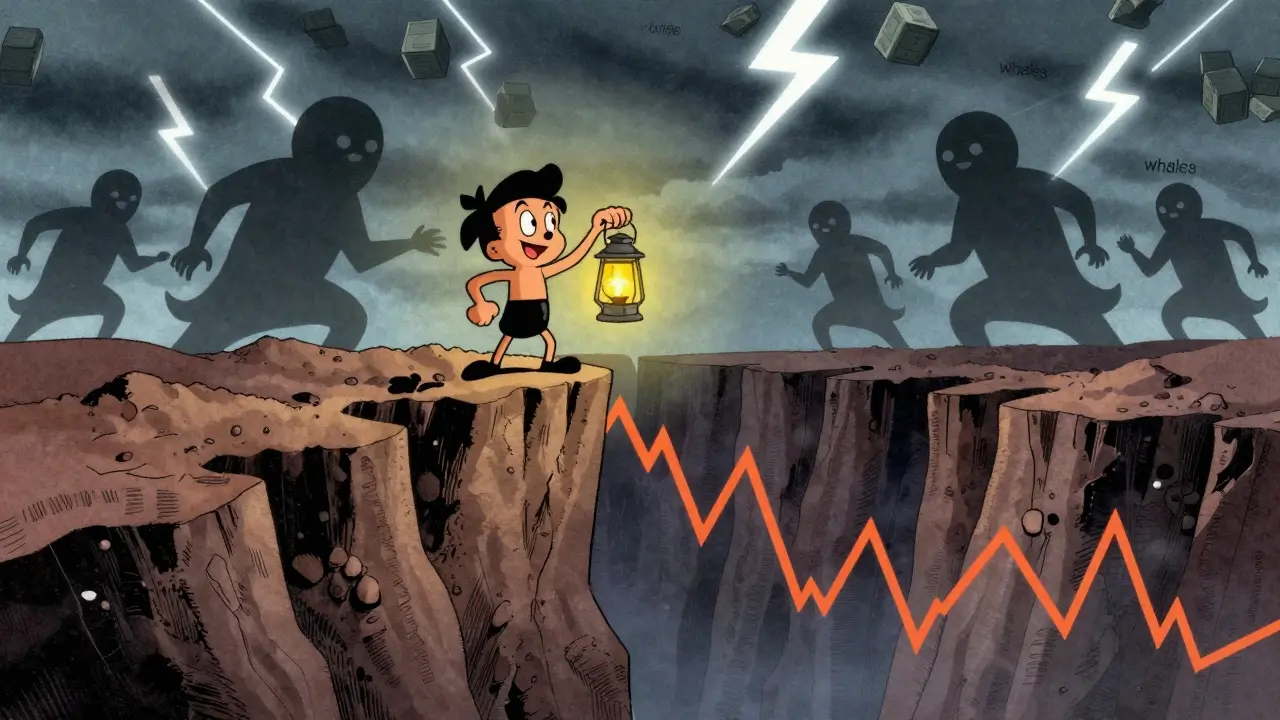
Before allocating any funds to COBE, consider the following realities. First, the market capitalization is tiny. With a circulating supply of ~7.5 million and prices under $0.03, the market cap hovers around $165,000-$200,000. This makes it susceptible to manipulation by large holders (whales). A single large sell order could crash the price by 20-30% instantly.
Second, the utility dependency is high. Unlike Bitcoin or Ethereum, which have network effects independent of a single application, COBE’s value is tied exclusively to the success of Castle of Blackwater. If the game fails to attract a sustained player base, the token loses its primary reason for existence. There are no governance rights, staking yields, or DeFi integrations mentioned that would provide alternative value streams.
Third, transparency gaps exist. While the tokenomics outline the total supply, the detailed vesting schedule for the 91.7% held by the team and ecosystem is not fully public. Investors should dig into the whitepaper or official documentation to find out when those tokens unlock. Early unlocks can lead to massive sell-offs.
How to Buy and Store COBE
If you decide to proceed, here is the practical workflow. Since COBE is an ERC-20 token, you cannot buy it directly with fiat currency on most major centralized exchanges like Coinbase or Binance in a simple one-click manner. You typically need to go through a decentralized exchange (DEX) like Uniswap.
- Set Up a Wallet: Download MetaMask or similar Ethereum wallet. Secure your seed phrase offline.
- Acquire ETH: Buy Ethereum on a centralized exchange and transfer it to your wallet. You will need ETH to pay for gas fees and to swap for COBE.
- Connect to DEX: Navigate to Uniswap.io and connect your wallet.
- Swap for COBE: Paste the official COBE contract address (verify this from the official Castle of Blackwater website or trusted trackers like CoinGecko to avoid fake tokens). Select the amount of ETH you wish to swap.
- Confirm Transaction: Approve the transaction in your wallet. Wait for confirmation.
Always double-check the contract address. Scammers often create fake tokens with the same name but different addresses. Once you have COBE, keep it in your secure wallet. Do not leave it on the DEX interface.
Conclusion: Is COBE Worth It?
Castle of Blackwater offers an intriguing concept: blending the psychological thrill of social deduction with the ownership mechanics of Web3. The COBE token is the fuel for this engine, providing access to premium characters, land, and cosmetics. However, it remains a high-risk, micro-cap asset. The price has fallen significantly from its IEO levels, and liquidity is thin. It is suitable only for investors who understand the risks of early-stage gaming tokens and are willing to bet on the long-term adoption of the game itself. Always do your own research (DYOR) and never invest more than you can afford to lose.
Is Castle of Blackwater (COBE) a safe investment?
No crypto investment is guaranteed safe, but COBE carries higher-than-average risk. It is a micro-cap token with low liquidity and high volatility. Its value is entirely dependent on the success of the Castle of Blackwater game. If the game fails to gain traction, the token could lose most of its value. Additionally, the large portion of tokens held by the team and ecosystem poses a potential dilution risk if unlocked suddenly.
What blockchain is COBE built on?
COBE is an ERC-20 token built on the Ethereum blockchain. This means you need an Ethereum-compatible wallet (like MetaMask) to store it, and you will need ETH to pay for transaction gas fees when buying, selling, or transferring COBE.
How many COBE tokens are in circulation?
As of recent data, the circulating supply of COBE is approximately 7.4 to 7.8 million tokens. The total maximum supply is capped at 100 million tokens. The difference between circulating and total supply consists of tokens allocated to the team, private investors, and the ecosystem treasury, which may be subject to vesting schedules.
Can I earn COBE by playing the game?
While the project markets itself with a "play-to-earn" angle, the primary utility described is using COBE to purchase premium items like characters and land. Specific details on earning mechanisms (such as rewards for winning rounds) are not explicitly detailed in public tokenomics summaries. Check the official game documentation for current reward structures, as these can change with updates.
Where can I buy COBE?
COBE is primarily traded on decentralized exchanges (DEXs) like Uniswap due to its status as an ERC-20 token. You may also find pairs on smaller centralized exchanges. Always verify the contract address from official sources like CoinGecko or the Castle of Blackwater website before swapping to avoid scam tokens.