What is Hydro Protocol (HDRO)? A Deep Dive into Injective’s Yield Platform
 Jun, 18 2026
You’ve probably seen the ticker HDRO pop up on your screen while scrolling through crypto lists. It’s not Bitcoin, it’s not Ethereum, and it certainly isn’t one of the blue-chip altcoins you hear about every day. So, what exactly is Hydro Protocol, and why should you care? In short, it’s a specialized financial engine built specifically for the Injective Network, a blockchain designed for high-speed decentralized finance.
Hydro Protocol doesn’t just let you hold tokens; it lets you work them harder. It combines liquid staking with real-world asset strategies to create a system where your idle crypto generates yield in multiple ways at once. If you’re looking for a quick get-rich-quick scheme, this isn’t it. But if you want to understand how advanced DeFi (Decentralized Finance) mechanisms are evolving on niche blockchains, Hydro is a fascinating case study.
The Core Concept: Unlocking Liquidity on Injective
To understand Hydro, you first need to understand the problem it solves. The native token of the Injective blockchain is called INJ. Like many proof-of-stake networks, INJ holders can stake their tokens to secure the network and earn rewards. However, when you stake INJ, those tokens are locked up. You can’t trade them, lend them, or use them elsewhere while they’re staked. This is known as "illiquidity."
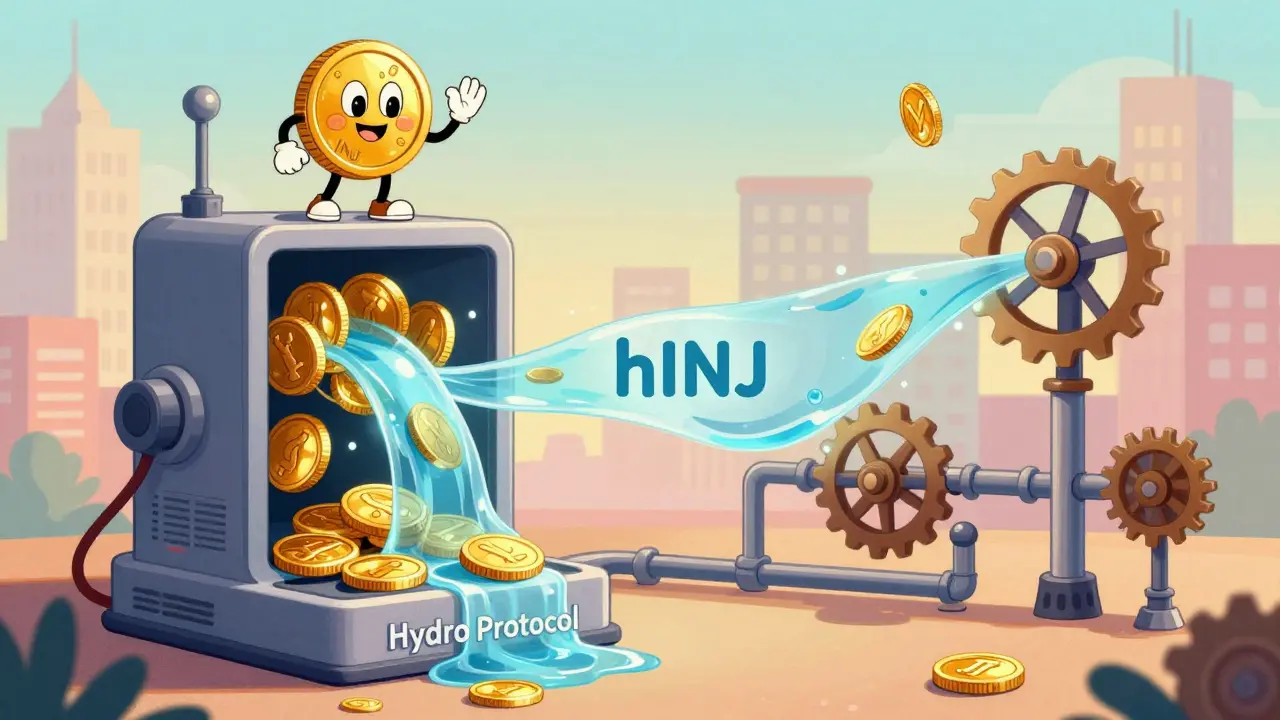
Hydro Protocol fixes this by introducing Liquid Staking Derivatives (LSDs). Here’s how it works in plain English:
- Deposit: You send your INJ tokens to the Hydro Protocol smart contract.
- Mint: In return, you receive hINJ (Hydro INJ). This is a receipt token that represents your staked INJ plus any accrued rewards.
- Use: While your original INJ is working hard securing the Injective network, you still have hINJ in your wallet. You can trade hINJ, use it as collateral for loans, or deposit it into other yield-generating strategies within the Hydro ecosystem.
This mechanism unlocks capital efficiency. Instead of your money sitting still, it’s actively participating in two different revenue streams simultaneously. This is the foundation of the LSDFi (Liquid Staking Derivative Finance) sector, which has grown explosively since 2024.
Beyond Simple Staking: The RYA System
If Hydro stopped at liquid staking, it would be just another Lido or Rocket Pool clone. But its unique selling point is the Real Yielding Asset (RYA) framework. Most DeFi protocols promise yields based on inflationary token emissions-basically printing new coins to pay users. Hydro aims for "real yield," meaning profits come from actual fees and interest generated by the protocol.
The RYA system aggregates multiple yield sources into a single, optimized product. Think of it like an automated index fund for crypto yields. Instead of manually moving your funds between lending pools, liquidity mines, and staking contracts, the RYA algorithm does it for you. It rebalances your position to chase the highest risk-adjusted returns available on the Injective network.
This approach integrates concepts from Real World Assets (RWA), bringing institutional-grade diversification strategies to the decentralized world. By bundling these yields, Hydro reduces the complexity for users who might otherwise struggle to manage multiple positions across different DeFi platforms.
The HDRO Token: Utility and Governance
Every protocol needs a native token to function, and Hydro’s is HDRO. It serves two primary purposes:
- Governance: HDRO holders vote on critical decisions, such as which yield strategies the RYA system should prioritize. This happens through the "Hydro Wars" mechanism, where community consensus dictates the flow of capital.
- Revenue Sharing: This is the big draw. When you stake your HDRO tokens back into the Hydro Protocol, you become eligible for a share of the platform’s revenue. Reports indicate that stakers can receive up to 30% of all incoming revenue generated by the protocol. This aligns the interests of the developers, the investors, and the users.
As of mid-2026, the total supply of HDRO is capped at 1 billion tokens. The circulating supply hovers around 246 million to 356 million tokens, depending on the exchange data source. This relatively low float compared to major caps contributes to its volatility.

Market Reality: Volatility and Liquidity Challenges
Let’s talk numbers, because the price action tells a different story than the technical promise. Hydro Protocol is a micro-cap project. With a market capitalization often fluctuating below $2 million, it sits far outside the mainstream crypto spotlight.
| Metric | Value |
|---|---|
| All-Time High | $0.5079 (March 2024) |
| All-Time Low | $0.0140 (April 2025) |
| Current Price Range | $0.0025 - $0.0027 |
| Market Cap Rank | #4770+ |
| Primary Exchange | Gate.io |
The disparity between its all-time high and current price is stark. From a peak of over 50 cents, HDRO has dropped significantly, reflecting broader market corrections and specific challenges within the project. One major issue is liquidity. Because HDRO trades primarily on smaller exchanges like Gate.io, executing large orders can result in significant slippage. If you try to buy or sell a large amount, you might move the price against yourself simply because there aren’t enough buyers or sellers in the pool.
Furthermore, the token’s performance has lagged behind broader market trends. A 30-day decline of over 30% in early 2026 highlights the risks associated with niche DeFi tokens. They lack the institutional backing and deep liquidity pools of giants like Ethereum or Solana.
How to Use Hydro Protocol: A Step-by-Step Guide
If you decide to experiment with Hydro, here is the practical workflow. Note that this requires some technical comfort with Web3 wallets.
- Set Up a Wallet: You need a wallet compatible with the Injective chain. Keplr is the most popular choice. Download it and secure your seed phrase offline.
- Acquire INJ: Buy INJ on a major centralized exchange (like Binance or Coinbase) and withdraw it to your Keplr wallet address on the Injective network.
- Connect to Hydro: Navigate to the Hydro Protocol interface. Connect your Keplr wallet. Ensure you are on the correct network (Injective Mainnet).
- Stake INJ for hINJ: Go to the LSD Minting section. Deposit your INJ. You will instantly receive hINJ in return. Your INJ is now staked and earning base rewards.
- Optimize Yields (Optional): Take your hINJ and deposit it into an RYA strategy. This exposes your assets to additional yield sources managed by the protocol’s algorithms.
- Acquire HDRO (For Governance): If you want to vote or earn revenue shares, you’ll need to buy HDRO tokens from an exchange like Gate.io and transfer them to your Injective wallet.
The learning curve is moderate. Users report spending 15-20 hours fully understanding the nuances of yield configuration. Don’t rush it. Misconfiguring a yield strategy can lead to suboptimal returns or unexpected exposure to smart contract risks.

Risks and Considerations
No investment is without risk, and Hydro Protocol carries several specific ones:
- Ecosystem Dependency: Hydro’s success is tied entirely to the growth of the Injective Network. If Injective loses relevance, Hydro’s utility diminishes rapidly. Analysts note this creates significant "ecosystem risk."
- Smart Contract Risk: As with all DeFi, bugs in the code can lead to losses. While Hydro has undergone audits, the complexity of its RYA system increases the attack surface.
- Liquidity Risk: Exiting your position during a market crash might be difficult due to low trading volume. You could be stuck holding illiquid assets.
- Regulatory Uncertainty: The SEC’s evolving stance on DeFi tokens, particularly those offering revenue sharing, poses a potential legal hurdle for projects like Hydro in the United States.
Future Outlook: Cross-Chain Ambitions
The Hydro team is aware of its limitations. Being confined to Injective restricts its user base. Their roadmap for late 2025 and 2026 focuses heavily on cross-chain expansion. The goal is to allow hINJ liquidity to flow onto Ethereum and Cosmos ecosystems. If successful, this could dramatically increase adoption and reduce the reliance on a single blockchain’s fortunes.
Partnerships with oracle providers like Chainlink aim to strengthen the RYA framework’s data integrity, making the yield calculations more robust. However, execution is key. Many projects promise cross-chain features but fail to deliver seamless integration. Investors should watch for tangible updates rather than just announcements.
Is Hydro Protocol a good investment?
Hydro Protocol is a high-risk, high-reward speculative asset. It offers innovative yield mechanisms but suffers from low liquidity and heavy dependence on the Injective ecosystem. Only invest what you can afford to lose, and ensure you understand the technical risks involved.
What is the difference between INJ and hINJ?
INJ is the native token of the Injective blockchain. hINJ is a derivative token issued by Hydro Protocol representing staked INJ. Holding hINJ allows you to participate in other DeFi activities while your underlying INJ earns staking rewards.
Where can I buy HDRO tokens?
HDRO is primarily traded on Gate.io. It may also be available on smaller decentralized exchanges within the Injective ecosystem. Always verify the contract address to avoid scams.
Does Hydro Protocol charge fees?
Yes, like most DeFi protocols, Hydro charges performance fees and management fees on the yields generated by its strategies. These fees contribute to the revenue pool shared with HDRO stakers.
Is Hydro Protocol safe?
Safety in DeFi is never guaranteed. Hydro has undergone security audits, but smart contract vulnerabilities and external hacks remain possible. Additionally, the low liquidity means exiting positions can be risky during market downturns.
Terry Hyland
June 18, 2026 AT 19:49its all a scam. they want your money and then they run away with it. i dont trust any of this crypto stuff because the big banks are trying to control us but these new coins are just another way for rich people to steal from normal folks. you should keep your cash under the mattress instead.
Monica Pathammavong
June 20, 2026 AT 06:55actually u need to understand that liquid staking is not just about holding tokens its about maximizing yield through complex strategies like RYA which aggregates multiple sources of income so ur idle assets work harder for u. most ppl dont get that nuance and just blindly buy in without reading the whitepaper or understanding the smart contract risks involved in DeFi protocols on niche chains like Injective. also the typo in ur comment shows u didnt even read the post properly before typing garbage.
Tim Lefebvre
June 21, 2026 AT 22:53hey there! i think terry is just worried about scams which is fair but hydro does have some cool tech. if u r interested in trying it out make sure u use keplr wallet and double check the network settings before sending any inj tokens. its easy to make a mistake if u rush into it. let me know if u need help setting up the wallet i can walk u thru it step by step no worries at all!
Fede Faith
June 22, 2026 AT 01:57I’ve been tracking Injective ecosystem projects for a while now, and Hydro’s approach to Real Yielding Assets is genuinely interesting. The shift away from inflationary token emissions toward fee-based revenue sharing aligns better with sustainable DeFi models we saw emerge post-2022. That said, the liquidity depth on Gate.io remains a critical bottleneck. If you’re considering entering, treat it as a high-risk satellite position, not a core holding. The cross-chain roadmap is ambitious, but execution will be the true test of their utility beyond the Injective silo.
Josh Dodson
June 23, 2026 AT 08:03you got this man! diving into defi can be scary but learning is key. hydro looks promising for those who want to experiment with yield farming on injective. just remember to start small and never invest more than you can afford to lose. the community here is great so feel free to ask questions if you get stuck. stay positive and keep learning every day!
Suman Patil
June 24, 2026 AT 05:47namaste friends! the concept of LSDs on Injective is quite revolutionary when you consider the capital efficiency gains. by minting hINJ you unlock liquidity without unstaking which is a massive advantage for active traders. however one must remain vigilant regarding smart contract audits and the overall health of the Injective chain itself. let us support each other in this journey towards financial freedom through decentralized finance technologies. peace and prosperity to all seekers of truth!
Grace Newman
June 25, 2026 AT 08:41It is imperative to note that the regulatory landscape surrounding such instruments remains fraught with uncertainty. The Securities and Exchange Commission has yet to provide clear guidance on whether tokens offering revenue shares constitute securities. Therefore, participants must exercise extreme caution and consult legal counsel before engaging with platforms that may inadvertently violate federal regulations. The allure of yield must not obscure the potential for severe legal repercussions.
Annemarie Fitzgerald
June 26, 2026 AT 12:30i feel like everyone is missing the point here. its not about the money its about the philosophy of decentralization. but really who are we to judge? maybe the collapse of value is part of the cosmic plan. i sit here in my room thinking about the void and how our digital tokens mean nothing in the grand scheme of things. anyway good luck with your gambling habits.
Abby Sivertsen
June 27, 2026 AT 16:09look i get the hype but the slippage on gate.io is insane. tried moving a decent amount and lost half the value just in fees and spread. its frustrating when a project has good tech but terrible market structure. until they list on bigger exchanges this is just a trap for retail investors. save yourself the headache and stick to blue chips.
Benjamin Eisen
June 27, 2026 AT 19:46i hear you abby. the liquidity issue is real. im currently testing the waters with a small amount of inj to see how the hinj behaves during volatility. so far the yields seem decent compared to just staking raw inj. would love to hear if anyone else has had success withdrawing large amounts without getting wrecked by slippage. lets share our experiences so we can all learn together.
ravi mahla
June 27, 2026 AT 21:30oh wow another coin promising moonshots. yeah right. first they say its revolutionizing yield then next week its down 90%. typical story. but hey if you enjoy losing money go ahead and ape in. i’ll be over here laughing while holding my btc. sarcasm aside the tech might be okay but the tokenomics are trash.
Mark Brunschwiler
June 28, 2026 AT 14:33why do you guys care so much? its just numbers on a screen. my life is hard enough without worrying about crypto yields. i just want someone to listen to my problems but nobody does. instead we talk about hydro protocol. pathetic. really pathetic. why am i even reading this?
Sonya O'Brien
June 29, 2026 AT 08:28I completely agree with the sentiment expressed regarding the need for careful consideration of the various factors involved in participating in decentralized finance ecosystems such as the one described herein, particularly given the inherent complexities associated with liquid staking derivatives and the specific nuances pertaining to the Injective network infrastructure which serves as the foundational layer upon which these innovative financial instruments are built and operated within the broader context of blockchain technology adoption trends observed globally over recent years.
Filbert Reeves
June 30, 2026 AT 21:58everyone says its safe because of audits but audits are useless if the devs are backdoored. i bet the team is dumping their tokens slowly while telling you to hodl. look at the chart its a classic pump and dump pattern disguised as innovation. they want you to believe in the narrative of real yield but its just marketing speak for stealing your principal. wake up sheeple.
Nick Rice
July 2, 2026 AT 18:11Let's cut through the noise. The metrics speak for themselves. Market cap under $2M means this is pure speculation. If you're looking for stability, look elsewhere. If you're looking for asymmetric upside and understand the risks of illiquidity and smart contract failure, then proceed with caution. I respect those who do their own due diligence rather than following herd mentality. Stay sharp out there.
Amit Thakur
July 2, 2026 AT 21:44Bhai listen carefully! The RWA integration is the future. When traditional finance meets DeFi via protocols like Hydro the alpha is massive. You need to understand the yield aggregation algorithms to truly benefit. Don't just stake and forget. Actively manage your positions using the data provided by Chainlink oracles. This is how we build wealth in the digital age. Join the revolution today!
Eric Scheinberg
July 2, 2026 AT 21:47The structural integrity of the Hydro Protocol relies heavily on the continuous expansion of the Injective ecosystem. Cross-chain interoperability remains the primary catalyst for sustained growth. Investors should monitor the implementation timeline for Ethereum bridging capabilities closely. Precision in execution will determine long-term viability.