What is Hydro Protocol (HDRO)? A Guide to Injective’s Liquid Staking
 Jun, 18 2026
You’ve probably heard of Ethereum and Bitcoin. You might even know about Solana or Avalanche. But have you heard of Hydro Protocol, a specialized financial infrastructure built on the Injective Network? If not, you’re not alone. It’s a niche player in the massive world of decentralized finance (DeFi), specifically focusing on something called Liquid Staking Derivatives Finance (LSDFi). While giants like Lido dominate the headlines, projects like Hydro are carving out specific roles within smaller, high-performance ecosystems.
So, what exactly is this thing? In short, it’s a platform that lets you stake INJ (the native token of the Injective blockchain) without locking your assets up completely. Instead, you get a receipt token back that you can use elsewhere. It sounds simple, but the mechanics involve governance, yield optimization, and some unique risks. Let’s break down how it works, why it exists, and whether that HDRO token is worth your attention in 2026.
The Core Problem: Locked Liquidity
To understand Hydro, you first need to understand the problem it solves. In Proof-of-Stake blockchains like Injective, validators secure the network by holding (staking) tokens. When you stake your INJ, those tokens are essentially frozen. You earn rewards, sure, but you can’t sell them if the market crashes, and you can’t use them as collateral in other DeFi apps. This is known as illiquidity.
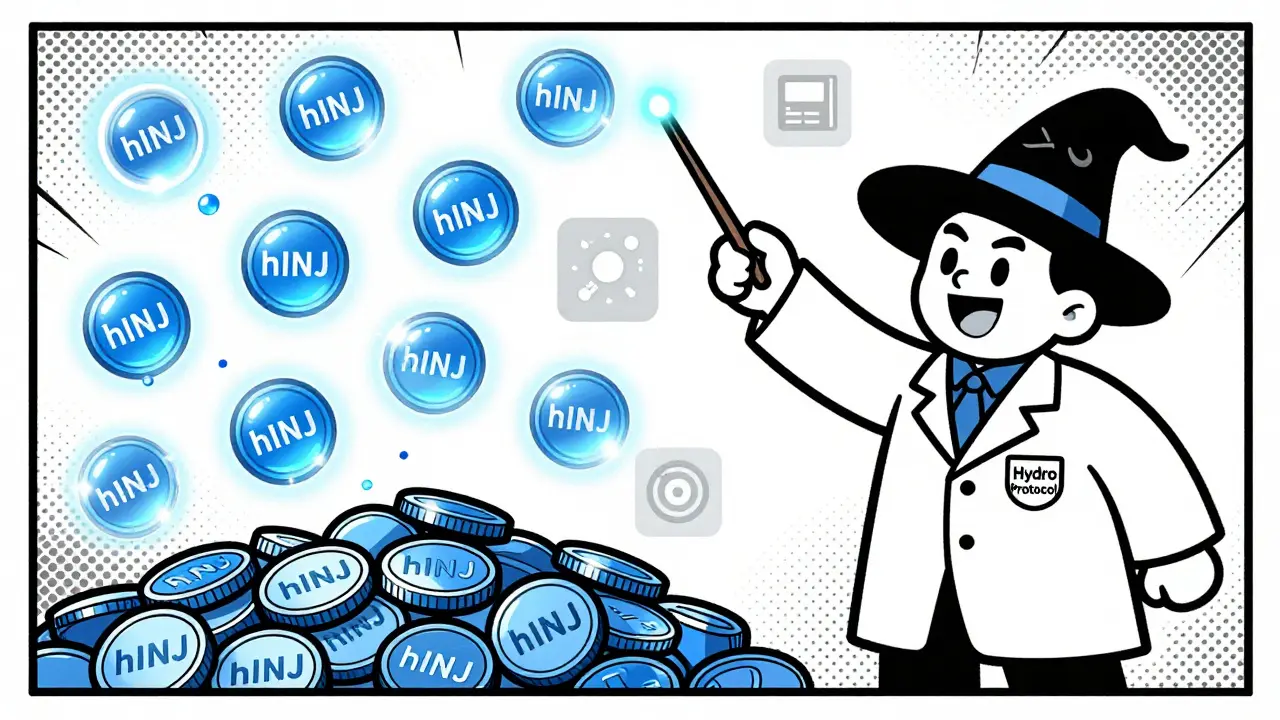
Liquid staking protocols solve this by giving you a derivative token when you stake. For Hydro, this token is hINJ. Think of hINJ as a digital receipt. It proves you own staked INJ and accrues value over time, but unlike your original INJ, hINJ is free-flowing. You can trade it, lend it, or use it in other applications while still earning staking rewards. This unlocks capital efficiency, allowing your money to work harder for you.
How Hydro Protocol Works
Hydro isn’t just a basic staking wrapper. It operates exclusively on the Injective Network, a blockchain designed specifically for derivatives trading and high-speed DeFi. By staying single-chain, Hydro aims for deeper integration rather than broad compatibility. Here is the workflow:
- Stake INJ: You deposit INJ into the Hydro protocol.
- Receive hINJ: The protocol mints hINJ tokens and sends them to your wallet. These represent your staked position.
- Earn Yield: Your underlying INJ earns staking rewards from the Injective network. Additionally, Hydro aggregates these yields through its Real Yielding Asset (RYA) system.
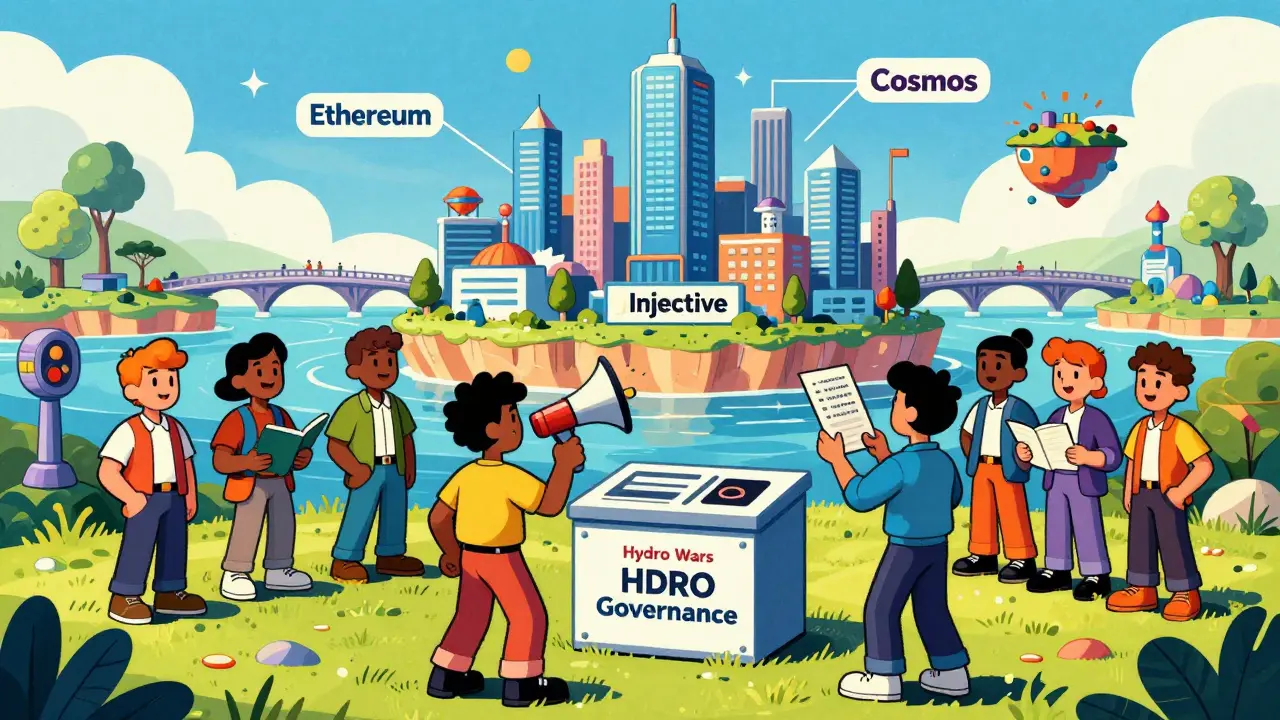
- Governance: If you hold the HDRO token, you can vote on how the protocol manages its liquidity and yield strategies. This feature is called "Hydro Wars."
The RYA framework is Hydro’s unique selling point. It doesn’t just passively collect staking rewards; it actively aggregates multiple yield sources into a single optimized product. This means your hINJ might be earning not just standard staking APY, but also yields from lending markets or other DeFi integrations within the Injective ecosystem.
The HDRO Token: Utility and Governance
Every protocol has a token, and HDRO is no exception. But what does it actually do? It serves two primary purposes:
- Governance: HDRO holders decide the future of the protocol. Through the "Hydro Wars" mechanism, voters choose which yield strategies to prioritize. Do we focus on high-risk, high-reward lending? Or stable, low-yield staking? The community decides.
- Revenue Sharing: This is the kicker. Stakers of HDRO can receive up to 30% of the protocol’s revenue share. This creates a direct incentive for users to lock their tokens, aligning their interests with the health of the platform.
As of mid-2026, the tokenomics show a maximum supply of 1 billion HDRO. However, circulating supply figures vary across exchanges, with reports ranging from 246 million to 356 million tokens in circulation. This discrepancy is common in newer DeFi projects where vesting schedules and burns aren't always perfectly synchronized across data aggregators. Always check the latest on-chain data before making decisions.
Market Performance and Reality Check
Let’s talk numbers, because hype doesn’t pay bills. Hydro Protocol is a small-cap project. As of early 2026, its market capitalization hovers around $1.79 million. Compare that to Lido Finance, which boasts a market cap in the billions. This size difference tells us a lot about risk and opportunity.
| Feature | Hydro Protocol (HDRO) | Lido Finance (LDO) | Rocket Pool (RPL) |
|---|---|---|---|
| Primary Chain | Injective | Ethereum (Multi-chain) | Ethereum |
| Market Cap (Approx.) | $1.79 Million | $1.2 Billion | $380 Million |
| Unique Feature | Real Yielding Assets (RYA) | Dominant Market Share | Decentralized Node Operators |
| Risk Profile | High (Niche/Ecosystem Dependent) | Medium (Established) | Medium (Established) |
Hydro’s price has been volatile. It hit an all-time high of roughly $0.51 in March 2024, driven by the initial excitement of its mainnet launch. Since then, like many altcoins, it has corrected significantly, trading in the $0.0025-$0.0027 range in early 2026. A 30-day decline of over 30% highlights the speculative nature of small-cap DeFi tokens. If you buy HDRO, you aren’t just betting on Hydro; you’re betting on the continued growth of the entire Injective ecosystem.
Pros and Cons: Is It Worth It?
No investment is perfect. Here is a balanced look at what makes Hydro interesting and what keeps investors awake at night.
The Good:
- Innovation: The combination of Liquid Staking with Real World Assets (RWA) via the RYA system is forward-thinking. It attempts to bridge crypto yields with more traditional asset classes.
- Deep Integration: Because it lives only on Injective, Hydro can optimize for speed and cost in ways multi-chain protocols cannot. Transactions are fast and fees are low.
- User Base Growth: With over 60,000 users since launch, there is genuine adoption within the Injective community.
The Bad:
- Liquidity Issues: Small market cap means low trading volume. Trying to sell a large amount of HDRO could result in significant slippage (you getting less money than expected due to thin order books).
- Ecosystem Risk: If Injective loses popularity, Hydro suffers disproportionately. It lacks the cross-chain safety net that competitors enjoy.
- Exchange Availability: HDRO is primarily traded on Gate.io and a few other niche platforms. It is not widely available on major centralized exchanges like Coinbase or Binance, making entry and exit harder for average retail investors.
How to Get Started with Hydro Protocol
If you’ve decided to take the plunge, here is how you actually use the protocol. Keep in mind that this requires some technical comfort with Web3 wallets.
- Set Up a Wallet: You’ll need a wallet compatible with Injective, such as Keplr. Install the browser extension and create a new account. Write down your seed phrase and store it offline. Never share it.
- Acquire INJ: Buy INJ on a major exchange (like Binance or Coinbase) and withdraw it to your Keplr wallet address on the Injective network. Make sure you select the correct network (Injective) during withdrawal.
- Connect to Hydro: Navigate to the official Hydro Protocol interface. Connect your Keplr wallet.
- Stake for hINJ: Deposit your INJ into the LSD Minting module. You will receive hINJ in return. These tokens are now yours to trade or use in other DeFi apps.
- Participate in Governance (Optional): If you acquire HDRO tokens, you can stake them to vote on yield strategies and earn a share of the protocol’s revenue.
Expect a learning curve. New users report spending 15-20 hours understanding the nuances of yield optimization and strategy configuration. Start small. Test with a tiny amount of INJ before committing significant capital.
The Future: Cross-Chain Expansion
Hydro’s team knows its biggest weakness is being stuck on one chain. Their roadmap for late 2025 and 2026 includes cross-chain expansion, aiming to bring hINJ liquidity to Ethereum and Cosmos ecosystems. They also partnered with Chainlink in late 2025 to improve oracle infrastructure for their RYA products. If they pull this off, it could dramatically increase their total addressable market. If they fail, they remain a niche tool for a niche chain. Watch their GitHub activity and official announcements closely-code commits speak louder than marketing tweets.
Is Hydro Protocol safe to use?
Like all DeFi protocols, Hydro carries smart contract risk. While it has undergone audits, no code is 100% immune to bugs. Additionally, because it is a small-cap project, it faces higher regulatory and liquidity risks compared to established giants. Only invest what you can afford to lose.
What is the difference between INJ and hINJ?
INJ is the native staking token of the Injective network. When you stake it, it becomes locked. hINJ is a liquid derivative token issued by Hydro Protocol that represents your staked INJ. You can trade hINJ freely while still earning the underlying staking rewards.
Can I buy HDRO on Coinbase or Binance?
As of 2026, HDRO is not listed on major centralized exchanges like Coinbase or Binance. It is primarily available on Gate.io and some decentralized exchanges within the Injective ecosystem. This limited availability contributes to lower liquidity and higher volatility.
What is the "Real Yielding Asset" (RYA)?
RYA is Hydro’s proprietary framework that aggregates multiple yield sources-including staking rewards, lending interest, and potentially Real World Asset yields-into a single optimized product. It aims to provide higher and more diversified returns than simple staking alone.
Why is HDRO price so volatile?
HDRO has a low market capitalization (under $2 million) and limited trading volume. In small markets, relatively small buy or sell orders can cause large price swings. Additionally, its value is tied to the performance of the Injective ecosystem, adding another layer of volatility.