What is Macro Millions (MACRO)? Mechanics, Risks, and Current Status in 2026
 Jul, 17 2026
Imagine a cryptocurrency that actively destroys your own holdings just so you can enter a digital raffle. That is the exact premise behind Macro Millions, also known by its ticker symbol MACRO. It is not a standard investment coin like Bitcoin or Ethereum. Instead, it is a high-risk, gamified experiment built on the Base blockchain designed for people who understand complex probability math and want to gamble with decentralized finance tools.
If you stumbled upon this name because of a social media post promising easy wins, stop and read carefully. By mid-2026, Macro Millions has largely faded from active trading, sitting near its all-time low price with almost no daily volume. Understanding what happened here requires looking at how the token works, why it launched, and where it stands today.
The Core Concept: A Debasing Lottery Token
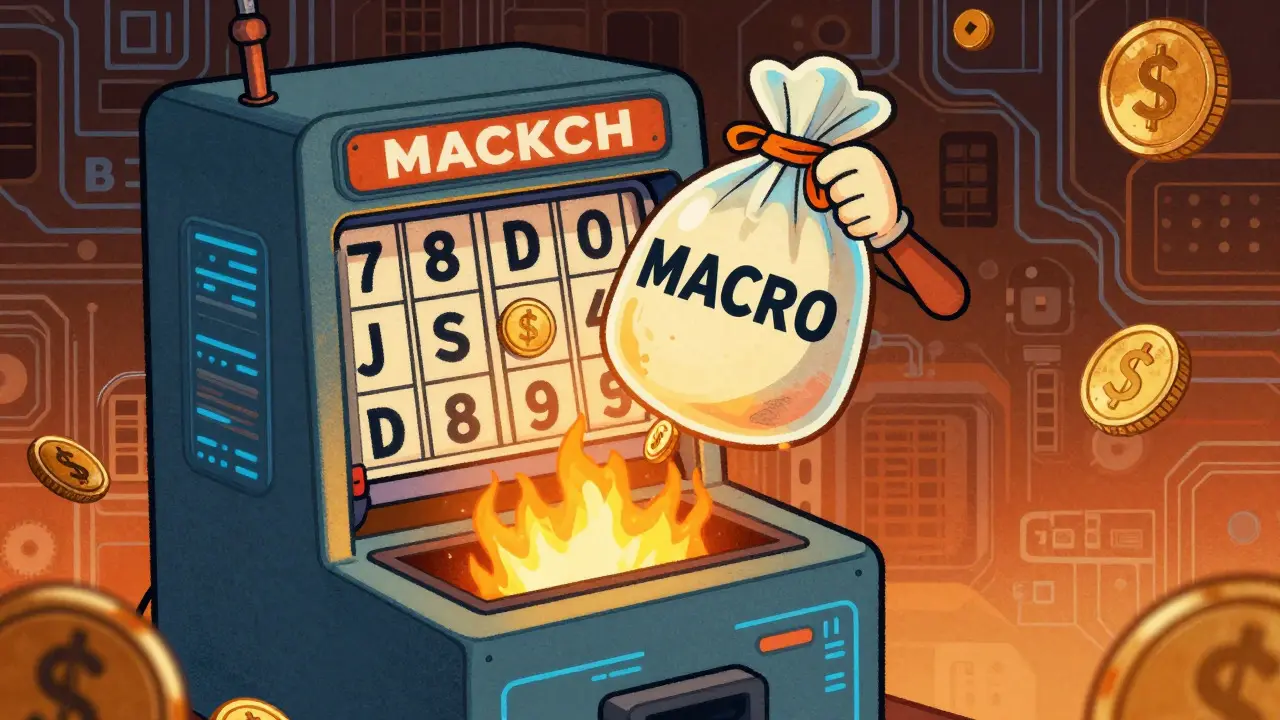
At its heart, Macro Millions is a raffle-powered debasing token. The term "debasing" is crucial here. In most cryptocurrencies, your supply stays the same unless you sell it. With MACRO, holding the token without staking it means you are slowly losing tokens over time. This burn mechanism funds the prize pool for the raffles.
Here is the trade-off every holder faces:
- Unstaked Holdings: You keep your MACRO tokens in your wallet. They automatically enter USDC raffles every six hours. However, a portion of your balance is burned (destroyed) to pay for these entries. You risk losing principal value for a chance at a cash prize.
- Staked Holdings: You lock your tokens into the protocol. Your supply stops shrinking, protecting your capital. But you forfeit any chance of winning the raffles.
This design targets "expected-value maximalists"-a niche group of traders who calculate whether the potential payout outweighs the guaranteed loss of their token count. For the average investor, this structure feels more like an online casino than a financial asset.
How the Raffle System Works
The technical backbone of Macro Millions relies on two major pieces of infrastructure: the Base network and Chainlink Verifiable Random Function (VRF).
Base is an Ethereum Layer-2 solution known for low transaction fees. This is important because the raffles happen frequently-every six hours. If gas fees were high, the cost of entering would eat up any winnings. Chainlink VRF provides the randomness. Unlike older systems that might take a snapshot of holders off-chain (which can be manipulated), Chainlink generates a provably fair random number directly on the blockchain. This ensures that when a winner is picked for the USDC prize, the process is transparent and cannot be rigged by the developers.
You do not need to click a button to enter. As long as you hold unstaked MACRO, the smart contract handles the entry logic automatically. The prizes are paid out in USDC, a stablecoin pegged to the US dollar, which adds a layer of real-world value to the otherwise volatile token ecosystem.
Origin and Early Volatility
Macro Millions launched in late July 2025, specifically around July 31 to August 1. Like many new meme or gamified coins, it experienced a massive initial spike followed by a steep decline.
Data from trackers shows an All-Time High (ATH) price ranging between $0.0167 and $0.0219 USD during that first week of August 2025. At its peak, daily trading volumes hit hundreds of thousands of dollars, indicating intense speculative interest. Traders were buying in hopes of quick flips or lucky raffle wins.
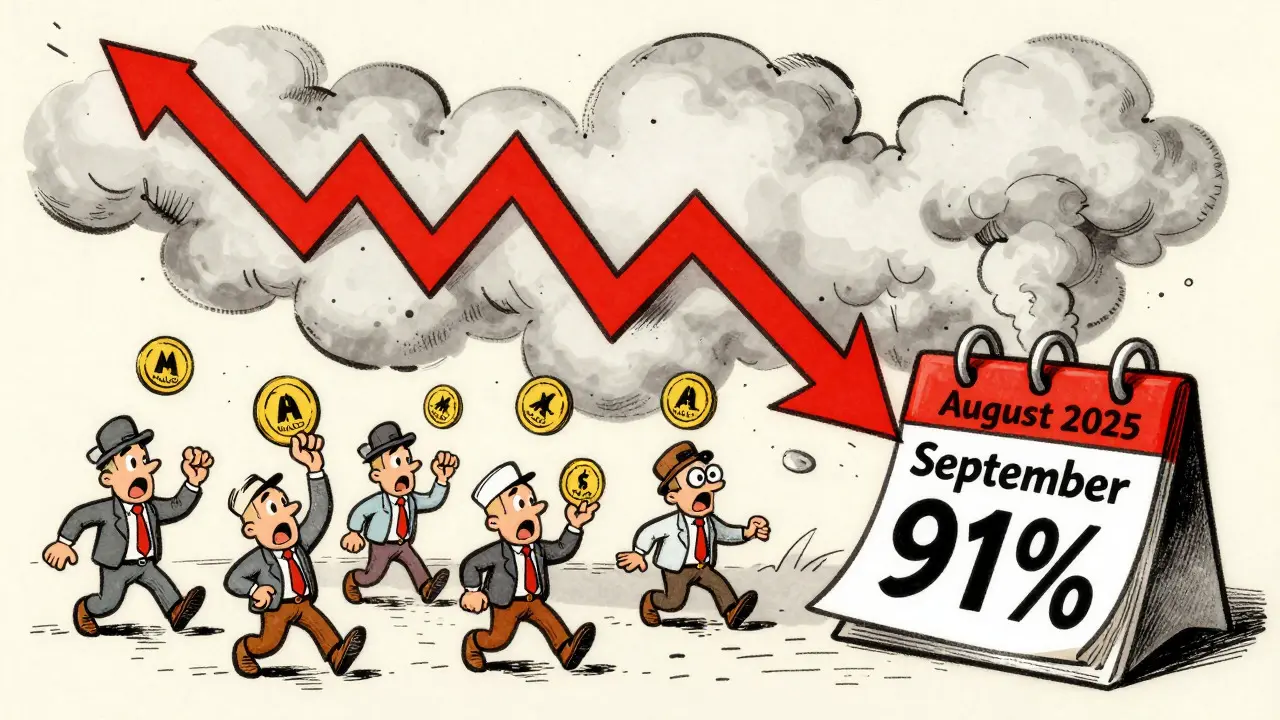
However, the hype did not last. By September 2025, the price had already dropped by roughly 91% from its peak. This pattern is common in the crypto space, especially for tokens with debasing mechanics. As early buyers took profits, the remaining holders faced increasing pressure from the token burn rate, accelerating the downward trend.
Current Market Status in 2026
Fast forward to July 2026, and the picture looks very different. Macro Millions is currently classified as a micro-cap asset with negligible liquidity.
| Metric | Value |
|---|---|
| Price | ~$0.000238 - $0.000240 USD |
| 24-Hour Volume | $5.00 - $13.00 USD |
| Fully Diluted Valuation (FDV) | ~$238,000 USD |
| Market Rank | #5,000+ (varies by tracker) |
| Trading Activity | Nearly dormant; sporadic swaps only |
The price has flatlined near its all-time low. Daily trading volumes are often less than $15, meaning there is almost no one buying or selling the token. Some data sources even indicate that trading ceased on tracked exchanges for periods in June and July 2026. Without liquidity, exiting a position becomes difficult; if you try to sell a large amount, you could crash the price further due to slippage.
Tokenomics and Supply Details
Understanding the supply helps explain the valuation. Macro Millions has a maximum supply cap of 1.00 billion tokens. However, the circulating supply figures vary across platforms due to the ongoing burn mechanism and inconsistent reporting.
- Max Supply: 1,000,000,000 MACRO
- Total Supply: Approximately 881 million to 889 million MACRO
- Circulating Supply: Estimates range widely, but FDV calculations assume the full 1 billion cap.
The discrepancy in circulating numbers highlights a challenge with experimental tokens: accurate tracking is hard. Regardless of the exact count, the fully diluted valuation (the total value if all tokens were in circulation) remains under $250,000. This places Macro Millions far outside the realm of mainstream investments. It is a niche project with minimal economic footprint compared to top-tier DeFi protocols.
Where Can You Trade MACRO?
You will not find Macro Millions on major centralized exchanges like Binance or Coinbase. These platforms explicitly state they do not list the coin for direct trading due to its high risk and low liquidity. Crypto.com tracks the price but notes it is "not tradable yet" on their exchange.
To interact with MACRO, you must use decentralized exchanges (DEXs) on the Base network. The primary venues are:
- Uniswap V2/V3 on Base: This is where the remaining liquidity pools reside. You can swap ETH or USDC for MACRO here.
- Bitget Web3 Swap: Offers access to the token via its non-custodial interface.
Because you are using a DEX, you need an EVM-compatible wallet like MetaMask, bridged funds onto the Base network, and a willingness to pay small gas fees. There is no customer support if something goes wrong, and no recourse if the smart contract behaves unexpectedly.
Risks and Considerations
Before considering any interaction with Macro Millions, you should weigh several critical risks:
- Liquidity Risk: With daily volumes in single digits, selling your tokens may be impossible without significant loss. You could be stuck holding a bag of worthless assets.
- Debasement Risk: If you hold unstaked, your token count decreases over time. If the price does not rise enough to offset this burn, you lose money purely by holding.
- Smart Contract Risk: While Chainlink VRF is secure, the underlying Macro Millions contract itself has not undergone widespread public audit scrutiny comparable to blue-chip DeFi projects. Bugs or exploits could lead to total loss of funds.
- Regulatory Uncertainty: Tokens functioning as lotteries may face legal challenges in various jurisdictions regarding gambling laws. This lack of clear regulatory status deters institutional adoption.
Analysts describe MACRO as a tool for "EV maximalists," implying it is suitable only for those who can model expected value accurately and afford to lose their entire investment. For casual investors, the complexity and risk profile make it unsuitable.
Conclusion on Macro Millions
Macro Millions represents a specific moment in crypto history: the experimentation phase of gamified DeFi on Layer-2 networks. While the concept of an on-chain, verifiable raffle is technically interesting, the market has spoken. After a brief burst of speculation in late 2025, the token has collapsed in value and activity.
As of mid-2026, it serves more as a case study in volatility and niche mechanics than a viable investment opportunity. If you are curious about DeFi innovation, studying its code and mechanics offers educational value. But expecting financial returns from MACRO today is akin to buying a ticket for a closed lottery.
Is Macro Millions (MACRO) a scam?
There is no definitive evidence labeling Macro Millions as a outright scam in the traditional sense of stolen funds. However, it is a highly speculative, high-risk asset with a debasing supply that loses value over time. The extreme drop in price and liquidity suggests that early adopters have exited, leaving later entrants with little value. Treat it as a gamble, not an investment.
Can I buy MACRO on Binance or Coinbase?
No. Major centralized exchanges like Binance and Coinbase do not list Macro Millions. You can only acquire it through decentralized exchanges (DEXs) like Uniswap on the Base blockchain, which requires technical knowledge of wallets and bridging.
How does the debasing mechanism work?
If you hold MACRO tokens unstaked, a portion of your balance is automatically burned (destroyed) to fund the USDC raffles. This reduces your total token count over time. Staking your tokens prevents this burn but removes you from the raffle eligibility.
Why is the trading volume so low in 2026?
After launching in 2025 with high hype, the token suffered a >90% price drop. Most speculative traders have exited the project. With few buyers and sellers remaining, daily volume has shrunk to negligible amounts, indicating a lack of active market interest.
What is the purpose of Chainlink VRF in Macro Millions?
Chainlink VRF provides provably fair randomness for selecting raffle winners. This ensures that the lottery results are generated on-chain and cannot be manipulated by the project developers, adding a layer of trust to the gambling mechanic.