What is MIRAI (MIRAI) Crypto Coin? AI Metaverse, Tokenomics & Risks Explained
 Jun, 13 2026
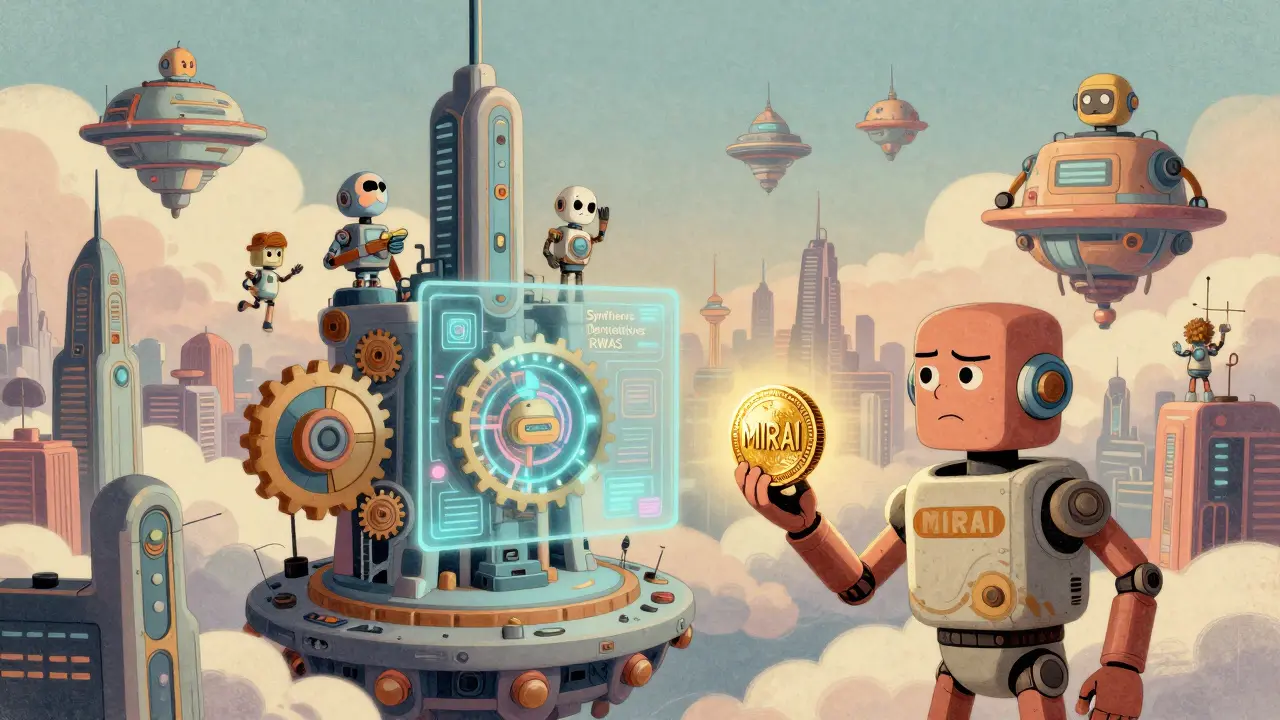
You’ve probably seen the ticker MIRAI pop up in your feed or on a chart. But before you click 'buy' or wonder why it’s down 99% from its peak, you need to know what you’re actually looking at. This isn’t just another meme coin hoping for viral fame. It’s positioned as an infrastructure layer for an AI-driven metaverse, mixing virtual worlds with something called 'Synthetic Derivative Real-World Assets' (RWAs). That sounds complex, and honestly, it is. The reality of MIRAI right now is that it’s a high-risk, micro-cap speculative asset with thin liquidity and a lot of unanswered questions about its execution.
What Exactly Is MIRAI?
MIRAI is an Ethereum-based cryptocurrency token powering an AI-driven metaverse platform focused on interconnected world-building and dynamic AI agent interactions. If you strip away the buzzwords, the project claims to offer three main things: virtual worlds where users can build and explore, AI agents that interact with those users dynamically, and a marketplace for synthetic assets tied to real-world value.
The official branding calls it "the first AI Metaverse with Synthetic Derivative RWAs." It relies on proprietary technology dubbed HyperGen to generate content and uses the Axelar network for cross-chain interoperability. However, while the vision is ambitious, the technical documentation available publicly is sparse. There are no detailed whitepapers outlining the algorithms behind HyperGen, nor are there clear explanations of how these synthetic assets are collateralized or regulated. For now, MIRAI functions primarily as a governance or utility token within this proposed ecosystem, rather than a fully realized product with millions of daily active users.
Tokenomics: Supply, Distribution, and Market Cap
When evaluating a small-cap crypto, the numbers tell you more than the marketing does. MIRAI operates on the Ethereum network as an ERC-20 token. Here is the breakdown of its supply structure:
- Total Supply: Approximately 1,000,000,000 MIRAI.
- Circulating Supply: Nearly 100% of the total supply is already in circulation (reported as 999,999,907 on some exchanges).
- Market Cap: As of recent snapshots, the market capitalization hovers around $71,700 USD, placing it firmly in the micro-cap category.
- Holders: Roughly 3,070 on-chain addresses hold the token.
The fact that almost the entire supply is circulating means there is little inflation risk from new token unlocks. However, it also raises concerns about concentration. With only about 3,000 holders, a few large wallets could potentially manipulate the price significantly. There is no public data on vesting schedules or team allocations, which makes it hard to assess if insiders still hold a controlling stake.
| Attribute | Value |
|---|---|
| Network | Ethereum (ERC-20) |
| All-Time High (ATH) | $0.01873 - $0.03123 (varies by source) |
| Current Price Range | $0.00007 - $0.00031 (highly volatile) |
| 24h Volume | Low ($0 - $1,500 depending on aggregator) |
| Contract Address | 0x42c83a91B3a79dE5488CD9280A4dF564e13A79EE |
Price History and Volatility
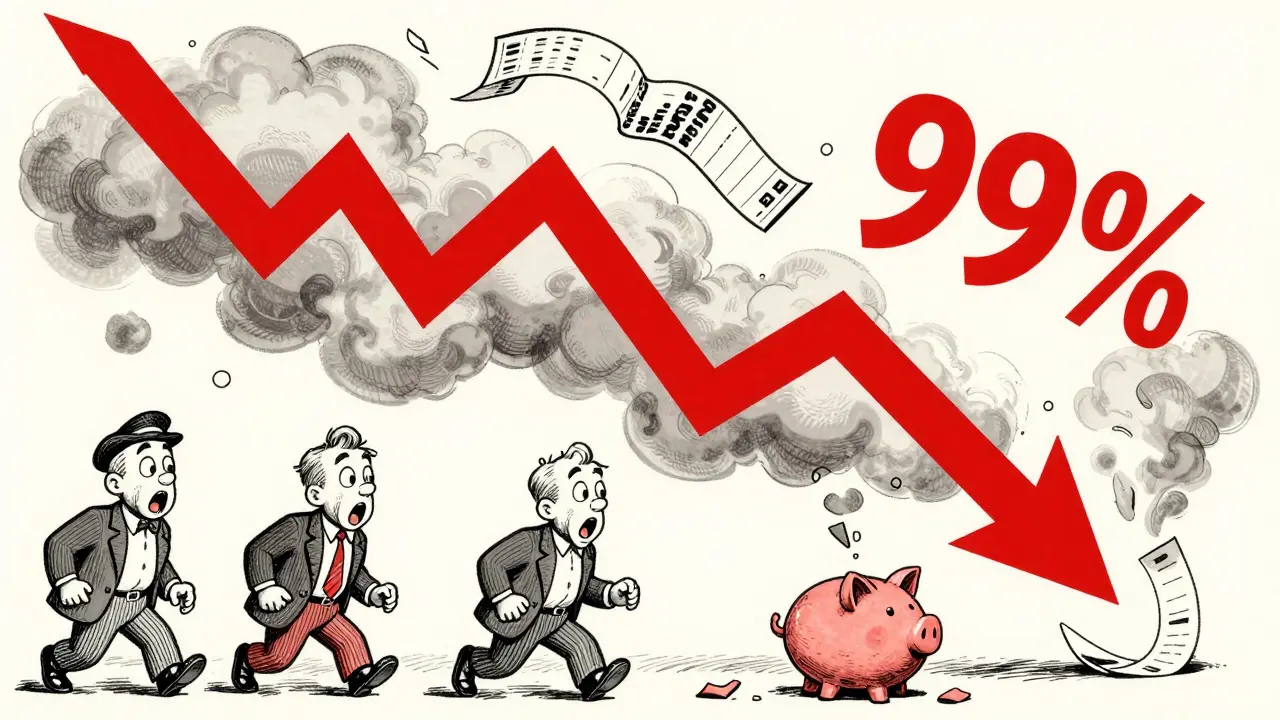
Let’s talk about the elephant in the room: the price action. MIRAI reached an all-time high between December 2024 and early 2025, with different aggregators reporting peaks ranging from $0.01873 to over $0.031. Since then, it has crashed dramatically. Recent data shows prices sitting below $0.0001, representing a drawdown of over 99% from its highs.
This level of volatility is typical for micro-cap tokens but dangerous for inexperienced investors. Trading volume is also inconsistent. Some days show zero volume on major trackers like CoinMarketCap, while others show modest activity on decentralized exchanges. Technical analysts using tools like CoinCodex have labeled the sentiment as "Bearish" with a Fear & Greed Index score indicating "Extreme Fear." Predictions suggest further downward pressure in the short term, though such forecasts should be taken with a grain of salt given the lack of fundamental drivers.
How to Buy and Store MIRAI
You won’t find MIRAI on major centralized exchanges like Binance or Coinbase for direct spot trading. Instead, you’ll need to use a decentralized exchange (DEX). Here is the practical process:
- Get a Wallet: Download a self-custody wallet like Trust Wallet or MetaMask.
- Buy ETH: Purchase Ethereum (ETH) on a centralized exchange and transfer it to your wallet.
- Connect to Uniswap: Use the DEX interface on Ethereum. Connect your wallet.
- Add the Token: Paste the official contract address (
0x42c83a91B3a79dE5488CD9280A4dF564e13A79EE) into the swap field. Be careful-scammers often create fake tokens with similar names. - Swap: Exchange your ETH for MIRAI. Expect high gas fees due to Ethereum network congestion.
Once bought, you can store MIRAI in any standard ERC-20 compatible wallet. For long-term holding, a hardware wallet like Ledger or Trezor is recommended to mitigate security risks.
Risks and Red Flags
Investing in MIRAI comes with significant risks that you must understand before committing funds:
- Liquidity Risk: With low trading volume, selling large amounts of MIRAI could crash the price instantly.
- Regulatory Uncertainty: The concept of "Synthetic Derivative RWAs" touches on securities laws. There is no clear information on whether the project complies with KYC/AML regulations or has legal backing for these assets.
- Team Opacity: While founders are listed as Paras Jha, Josiah White, and Dalton Norman, their specific roles, backgrounds, and current involvement are not well-documented. These names also appear in historical cybersecurity contexts unrelated to crypto, adding confusion.
- Execution Risk: The platform promises AI agents and metaverse integration, but there is limited proof of a working product with substantial user adoption.
MIRAI vs. Other Projects
Don’t confuse MIRAI (MIRAI) with other similarly named projects. For instance, there is a Mirai (MRI) token associated with an augmented reality platform and mobile gaming studio. MRI has a total supply of 16 million and focuses on social content creation. MIRAI (MIRAI) has a billion-token supply and focuses on AI metaverses and synthetic finance. They are completely separate entities with different technologies, teams, and use cases. Always check the ticker symbol and contract address to avoid buying the wrong asset.
Is MIRAI a safe investment?
No. MIRAI is a high-risk, micro-cap cryptocurrency with extreme volatility, low liquidity, and limited regulatory clarity. It has dropped over 99% from its all-time high. Only invest money you can afford to lose entirely.
Where can I buy MIRAI token?
MIRAI is not listed on major centralized exchanges. You must buy it via decentralized exchanges like Uniswap on the Ethereum network using the official contract address: 0x42c83a91B3a79dE5488CD9280A4dF564e13A79EE.
What is the difference between MIRAI and MRI?
MIRAI (MIRAI) is an AI metaverse token on Ethereum. MRI (Mirai) is a payment and AR token with a different supply and utility. They are unrelated projects. Check the ticker and contract address carefully.
Who founded the MIRAI project?
The project lists Paras Jha, Josiah White, and Dalton Norman as founders. However, detailed biographical information or governance structures are not publicly verified, raising transparency concerns.
What are Synthetic Derivative RWAs in MIRAI?
These are digital representations of real-world assets (like commodities or financial instruments) traded within the MIRAI metaverse. The project lacks clear documentation on how these assets are collateralized or regulated, posing significant risk.
Mauricio Contreras Loredo
June 14, 2026 AT 16:33oh great another coin that lost 99% of its value and now people are writing essays about it like it's the next bitcoin 😂
Kumaran sowkarpet
June 14, 2026 AT 23:36hey frnds, i think u should be very carefull with this one. the liquidity is super low so if u buy it might be hard to sell later. also the team info is not clear which is a big red flag for me. better safe than sorry right? :)
Grace Newman
June 15, 2026 AT 03:38It is imperative to note that the lack of regulatory oversight in such synthetic derivative structures often indicates a deliberate evasion of securities laws by unscrupulous entities seeking to exploit retail investors through obfuscation and complex terminology.
Filbert Reeves
June 16, 2026 AT 16:10look i dont trust any of these ai metaverse coins they are all just rug pulls waiting to happen the whole crypto space is rigged against us little guys and the big whales know everything before we do so why would this one be different it makes no sense at all
Nick Rice
June 16, 2026 AT 19:01You need to understand the fundamentals before jumping in. The tokenomics show nearly 100% supply circulating which means no inflation but also high concentration risk. Do your own research on the contract address and verify the liquidity pools yourself.
Abby Sivertsen
June 17, 2026 AT 04:29i feel like everyone is sleeping on the tech here but yeah the price action is brutal. just chill and watch it for a bit before doing anything stupid.
Sonya O'Brien
June 18, 2026 AT 15:45I have been following the development of AI-driven metaverses for quite some time now and while the concept of HyperGen technology sounds intriguing on paper the lack of detailed whitepapers or technical documentation regarding the algorithms behind it is concerning because without transparent proof of execution these projects often fail to deliver on their ambitious promises leaving investors with worthless tokens.
Amit Thakur
June 19, 2026 AT 19:04Bullish on the RWA narrative long term but this specific token has terrible volume metrics and slippage will eat you alive if you try to exit quickly so stay away unless you are an insider.
Eric Scheinberg
June 20, 2026 AT 09:52The market capitalization is approximately seventy-one thousand dollars which classifies it as a micro-cap asset with significant volatility risks associated with low liquidity and potential manipulation by large holders
pankaj chawla
June 21, 2026 AT 00:40We should focus on the utility rather than just the price. If the AI agents actually work as described this could be valuable but currently there is no product to speak of.
Jessica Lane
June 21, 2026 AT 03:36It is fascinating how the project claims to offer dynamic AI agent interactions yet provides no public interface or demo for users to test these features which raises questions about the actual progress of the platform development.
Charles Pawlikowski
June 23, 2026 AT 03:23this is pure scam material no doubt about it the founders are hiding behind fake names and the whole thing smells fishy stay away from this garbage ok :P
Andrea Burd
June 24, 2026 AT 04:48ugh another boring analysis of a dead coin. nobody cares about mirai anymore it is completely irrelevant in the current market cycle.
Akeem Whittaker
June 25, 2026 AT 03:22Check the contract address carefully before swapping. There are many scams out there trying to copy legitimate projects. Always use a hardware wallet for storage if you decide to hold.
Manish Prajapat
June 26, 2026 AT 21:01The philosophical implication of synthetic derivatives tied to real-world assets within a virtual environment challenges our understanding of value creation but practically speaking the execution risk remains extremely high.
John Doe
June 27, 2026 AT 00:00I cannot believe how much money people lose on these things every day it is absolutely tragic to see folks throwing their savings into micro-caps with zero fundamental backing.
Mekz Wheoki
June 28, 2026 AT 00:30you really think this is going anywhere? lol. keep dreaming kid.
Skm Shubham
June 29, 2026 AT 19:23This project exhibits classic signs of a failed startup with opaque leadership and unrealistic technological claims. Avoid at all costs.
Rob Aronson
June 30, 2026 AT 22:17The interoperability via Axelar is a nice touch theoretically but without active cross-chain bridges being utilized the benefit is null. 📉🔗
Kwon Bill
July 2, 2026 AT 12:51In the context of decentralized finance the lack of clear collateralization mechanisms for synthetic RWAs poses systemic risks that extend beyond individual token holders to the broader ecosystem stability.
sreeja boora
July 3, 2026 AT 00:15It is evident that the regulatory framework for such digital assets remains undefined which creates an environment conducive to fraudulent activities and investor exploitation.