What is PepsiCo Tokenized Stock (PEPX)? xStocks Explained
 Aug, 8 2026
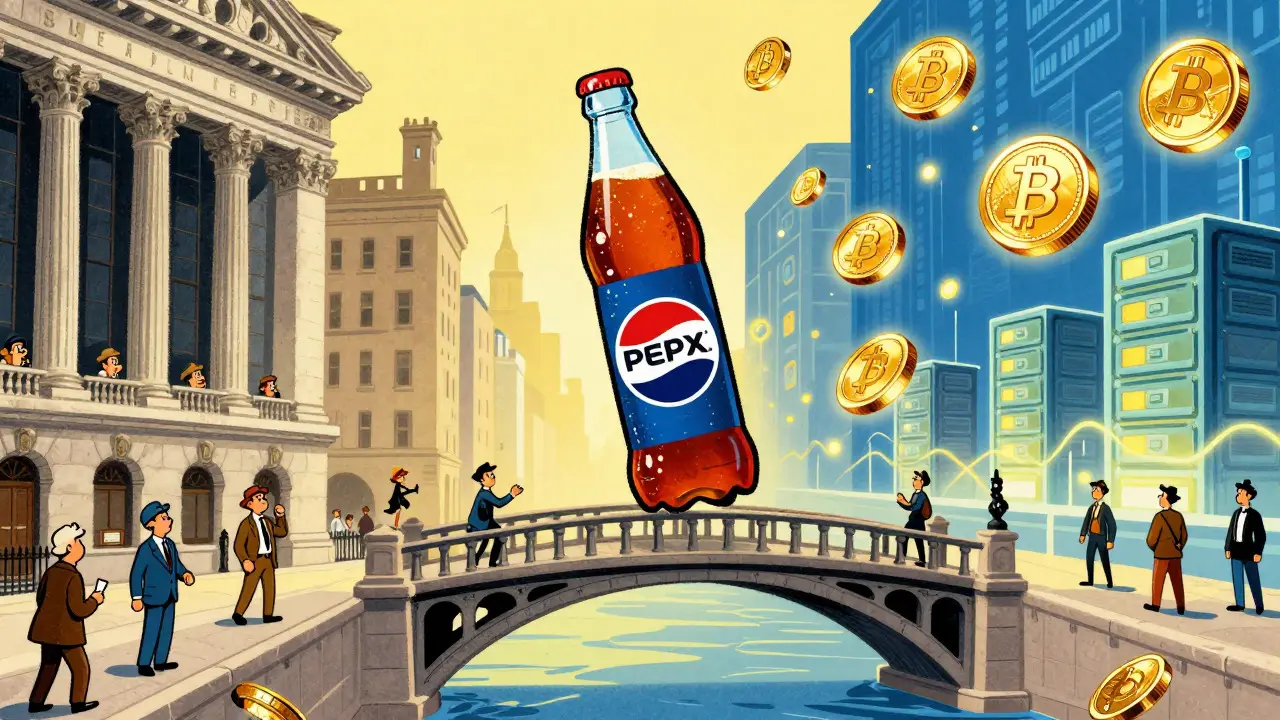
You want exposure to PepsiCo, the global beverage giant, but you don't have a traditional brokerage account. Or maybe you want to use your stock holdings in decentralized finance protocols without selling them. Enter PepsiCo tokenized stock (xStock), trading under the ticker PEPX. This digital asset promises to bridge the gap between Wall Street and blockchain technology. But does it actually work? Is it safe? And can you even buy it right now?
The short answer is complicated. PEPX is a real token on the blockchain, but its market presence is tiny, its liquidity is thin, and major exchanges often list it as "not tradable." Before you send any money, you need to understand exactly what this token represents, how the underlying platform works, and why so few people are using it despite the hype around tokenized real-world assets.
How xStocks Works: The Bridge Between Stocks and Crypto
To understand PEPX, you first need to look at the platform behind it: xStocks. According to documentation from late 2023, xStocks is a platform designed to provide easy access to US stocks and ETFs for regular users through both centralized and decentralized exchanges. The core idea is simple: take a traditional stock like PepsiCo (NASDAQ: PEP), wrap it in a blockchain token, and let anyone with a crypto wallet trade it.
Here is how the mechanism functions:
- 1:1 Backing: Each PEPX token is supposed to be backed one-to-one by the underlying value of PepsiCo stock. If PepsiCo shares go up $1, PEPX should theoretically go up $1.
- Multi-Chain Support: The token exists as an ERC-20 token on Ethereum and as an SPL token on Solana. This means you can hold it in wallets that support either network, such as Phantom or MetaMask.
- Regulatory Compliance: The platform claims compliance with EU regulations, aiming to make these tokens accessible to non-US investors who might face barriers buying American stocks directly.
The promise is attractive. You get the stability of a blue-chip company like PepsiCo with the flexibility of crypto. You could, in theory, lend your PEPX tokens in a DeFi protocol to earn yield, something you can't easily do with shares held in a standard brokerage account. However, the reality of execution has lagged significantly behind the concept.
Key Metrics and Market Reality
If you look at the data from late 2025, the picture for PEPX is stark. It is not a mainstream investment vehicle. Here are the hard numbers you need to know:
| Metric | Value |
|---|---|
| Total Supply | 4,000 tokens |
| Circulating Supply | 4,000 tokens |
| Number of Holders | 8 |
| Market Cap | ~$558,000 - $587,000 |
| 24-Hour Volume | $16,000 - $473,000 (highly variable) |
| Price Range | $140.29 - $148.27 |
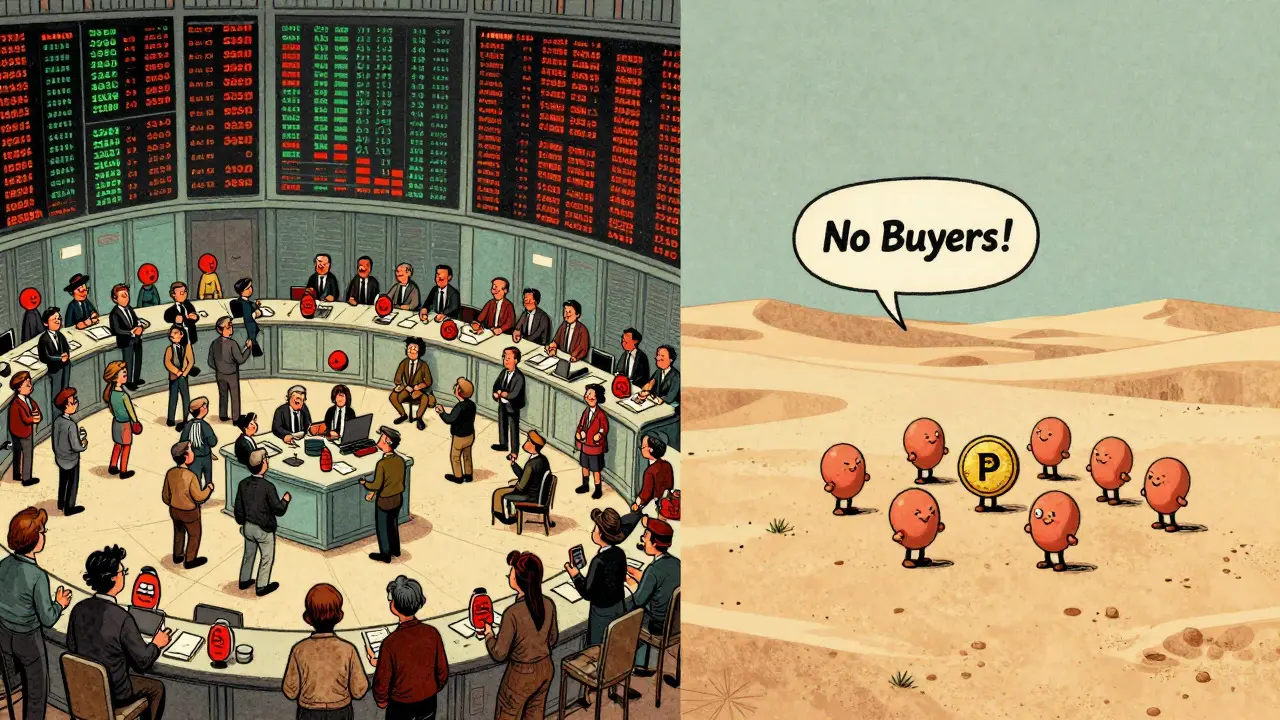
Notice the number of holders: eight. In the world of cryptocurrency, where Bitcoin has millions of holders, eight is virtually nothing. This indicates extreme concentration. A small group of people controls the entire supply. This creates significant risks for price manipulation. If one of those eight holders decides to sell, the price could crash because there aren't enough buyers to absorb the shock.
The price discrepancy across platforms is also telling. One tracker shows $148.27, while another shows $140.29. In liquid markets, arbitrage bots smooth out these differences instantly. The fact that they persist here proves that the market is fragmented and illiquid. You might buy at $148 and find no one willing to buy back from you at $140.
Can You Actually Buy PEPX?
This is the biggest hurdle. Many users click on PEPX listings only to find a dead end. As of late 2025, major platforms like Crypto.com explicitly state that "PEPX is not tradable yet." CoinGecko notes that the tokens are unavailable on many listed exchanges.
Why is this happening? There are two likely reasons:
- Regulatory Hurdles: Tokenized stocks sit in a gray area. While xStocks claims EU compliance, getting full approval across different jurisdictions is difficult. Exchanges may delist or pause trading to avoid legal headaches.
- Lack of Demand: With only eight holders, there is simply no reason for large exchanges to prioritize listing PEPX. They prefer assets with high volume and active communities.
If you manage to find a venue where PEPX is trading, such as smaller decentralized exchanges or specific wallets like Phantom, you need to proceed with caution. The process involves adding the contract address manually, which carries the risk of interacting with fake tokens if you aren't careful. Always verify the contract address against official sources.
PEPX vs. Traditional PepsiCo Stock
Let's compare PEPX directly to buying actual PepsiCo shares on the NASDAQ. This comparison highlights why most investors still stick to traditional methods.
| Feature | PEPX (Tokenized) | Traditional PEP Stock |
|---|---|---|
| Liquidity | Extremely Low (Thin markets) | Very High (Billions traded daily) |
| Ownership Rights | Tracker Certificate (No voting rights) | Direct Equity (Voting & Dividends) |
| Accessibility | Global (Crypto Wallet Required) | Restricted (Brokerage Account Needed) |
| DeFi Integration | Yes (Theoretically composable) | No |
| Regulatory Clarity | Ambiguous/Varies by Region | High (SEC Regulated) |
| Counterparty Risk | Platform Risk (xStocks) | Minimal (Custodial Banks) |
The critical difference is ownership. When you buy PEPX, you hold a "tracker certificate." You do not own a piece of PepsiCo. You cannot vote in shareholder meetings. It is unclear if you receive dividends automatically or if they are handled separately. Traditional stock ownership gives you legal rights and protections that a smart contract on Ethereum does not necessarily replicate.
Risks and Red Flags
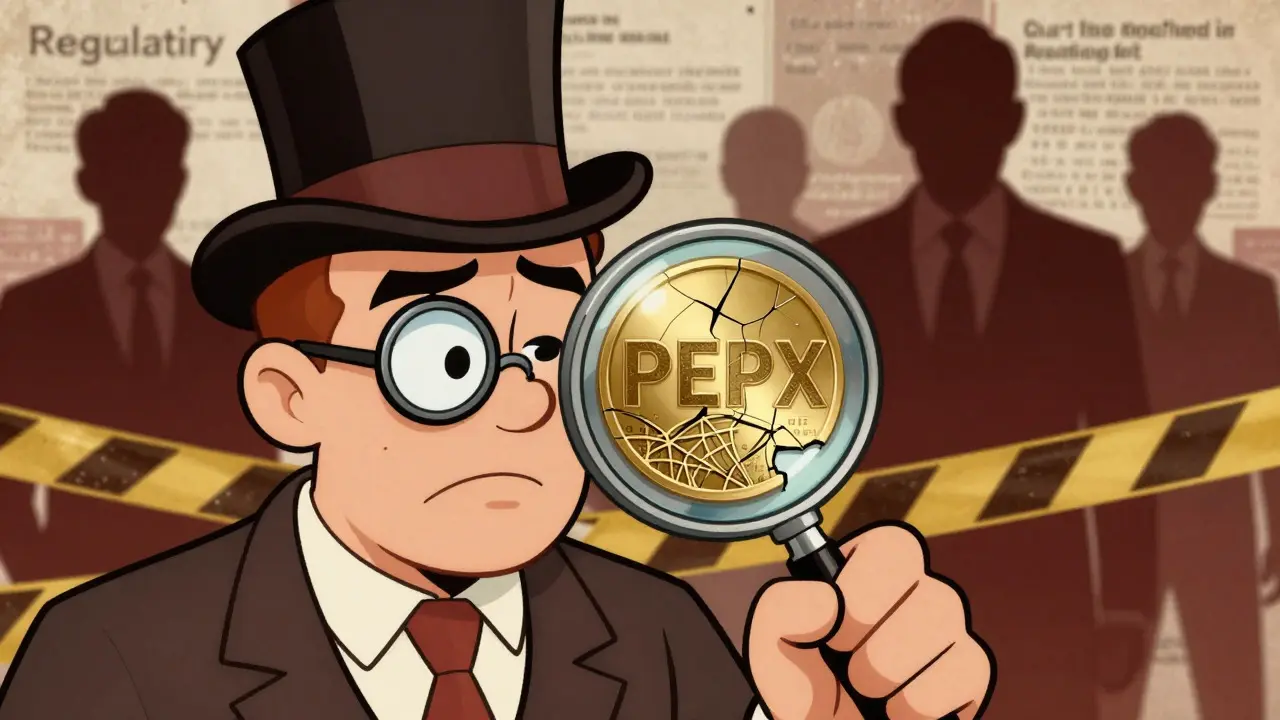
Investing in PEPX comes with unique dangers that go beyond normal crypto volatility.
- Smart Contract Risk: If there is a bug in the xStocks code or the ERC-20/SPL implementation, your funds could be lost. Unlike a bank, there is no FDIC insurance for crypto tokens.
- Liquidity Trap: You might be able to buy PEPX, but can you sell it? With low volume, you could face massive slippage, meaning you sell for much less than the displayed price.
- Platform Dependency: Your token's value depends entirely on xStocks maintaining the reserve of actual PepsiCo stock. If the platform shuts down or goes bankrupt, your tokens could become worthless paper.
- Regulatory Crackdown: Governments are still defining rules for tokenized securities. A sudden regulatory change could freeze trading or force delistings.
Furthermore, the lack of community engagement is a red flag. There are no active Reddit threads, Discord servers, or Twitter discussions about PEPX. In crypto, community often drives adoption and support. Silence usually means abandonment.
Is PEPX Worth It in 2026?
For the average investor, the answer is likely no. If you want exposure to PepsiCo, a traditional brokerage account offers better liquidity, lower fees, and clear legal rights. If you are a crypto enthusiast looking for DeFi composability, PEPX's current illiquidity makes it impractical for lending or yield farming.
However, PEPX serves as an interesting case study in the broader trend of Real World Assets (RWAs) moving on-chain. Platforms like BlackRock's BUIDL are exploring similar concepts with more institutional backing. PEPX represents an early attempt that struggled with execution. Unless xStocks secures major exchange listings and injects significant liquidity, PEPX remains a niche experiment rather than a viable investment tool.
Keep an eye on regulatory developments in the EU and US. If clearer frameworks emerge, tokenized stocks might see a resurgence. Until then, treat PEPX with extreme skepticism and never invest more than you can afford to lose entirely.
What is the PEPX token?
PEPX is a blockchain-based token issued by the xStocks platform that tracks the price of PepsiCo, Inc. stock. It exists as both an ERC-20 token on Ethereum and an SPL token on Solana, allowing crypto users to gain exposure to PepsiCo's performance without holding traditional shares.
Can I buy PEPX on Binance or Coinbase?
As of late 2025, PEPX is not widely available on major centralized exchanges like Binance or Coinbase Advanced Trade. Some platforms list it as "not tradable yet," and availability is limited to certain decentralized exchanges or specific wallets like Phantom, subject to regional restrictions.
Do PEPX holders get dividends from PepsiCo?
It is unclear. PEPX is described as a "tracker certificate" rather than direct equity. Unlike traditional shareholders, token holders typically do not have voting rights. Dividend distribution mechanisms for xStocks tokens are not clearly defined in public documentation, suggesting you may not receive direct payouts.
Why is the PEPX market cap so low?
PEPX has a fixed total supply of only 4,000 tokens and just eight known holders. This extreme scarcity and lack of widespread adoption result in a market capitalization of under $600,000, compared to PepsiCo's actual market cap of over $245 billion.
Is PEPX regulated?
The xStocks platform claims compliance with EU regulations, making it potentially accessible to non-US investors. However, specific regulatory approvals vary by jurisdiction, and the token operates in a complex legal space between securities laws and crypto assets. Always check local laws before trading.
What are the risks of investing in PEPX?
Major risks include extreme illiquidity (difficulty selling), price manipulation due to few holders, smart contract vulnerabilities, and platform dependency. Since PEPX is not direct stock ownership, you lack traditional shareholder protections and voting rights.
Qolbina Islami
August 8, 2026 AT 15:02THIS IS A SCAM! ! ! Why are we even talking about this?! The SEC should shut this down immediately!! It is an insult to American investors who play by the rules!! Who gave these crypto bros permission to tokenize our hard-earned equity?! It is a disaster waiting to happen!!
SUBHAM CHOUDHURY
August 9, 2026 AT 11:11You know what? This is actually a really interesting concept for global accessibility. Don't let the haters get you down! If it works, it could open doors for so many people in emerging markets. Keep an open mind!
Joy Kwant
August 10, 2026 AT 18:55I just feel so drained reading all this hype. It's empty promises wrapped in blockchain jargon. Where is the soul of investing? Where is the human connection? It feels cold and calculated. I miss when stocks were just... stocks.
amy miranda
August 11, 2026 AT 15:03The sheer audacity of claiming 'compliance' while having only eight holders is laughable. It is morally bankrupt to sell this as a viable investment vehicle. The lack of transparency is offensive to anyone with basic financial literacy. They are preying on the desperate. It is disgusting how they market this. One must question the ethics of xStocks entirely. The silence from regulators is deafening. We deserve better than this digital snake oil.
Pernelia Wahkan
August 12, 2026 AT 06:41Fascinating mechanism, truly. The idea of wrapping traditional assets like PepsiCo into ERC-20 tokens is a clever hack for DeFi composability. However, the liquidity crunch is a real killer here. It reminds me of early stablecoin experiments that failed due to trust issues. The tech is sound, but the market dynamics are hostile.
Subhash Kashyap Dm
August 13, 2026 AT 17:29its not about the tech its about control. the fed wants to keep you in their system. tokenized stocks are a backdoor for cbdc integration. watch out for the smart contract exploits they will rug pull the whole thing. typical central bank narrative. do your own research before they ban it again
Billy Cunningham
August 14, 2026 AT 13:18Wow 😲 Only 8 holders?? That’s wild 🤯 I guess if you want to gamble, go ahead 🎰 But good luck selling it later 💸
Ed Wallace
August 14, 2026 AT 14:15It makes one wonder about the nature of ownership in the digital age. Is a token truly property if it lacks the legal weight of a share certificate? The philosophical implications are quite profound. We are trading certainty for convenience, and perhaps that is a price too high to pay.
Alex Di Mango
August 14, 2026 AT 19:21Look, no need to panic. It's just another experiment in the space. Some things work, some don't. Let's see if xStocks can gain traction. If not, we move on. No harm done unless you invest more than you can lose.
Amor Jordan
August 15, 2026 AT 23:28I hear your concerns, Joy. It does feel impersonal. But maybe there is a place for innovation. Just be careful not to lose yourself in the noise. Trust your gut feelings about where your money goes.
Nick Darring
August 17, 2026 AT 13:14Oh, please, everyone is so quick to dismiss it because it doesn't fit their little box. You guys are missing the forest for the trees. I mean, think about it, why should Wall Street have all the fun? It's not like traditional brokers aren't charging us arms and legs. This is just the beginning of a revolution, whether you like it or not. And honestly, the fact that it's illiquid right now just means it's an opportunity for the brave. The rest of you can stay safe in your little brokerage accounts while the pioneers build the future. It's always the contrarian view that wins in the end, isn't it?
Eden Tadesse
August 17, 2026 AT 18:13i think its cool but scary at the same time. lots of typos in my head right now but basically just be carefull ok?
Sus Sawyer
August 19, 2026 AT 09:07Hey folks, listen up! This is a goldmine if you know how to use it. Sure, liquidity is low now, but that's where the alpha is. Get in early, leverage it in DeFi, and watch it grow. Don't be a sheep! Use your brain and make moves. It's all about timing and guts.
Aryan MISHRA
August 21, 2026 AT 00:13Amateurs!!! Liquidity is king!!! Without volume, you are dead in the water!!! Smart contracts are risky!!! Regulatory arbitrage is ending!!! Wake up!!!
Ryan Robinson
August 21, 2026 AT 04:21honestly i dont get the fuss. just buy pep stock on robinhood. why complicate life with crypto wallets and gas fees? seems like extra work for no real benefit right now.
Earl Kott65
August 22, 2026 AT 15:02Oh, look at you, trying to be smart with tokenized assets 🙄 How original. Bet you'll be crying when the slippage hits 😂 Good luck with that 'investment' 📉
Ethan Yuwono
August 23, 2026 AT 06:17the risk is real but so is the potential. balance is key. dont put all eggs in one basket. think long term.
Jack Delasquez
August 24, 2026 AT 05:30this is gonna blow up soon mark my words! just wait til the big exchanges list it then everyone will be scrambling. early adopters win big time!
Harman Singh
August 24, 2026 AT 15:24why is nobody talking about the counterparty risk? xstocks could vanish tomorrow and ur tokens become dust. its terrifying really. feels like walking a tightrope without a net.
Joshua Hofford
August 26, 2026 AT 09:29From a cultural perspective, this reflects our desire for borderless finance. It's exciting to see how different regions might adopt this. Let's embrace the change with optimism!
Marcia Albert
August 27, 2026 AT 03:54I'm just sitting here watching the drama unfold. It's like a soap opera but with numbers. Pretty fascinating to see how people react to uncertainty. I'll stick to my index funds thanks.
Emma Smith
August 28, 2026 AT 07:10the paradigm shift is undeniable yet obscured by regulatory fog. decentralized autonomous organizations will eventually render traditional brokerages obsolete. we are witnessing the death of the old world order. ignore the naysayers.
Ed Mitchell
August 29, 2026 AT 05:48IT IS ALL CONNECTED. The tokenization is merely a distraction from the true agenda. They want to track every transaction you make. Your privacy is gone. The deep state is using xStocks to monitor dissent. Do not fall for their trap. Stay vigilant against the surveillance capitalism machine.
Michael Mostyn
August 30, 2026 AT 05:31One must consider the structural integrity of such a model. The lack of voting rights fundamentally alters the definition of shareholder engagement. It is a derivative product masquerading as equity. Caution is advised.
Erica Johnson
August 30, 2026 AT 13:30I've been following this since day one. Honestly, it's a bit of a mess right now. But hey, that's crypto for you. High risk, high reward. Just don't expect customer service if things go south 😉