What is Tokenomics in Cryptocurrency? A Simple Guide to Supply, Utility, and Value
 Jul, 18 2026
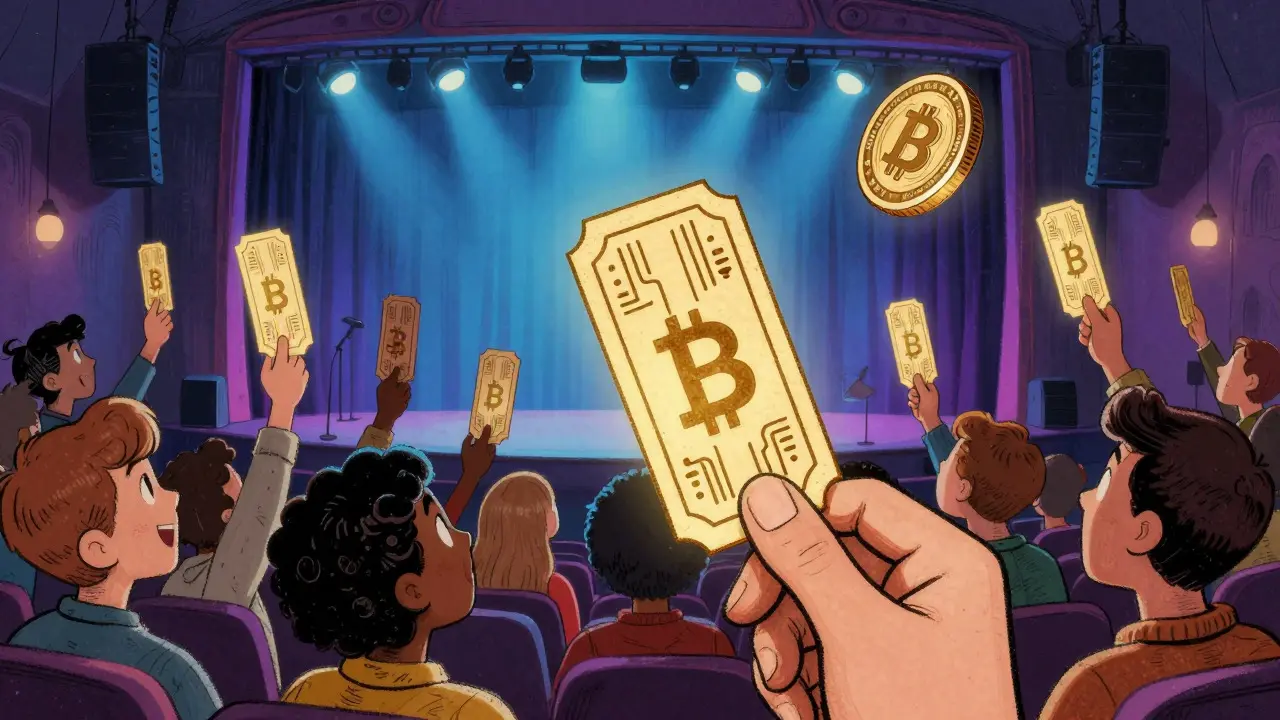
Imagine buying a ticket to a concert. The price isn't just random; it depends on how many tickets exist, who gets them first, whether they can be resold, and if holding one gives you access to backstage passes. Now imagine that ticket is digital, lives on a blockchain, and its value changes every second based on complex mathematical rules. That is tokenomics.
If you have ever wondered why some cryptocurrencies cost fractions of a cent while others trade for tens of thousands of dollars, the answer rarely lies in hype alone. It lies in their economic design. Tokenomics is the study of the financial structure and economic principles governing digital assets within blockchain ecosystems. It combines "token" and "economics" to describe how a cryptocurrency works, from its creation to its daily usage.
For investors, developers, and everyday users, understanding tokenomics is no longer optional. It is the difference between spotting a sustainable project and falling for a speculative bubble. This guide breaks down what tokenomics actually means, how to read it, and why it matters for your wallet.
The Core Components of Tokenomics
Tokenomics is not a single number or metric. It is a framework made up of several interconnected parts. To evaluate any cryptocurrency, you need to look at four main pillars: supply, utility, distribution, and incentives.
- Total Supply: The maximum number of tokens that will ever be created. For example, Bitcoin has a hard cap of 21 million coins. This scarcity is a key driver of its value proposition.
- Circulating Supply: The number of tokens currently available for trading. If a project has a total supply of 1 billion but only 10 million are circulating, the market capitalization might look small now, but future inflation could dilute value.
- Inflation vs. Deflation: Some tokens increase in supply over time (inflationary) to reward validators or miners. Others decrease in supply (deflationary) by burning tokens when transactions occur. Ethereum, for instance, shifted toward a slightly deflationary model after its "Merge" upgrade, where more ETH is burned than issued during high network activity.
Utility Functions answer the question: "What does this token actually do?" A token without utility is essentially a promise with no backing. Common utilities include:
- Governance: Holding the token allows you to vote on protocol upgrades. Projects like Uniswap use governance tokens to let community members decide on fee structures and treasury spending.
- Access: Tokens may grant entry to exclusive services, storage space (like Filecoin), or computing power (like Render).
- Medium of Exchange: Using the token to pay for transaction fees (gas) on a network, as seen with SOL on Solana or MATIC on Polygon.
Distribution Mechanisms reveal who owns the tokens. This is crucial for assessing centralization risks. You need to ask: Do the founders hold too much power? Are early investors set to dump their holdings soon? A fair distribution usually involves a mix of allocations for development teams, community rewards, venture capitalists, and ecosystem growth funds.
Incentive Structures are the behavioral nudges built into the system. Good tokenomics aligns the interests of all participants. For example, staking rewards encourage users to lock up their tokens, reducing selling pressure and securing the network. Poor incentives might reward short-term speculation, leading to volatility and instability.
Why Tokenomics Matters More Than Price
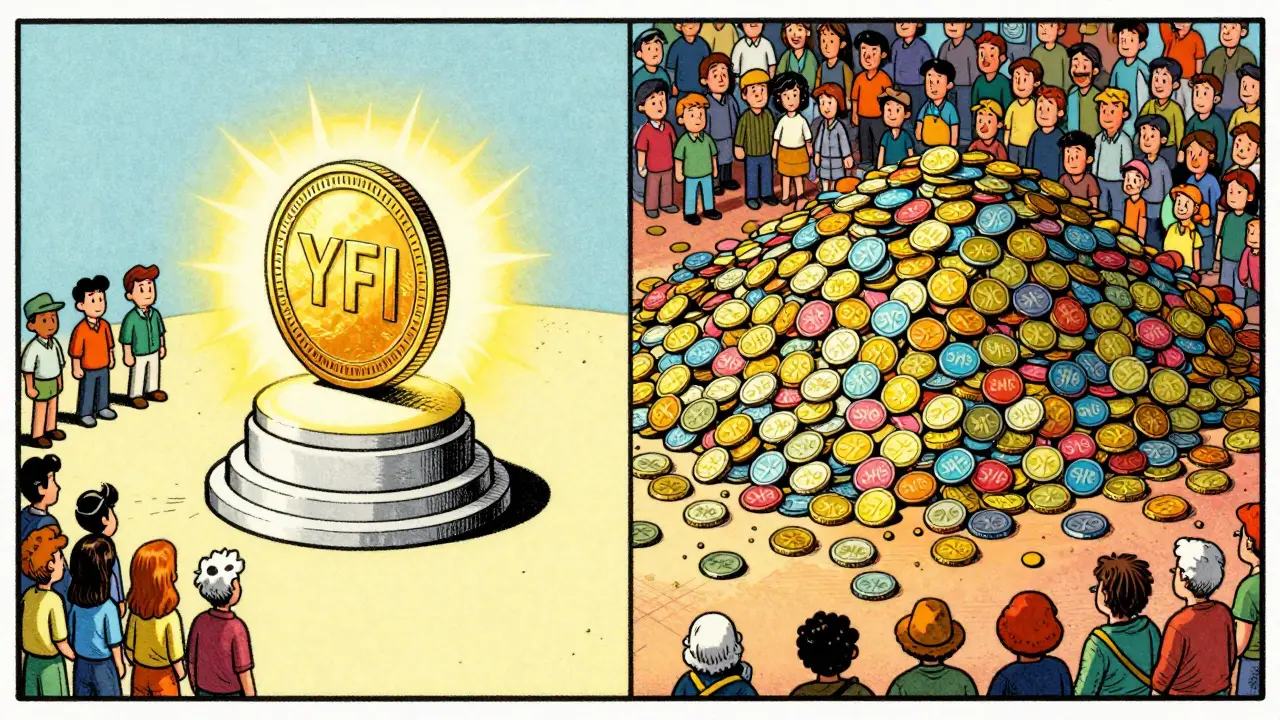
Newcomers often focus solely on the price per coin. But price is a result, not a cause. Tokenomics explains the cause. Consider the stark contrast between Yearn.finance (YFI) and Shiba Inu (SHIB). At various points in history, one YFI token has traded at a value hundreds of millions of times higher than one SHIB token. Does this mean YFI is "better"?
Not necessarily. It means YFI has a tiny supply (only 36,666 tokens ever existed), while SHIB has quadrillions. Market capitalization (Price × Circulating Supply) is the better metric for comparing size, but tokenomics explains the dynamics. YFI’s extreme scarcity creates high individual unit prices, which can be psychologically appealing but also limits liquidity. SHIB’s massive supply makes it accessible to retail investors but requires enormous demand to move the needle.
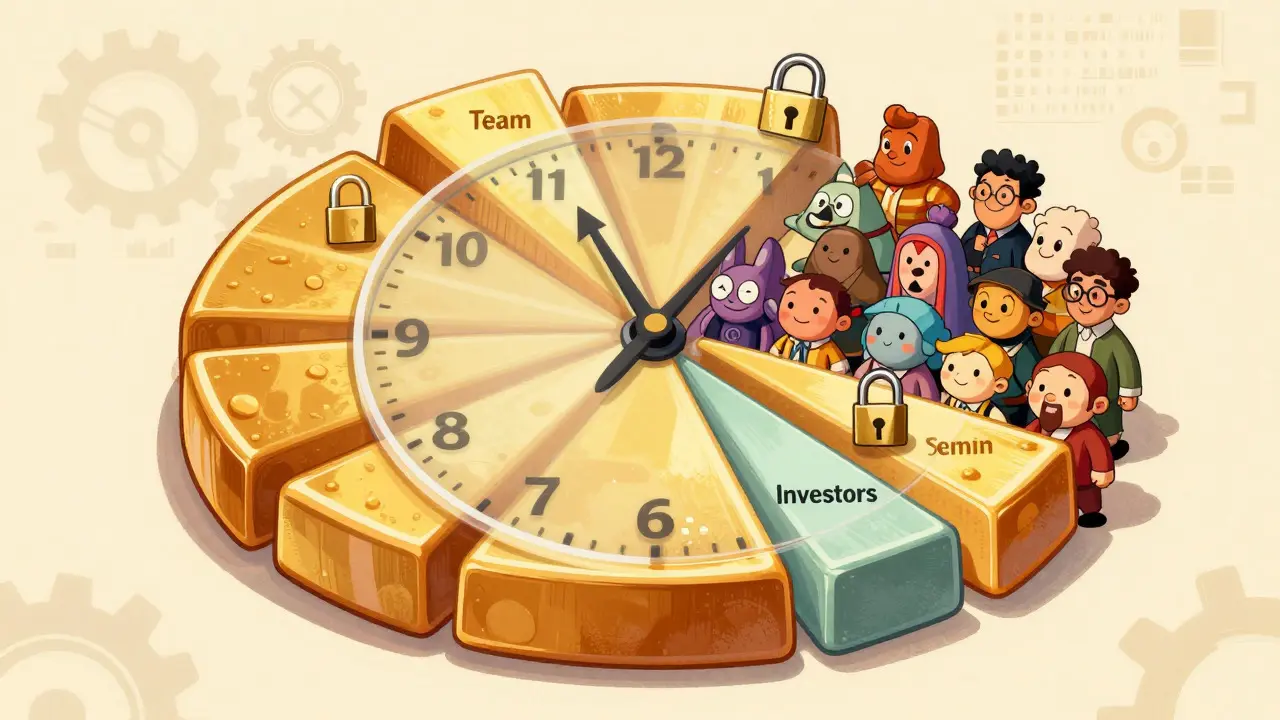
Understanding these mechanics helps you avoid common traps. For instance, a project with a low price but an astronomical total supply might seem cheap, but if half the supply is locked for a year and then released, the price could crash due to sudden oversupply. This is known as an "unlock event," and checking token unlock schedules is a critical part of tokenomic analysis.
How to Analyze Tokenomics Before Investing
You don’t need a PhD in economics to analyze tokenomics, but you do need a checklist. Here is how to evaluate a project’s economic health:
- Read the Whitepaper: The whitepaper is the blueprint. Look for sections titled "Token Economics," "Distribution," or "Monetary Policy." If these sections are vague or missing, proceed with caution.
- Check Vesting Schedules: Find out when team tokens and investor tokens become liquid. If 40% of the supply unlocks in six months, expect potential sell pressure. Tools like TokenUnlocks.app can help visualize this data.
- Assess Utility Demand: Is there a real reason people need to buy and hold the token? Or is it purely speculative? Projects with recurring revenue models tied to token burns or buybacks tend to have stronger long-term fundamentals.
- Evaluate Inflation Rates: Calculate the annual inflation rate. If a new token issues 50% of its total supply in year one, early investors are heavily diluted. Compare this to established assets like Bitcoin (which has less than 1% annual issuance post-halving).
- Analyze Staking Rewards: High staking yields (e.g., 100% APY) sound attractive but are often unsustainable. They usually indicate high inflation or risk. Sustainable rewards typically range from 5% to 15%, depending on the project’s maturity.
Common Tokenomic Pitfalls to Avoid
Even experienced investors fall victim to poor tokenomics. Here are three red flags to watch for:
- Excessive Team Allocation: If the founding team holds more than 20-30% of the supply without significant vesting periods, they have disproportionate control. This can lead to centralized decision-making or mass dumps.
- Lack of Burn Mechanisms: In a bear market, projects without deflationary mechanisms struggle to maintain value. While not essential, burn mechanisms (destroying tokens permanently) can help counteract inflation and support price floors.
- Vague Utility: If the token is described as having "future utility" or "potential use cases" without concrete implementation, it may be a placeholder asset. Real utility drives consistent demand.
Tokenomics vs. Traditional Finance
Tokenomics differs fundamentally from traditional monetary policy. Central banks, like the Federal Reserve, can print money at will to stimulate economies or fund government spending. This flexibility can lead to unpredictable inflation.
In contrast, most cryptocurrencies operate on algorithmic issuance schedules. These rules are written into code and are transparent. For example, Bitcoin’s halving events reduce block rewards by half approximately every four years. This predictability allows investors to model future supply with high accuracy. While smart contracts can be upgraded, changing core tokenomic parameters usually requires community consensus, making it harder to arbitrarily inflate supply.
This transparency is a double-edged sword. On one hand, it builds trust through verifiable data. On the other, it means mistakes in initial design are costly to fix. Projects must get their tokenomics right from day one, or they risk losing credibility.
The Future of Tokenomics
As blockchain technology matures, tokenomics is evolving beyond simple store-of-value models. We are seeing experiments with real-world asset (RWA) tokenization, where physical assets like real estate or bonds are represented on-chain. These tokens derive value from underlying cash flows rather than pure speculation.
We are also seeing more sophisticated incentive layers, such as quadratic funding for public goods and dynamic fee structures that adjust based on network congestion. Developers are increasingly using game theory to create self-sustaining ecosystems where users benefit directly from network growth.
For the average user, this means doing your homework is more important than ever. The days of buying blindly based on social media trends are fading. Projects with robust, well-thought-out tokenomics will survive market cycles, while those relying on hype will fade away.
What is the difference between tokenomics and economics?
Economics is the broad study of how societies allocate resources. Tokenomics is a specialized subset focused specifically on the economic design of digital tokens within blockchain networks. It includes elements of traditional economics but adds cryptographic constraints, smart contract automation, and decentralized governance.
Does good tokenomics guarantee a profitable investment?
No. Good tokenomics reduces risk and increases the likelihood of long-term sustainability, but it does not guarantee profit. Market sentiment, regulatory changes, technological failures, and broader macroeconomic factors also play significant roles in price movements.
How do I find the tokenomics details of a cryptocurrency?
Start with the project’s official whitepaper or documentation. Websites like CoinMarketCap, CoinGecko, and specialized tools like TokenTerminal or Messari provide detailed breakdowns of supply, distribution, and market metrics. Always cross-reference multiple sources to ensure accuracy.
What is a "token burn" and why is it important?
A token burn is the permanent removal of tokens from circulation, usually by sending them to an inaccessible address. Burns reduce supply, which can increase scarcity and potentially drive up price if demand remains constant. It is a deflationary mechanism used to counteract inflation.
Are inflationary tokens bad investments?
Not necessarily. Inflationary tokens often reward holders with staking yields or dividends. If the utility demand grows faster than the inflation rate, the token can still appreciate in value. The key is to compare the inflation rate against the network’s growth and adoption metrics.
What is vesting in tokenomics?
Vesting is a schedule that determines when allocated tokens (for teams, investors, or advisors) become liquid and tradable. Long vesting periods align stakeholder interests with long-term project success, while short or immediate vesting can lead to sell-offs.