What is Vector Smart Gas (VSG) crypto coin?
 Mar, 3 2026
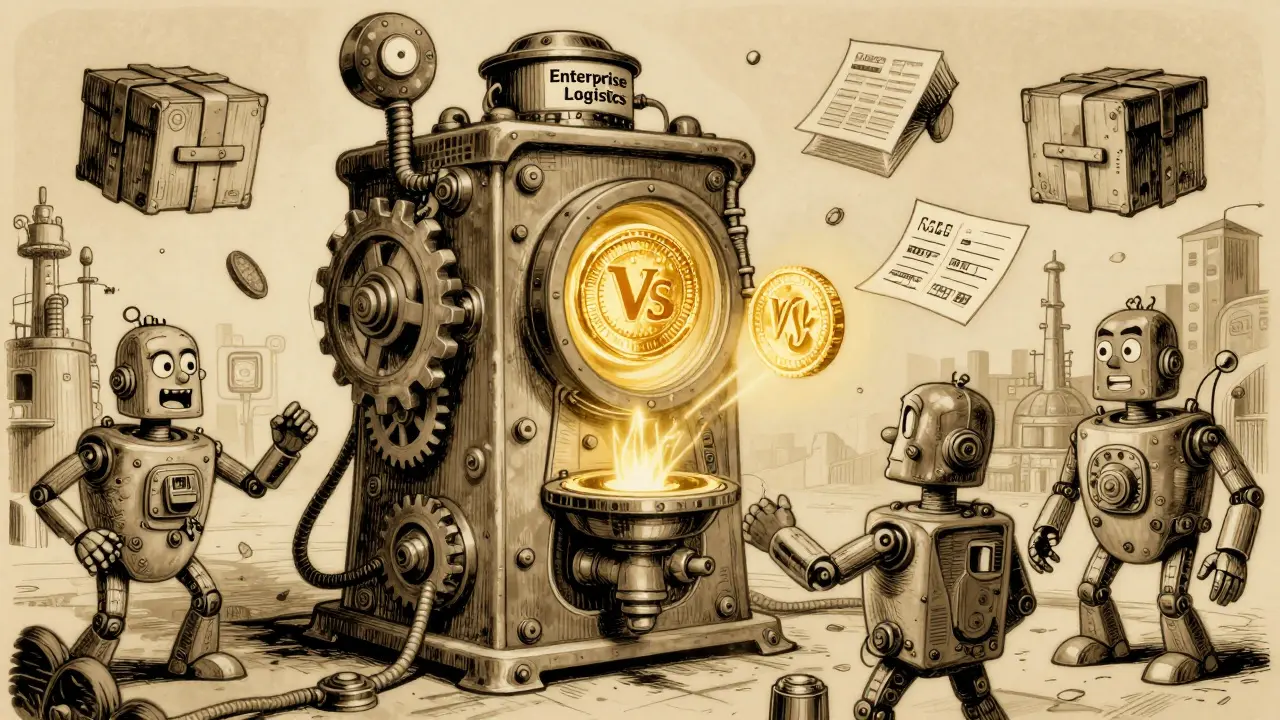
Vector Smart Gas, or VSG, is the native token of the Vector Smart Chain (VSC), a Layer 1 blockchain built to handle real-world business needs using blockchain technology. Unlike many crypto coins that exist mostly for speculation, VSG has a clear job: it powers transactions, smart contracts, and security across an entire blockchain network designed for enterprises, DeFi apps, and tokenized real-world assets. If you’ve heard of Ethereum’s ETH or Solana’s SOL, think of VSG as something similar-but with a sharper focus on bringing blockchain into industries like real estate, supply chains, and logistics.
What does Vector Smart Gas actually do?
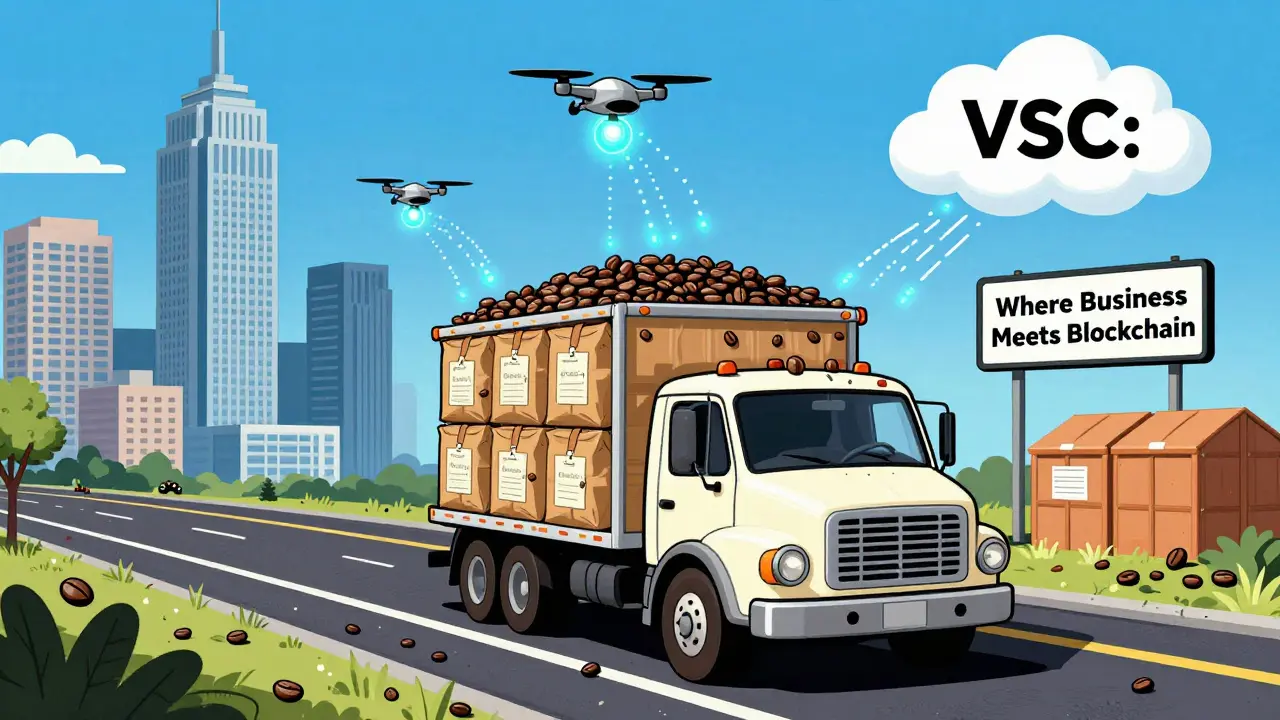
VSG isn’t just another digital coin you buy hoping it goes up. It’s the fuel that keeps the Vector Smart Chain running. Every time someone sends a transaction, deploys a smart contract, or interacts with a decentralized app on VSC, they pay a small fee in VSG. This is called gas, and it’s how blockchains prevent spam and reward validators who secure the network. Without VSG, the network wouldn’t work. It’s like electricity for a computer-invisible until you need it.The Vector Smart Chain doesn’t just copy what Ethereum does. It’s built to handle heavy business use. That means faster transactions, lower fees, and better integration with existing corporate systems. Companies that want to tokenize a building, track a shipment of coffee beans, or create a digital deed for land can do it on VSC-and they pay for it in VSG.
How is VSG different from other crypto tokens?
Most crypto projects focus on one thing: DeFi, NFTs, or gaming. VSG’s ecosystem targets three big areas at once:- Enterprise solutions - VSC is built so businesses can plug it into their current software without overhauling everything. Think ERP systems, inventory databases, accounting tools-all able to talk to blockchain via VSG.
- DePIN (Decentralized Physical Infrastructure Networks) - This is where VSG gets interesting. It connects digital tokens to physical things. For example, a network of sensors tracking temperature in a warehouse can be paid in VSG to send data to the blockchain. That creates a tamper-proof record of every shipment.
- RWA (Real-World Asset) integration - VSG enables tokenization of real assets like property, commodities, or even invoices. Instead of buying a share of a building through a bank, you can buy a token on VSC that represents ownership. VSG handles the payments, transfers, and verification.
This makes VSG different from coins that are purely speculative. Its value comes from usage, not just hype. If more companies start using VSC to manage supply chains or tokenize assets, demand for VSG will rise because it’s needed to make those systems run.
Tokenomics: Supply, distribution, and value
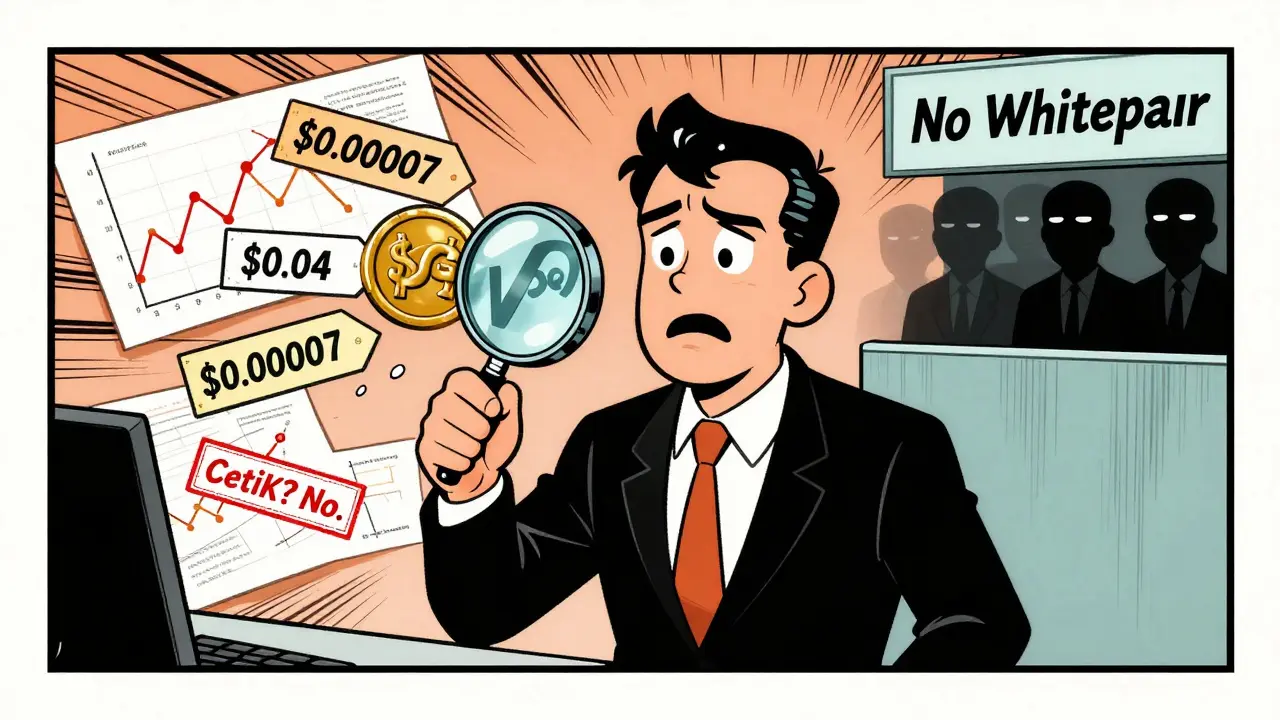
The total supply of VSG is capped at 10 billion tokens. That’s a lot compared to Bitcoin’s 21 million, but it’s not unusual for enterprise blockchains that need to handle millions of daily transactions. According to data from CoinMarketCap, all 10 billion VSG tokens are already in circulation, with a market cap around $702,000 as of early 2026. That gives each VSG a price of roughly $0.00007.But here’s the catch: other data sources like RootData show wildly different numbers. One reports VSG at $0.04, with a market cap over $135 million. Why the gap? It’s unclear. Some platforms may be using outdated data, inaccurate trading pair calculations, or even fake volume. This inconsistency is a red flag. If you’re thinking of investing, you need to know that price data for VSG is unreliable right now.
Historical price data shows VSG hit an all-time high of $0.0087 in December 2024, then crashed to $0.0000024 in March 2025. That kind of volatility isn’t normal for a token meant to power enterprise systems. It suggests the market is still small, thinly traded, and easily manipulated. There’s no clear reason for the drop-no major hack, no team scandal, no protocol failure. Just a steep price collapse followed by slow recovery.
Where can you buy VSG?
VSG is listed on several exchanges, including MEXC, HTX, LBank, and through Binance’s Web3 Wallet. You can trade it against USDT, ETH, or BTC. But because trading volume is low-around $160,000 per day-it’s hard to buy or sell large amounts without moving the price. That’s risky. If you try to sell 100,000 VSG and there’s only $20,000 of buyers in the order book, your sale could tank the price.There’s no official VSG wallet. Most users store it in MetaMask or Trust Wallet, which support the VSC network. You’ll need to manually add the VSC RPC details to your wallet if you want to interact with VSG directly. That’s not beginner-friendly.
Who’s behind Vector Smart Chain?
This is where things get fuzzy. There’s no public team list. No LinkedIn profiles. No detailed whitepaper explaining the consensus mechanism, block time, or security audits. The project claims to have partnerships with enterprises, but no names are released. No major audit firm like CertiK or SlowMist has published a report on VSC’s code. That’s unusual. Even lesser-known blockchains usually have at least a GitHub repo and a team photo.The lack of transparency doesn’t mean it’s a scam-but it does mean you’re investing in something with very little public oversight. If the team disappears tomorrow, there’s no legal recourse. No community governance votes. No roadmap updates. Just a token on a few exchanges and a website that hasn’t changed in months.
Is VSG a good investment?
If you’re looking for a crypto coin to hold for long-term growth, VSG is a high-risk bet. The project has real technical goals-enterprise integration, DePIN, RWA tokenization-but it’s missing the basics: team credibility, audit reports, community trust, and stable pricing.Its value depends entirely on whether businesses start using it. Right now, there’s no proof that any major company is on VSC. No press releases. No case studies. No user testimonials. Without adoption, VSG is just a token with no real utility beyond trading.
On the flip side, if even one big company-say, a logistics firm or a real estate platform-decides to build on VSC, the demand for VSG could spike overnight. That’s the gamble. It’s not about whether VSG is good. It’s about whether someone will use it.
What’s next for VSG?
Some price prediction models suggest VSG could reach $0.000082 by 2027. That’s a 17% increase from current levels. But predictions like that are meaningless without adoption. If the VSC team releases a public audit, names their developers, or announces a partnership with a Fortune 500 company, then VSG might have a future. Until then, it’s a speculative asset with unclear fundamentals.For now, VSG is best understood as an experimental token tied to an ambitious but unproven blockchain. It’s not Bitcoin. It’s not Ethereum. It’s something in between-a niche project trying to solve real problems, but without the transparency or traction to prove it works.
Is Vector Smart Gas (VSG) a real cryptocurrency?
Yes, VSG is a real cryptocurrency. It’s the native token of the Vector Smart Chain (VSC), a functioning Layer 1 blockchain. Transactions on VSC require VSG as gas, and it’s listed on multiple exchanges. However, its legitimacy is questionable due to lack of team transparency, audit reports, and verifiable adoption.
Can I mine VSG tokens?
No, you cannot mine VSG. Vector Smart Chain uses a proof-of-stake (PoS) consensus mechanism, not proof-of-work. New VSG tokens are not created through mining. Instead, validators stake existing VSG to secure the network and earn rewards. All 10 billion tokens were pre-mined and distributed at launch.
Why do price sources like CoinMarketCap and RootData show such different VSG prices?
The discrepancy likely comes from different trading pairs, fake volume, or outdated data. CoinMarketCap reports VSG at $0.00007, while RootData shows $0.04. This could mean one platform is including illiquid or manipulated markets. Always check trading volume and liquidity before trusting a price. Low volume = easy price manipulation.
What makes VSG different from Ethereum’s ETH?
ETH powers the Ethereum network, which is focused on DeFi and NFTs. VSG powers the Vector Smart Chain, which targets enterprise use cases like tokenizing real estate, supply chain tracking, and integrating with legacy business systems. VSC is designed to be easier for companies to adopt than Ethereum, with lower fees and faster finality. But unlike Ethereum, VSC lacks proven adoption and public audits.
Is VSG a good long-term investment?
Not unless you’re comfortable with extreme risk. VSG has no proven track record of enterprise adoption, team transparency, or community trust. Its price history is volatile, and data sources contradict each other. It’s speculative. Only invest what you can afford to lose, and wait for credible updates-like audits, partnerships, or team disclosures-before considering it seriously.
Cerissa Kimball
March 4, 2026 AT 12:33But the lack of team info is scary like who even built this
No audits no github no nothing just a website with fancy words
I dont trust it but i cant ignore it either
Jeffrey Dean
March 5, 2026 AT 02:50Every blockchain claims to be for enterprises
But none of them actually deliver
This is just vaporware dressed up with buzzwords
DePIN RWA enterprise integration
Same old marketing garbage
Real innovation doesn't need 10 billion tokens
Julie Potter
March 6, 2026 AT 22:14One minute it's the future of supply chains the next it's a $0.0000024 dumpster fire
Who even designed this tokenomics
10 billion tokens and no one knows if it's worth 7 cents or 4 cents
Its like watching a soap opera but with blockchain
I need tea and a nap after reading this
Olivia Parsons
March 7, 2026 AT 19:40Enterprise use cases make sense
But you cant build trust without a team or audits
Maybe theyre working on it quietly
Still I'd wait for more proof before putting money in
Nick Greening
March 8, 2026 AT 03:41Its a token with zero real adoption
Anyone who thinks this is a good investment is delusional
Theyre just hoping someone else will buy it at a higher price
Thats not innovation thats gambling with extra steps
Issack Vaid
March 9, 2026 AT 10:23Its a feature of unregulated markets
When you have low volume and no oversight
Price becomes a narrative not a metric
That's not unique to VSG
Its the entire crypto ecosystem in miniature
Shawn Warren
March 10, 2026 AT 07:58Real world asset tokenization is the next frontier
Supply chain tracking with blockchain can revolutionize logistics
Yes the team is quiet but maybe theyre focused on building not posting
Give them time and support the vision
Jackson Dambz
March 11, 2026 AT 22:15And I'm tired
Why does every new coin have to be the next big thing
Why can't they just say hey we're building something small and maybe it works
Instead we get 10 paragraphs of hype and zero substance
I'm done
Jesse VanDerPol
March 12, 2026 AT 03:41One says $0.00007 another says $0.04
That gap suggests either manipulation or incompetence
Neither inspires confidence
But the underlying idea isn't bad
Just poorly executed
jonathan swift
March 13, 2026 AT 15:1010 billion tokens with no team
Low volume
Price swings like a pendulum
They're not building a blockchain
They're building a Ponzi with fancy slides
Save your money and buy gold instead 💰
Datta Yadav
March 14, 2026 AT 15:48VSG is not a cryptocurrency
It's a speculative instrument wrapped in corporate jargon
The tokenomics are broken
10 billion supply with a $700k market cap means absurd dilution
And the price volatility proves it's not being used for real transactions
It's being pumped and dumped by whales on MEXC and HTX
Enterprise adoption? Prove it with names not buzzwords
This is the kind of project that makes legitimate blockchain look bad
And yes I've analyzed 87 crypto projects this year
I know what I'm talking about
Lydia Meier
March 16, 2026 AT 12:27Why not just use Ethereum or Solana
They're proven
They have audits
They have communities
This feels like a copycat project trying to ride on the hype
Without a team or transparency it's just a spreadsheet with a logo
Austin King
March 17, 2026 AT 08:36But trust comes from action not announcements
Wait for an audit
Wait for a named partner
Wait for a real update
Until then it's a gamble
And I'm not betting my money on a ghost