Why MultiSig Wallets Are Essential for DAO Treasury Security
 Jul, 19 2026
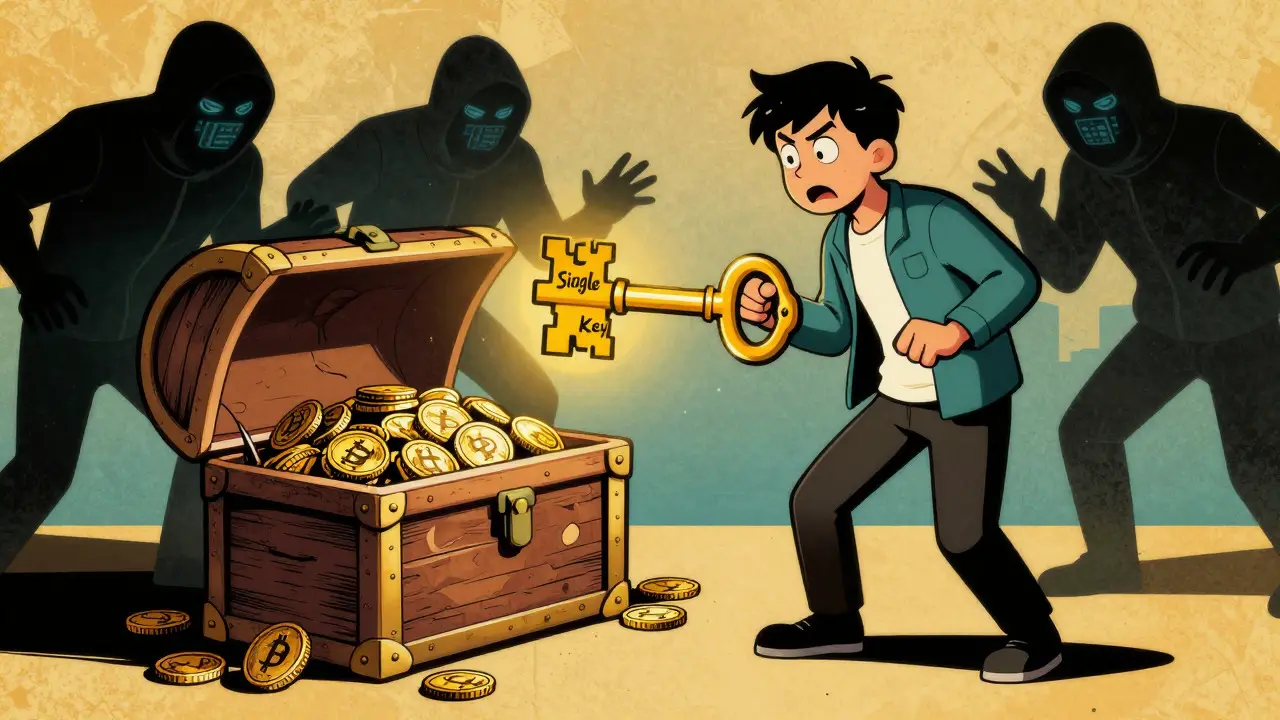
Imagine handing the keys to a vault containing millions of dollars to a single person. In the world of traditional finance, this is madness. Yet, in the early days of Decentralized Autonomous Organizations (DAOs are organizations represented by rules encoded as a computer program that is transparent, controlled by organization members and not influenced by a central government.), many treasuries were protected by just one private key. If that key was lost, stolen, or compromised, the entire organization’s funds vanished instantly. This single point of failure has cost the industry billions. The solution? Multi-signature wallets (Multisig wallets require multiple private keys held by different individuals to authorize transactions, eliminating single points of failure.). Often called "multisig," these digital vaults have become the non-negotiable standard for secure treasury management.
As of mid-2024, over 72% of top DeFi protocols use multisig custody models. But why is everyone switching? It isn’t just about hype; it’s about survival. Let’s break down exactly how multisig works, why it saves money, and how you can implement it without getting bogged down in technical debt.
The Core Problem: Single Points of Failure
In a standard Ethereum wallet, one private key controls everything. This is convenient for a solo trader but disastrous for a collective. If a developer’s laptop gets hacked, or if a founder falls for a phishing scam, the attacker drains the treasury. There are no "undo" buttons on the blockchain.
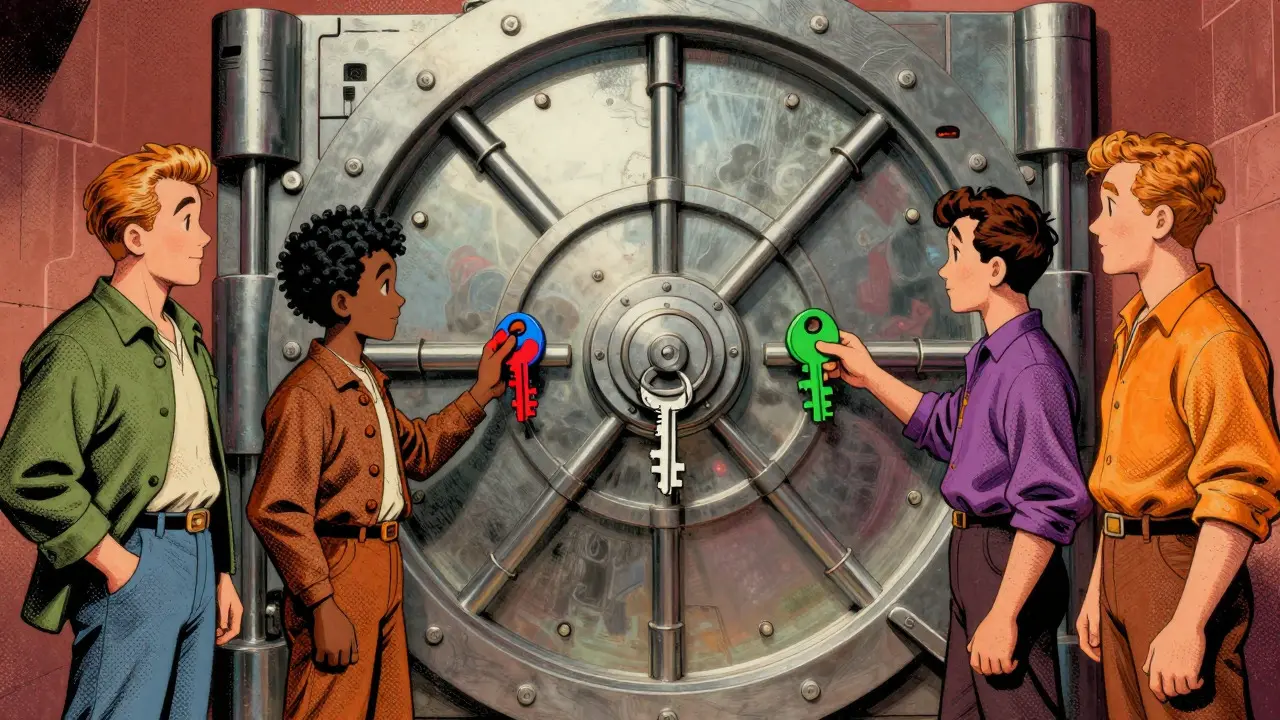
Multisig changes the math. Instead of one key, you need two, three, or more. A common setup is a "3-of-5" configuration. This means five people hold keys, but any three must agree to sign off on a transaction before it executes. If one person is hacked, the funds stay safe because the attacker still needs two other keys they don’t have. According to Chainalysis data, this architecture has prevented an estimated $1.2 billion in potential losses since 2020. That’s real money saved from vanishing into thin air.
How Multisig Actually Works Under the Hood
You might think multisig is just a fancy lockbox, but it’s actually a smart contract running on the blockchain. When a proposal is made-say, paying a grant to a developer-the transaction sits in a pending state. It doesn’t move until enough signatures are collected.
Here is the typical flow:
- Proposal: One signer submits a transaction to the multisig contract.
- Verification: Other signers review the details (recipient address, amount, token type).
- Execution: Once the threshold (e.g., 3 out of 5) is met, the contract broadcasts the transaction to the network.
This process adds a layer of human oversight to automated code. It forces communication. You can’t accidentally send tokens to the wrong address because your colleagues will likely spot the error before signing. However, this comes with a cost. Gas fees. While a standard transfer costs about 21,000 gas units, a multisig transaction can range from 21,000 to 100,000 gas depending on complexity. For small transfers, this overhead is negligible. For high-frequency trading strategies, it can be significant. This is why protocols like Yearn Finance sometimes migrate away from pure multisig for specific operational tasks, opting instead for timelock contracts that allow faster execution once a decision is made.
Gnosis Safe: The Industry Standard
If you are setting up a DAO today, you will almost certainly encounter Gnosis Safe (Gnosis Safe is the most widely used multisig wallet interface for Ethereum-based DAOs, known for its user-friendly UI and robust security features.). Launched in 2018, it dominates the market with a 68% share among DAO implementations. Why?
First, it’s battle-tested. Its code has been audited extensively by firms like OpenZeppelin, which confirmed 100% coverage of critical attack vectors in early 2024. Second, it supports 18 different blockchain networks, including Ethereum, Polygon, and Arbitrum. This flexibility is crucial for DAOs operating across Layer 2 solutions to save on gas fees. Finally, the user experience is surprisingly good for a security tool. You don’t need to be a coder to propose a transaction or review a signature. The interface clearly shows what is happening, reducing the risk of user error.
| Feature | Single-Signature Wallet | Multi-Signature Wallet |
|---|---|---|
| Security Risk | High (Single point of failure) | Low (Distributed control) |
| Transaction Speed | Instant | Delayed (Requires coordination) |
| Gas Cost | Standard (~21k gas) | Higher (Up to 100k+ gas) |
| Trust Model | Self-custody (You trust yourself) | Social consensus (You trust the group) |
| Hack Frequency | 2.3 incidents per $100M assets | 0.3 incidents per $100M assets |
Balancing Security with Operational Friction
Multisig isn’t perfect. The biggest complaint from DAO managers is speed. In an emergency, waiting for three people to wake up, check their hardware wallets, and sign a transaction can take hours. During the MetaCartel Ventures incident, a 72-hour delay in response occurred because signers were unresponsive. In fast-moving markets, that delay can be costly.
To mitigate this, most mature DAOs implement timelocks. A timelock is a module attached to your multisig that enforces a waiting period (usually 24 hours) for administrative changes, like adding or removing signers. This prevents a hacker who compromises three keys from immediately draining the treasury or changing the rules. They would have to wait 24 hours, giving the community time to react and potentially pause the contract.
Another friction point is key management. Losing a hardware wallet is a nightmare. If a signer loses their Ledger or Trezor device, the DAO might be stuck unless they have a backup plan. Best practice involves mandatory key backup protocols and quarterly signer rotation policies. Aave Grants DAO successfully implemented this in late 2023, ensuring that even if a member leaves or loses access, the treasury remains accessible.
Choosing the Right Configuration
There is no one-size-fits-all ratio. Your configuration should depend on the size of your treasury and the level of decentralization you value.
- $100K - $1M Treasury: A 3-of-5 setup is recommended. It provides redundancy without making every transaction a bureaucratic hurdle.
- $1M - $10M Treasury: Move to a 4-of-7 configuration. As stakes rise, you need more eyes on the prize to prevent collusion or insider threats.
- >$10M Treasury: Consider a 5-of-9 or higher setup. At this scale, institutional-grade oversight is necessary. MakerDAO, for example, uses a 6-of-11 configuration to secure over $500 million in assets.
Remember, more signers mean slower decisions. Find the sweet spot where security meets efficiency. Also, ensure your signers are geographically and socially diverse. If all five signers live in the same apartment building, a natural disaster or local power outage could freeze your treasury.

Implementation Steps for New DAOs
Setting up a multisig takes time. Consensys Academy estimates 16-24 hours for experienced teams. Here is your checklist:
- Select Signers: Choose trusted, active members. Avoid selecting people who are rarely online.
- Generate Keys Securely: Use hardware wallets (Ledger or Trezor). Never generate keys on a hot wallet or cloud storage. Conduct a "key ceremony" where signers generate keys offline.
- Deploy the Contract: Use Gnosis Safe’s deployer interface. Select your network and threshold.
- Add Timelock: Immediately configure a 24-hour timelock for admin functions.
- Test with Dust: Send a tiny amount of ETH to test the workflow before moving your main treasury.
Don’t skip the testing phase. Many DAOs have locked themselves out due to misconfigured thresholds during deployment.
The Future: Modules and Automation
Multisig technology is evolving. Gnosis Safe recently released "Modules" that allow for advanced treasury management, such as automated yield strategies within the multisig-controlled funds. This means your treasury can earn interest while still being secured by multiple signatures. Additionally, upcoming Ethereum upgrades like the Pectra hard fork aim to reduce multisig transaction costs by up to 45%, making frequent small transactions more viable.
Regulatory bodies are also taking notice. The SEC’s 2024 DAO Framework explicitly recognizes multisig as evidence of "sufficient decentralization" when implemented with 7+ signers. This could help DAOs navigate securities laws by proving that no single entity controls the assets.
What happens if a multisig signer loses their private key?
If a signer loses their key, they can no longer participate in signing transactions. However, the treasury is not frozen as long as the remaining signers meet the threshold. For example, in a 3-of-5 setup, if one key is lost, the remaining four can still execute transactions as long as three of them agree. To fully resolve the issue, the DAO must pass a proposal to remove the old signer and add a new one, which requires the current active signers to reach the threshold.
Is Gnosis Safe free to use?
Yes, the core Gnosis Safe interface is open-source and free to use. However, you pay gas fees to the blockchain network for every transaction and configuration change. These costs vary based on network congestion and the complexity of the transaction.
Can a multisig wallet be hacked?
While the smart contract itself is highly secure, the humans behind it are vulnerable. Social engineering attacks targeting individual signers are the primary risk. If hackers compromise the devices of enough signers to meet the threshold, they can drain the funds. Therefore, using hardware wallets and maintaining strict key hygiene is essential.
What is the difference between a multisig and a timelock?
A multisig requires multiple signatures to approve a transaction. A timelock enforces a waiting period after approval before the transaction executes. Most DAOs use both: multisig to decide *what* happens, and timelock to ensure there is a window to react if something goes wrong.
How many signers should a new DAO have?
For most new DAOs, a 3-of-5 configuration is ideal. It balances security with ease of use. Having fewer than three signers increases the risk of single-point failures, while having more than five can slow down decision-making significantly.
Heather Austin
July 21, 2026 AT 02:36hey everyone just wanted to drop a quick tip about gnosis safe modules since the post mentioned them briefly but didnt go deep enough imo
i've been using the yield module for my small dao treasury and it's actually pretty seamless you don't need to be a dev to set it up really just follow the docs carefully
the key thing is that your funds are still locked behind the multisig threshold so you aren't trusting some random protocol with full control you're just automating the deployment of lp positions or lending strategies
also make sure you test on goerli first because if you mess up the module configuration it can be a pain to fix without draining the whole balance
gas costs are higher obviously but the apy difference makes it worth it for anything over like $10k in stablecoins
just my two cents from someone who spent way too many hours debugging this last month 😅
Lisa Chong
July 22, 2026 AT 13:27oh please tell me we arent supposed to trust these centralized interfaces again because they are all compromised by the deep state i swear
gnosis safe is just another front for surveillance capitalism look at how they track every transaction metadata is everything to them
why do we need five people signing when one person with a brain could just use a coldcard and bury it in the woods
this whole dao movement is a psyop to get us to give up our sovereignty to algorithms controlled by venture capitalists
multisig is just a fancy way to say committee which means corruption and inefficiency guaranteed
trust no one especially not the code because the code is written by humans who are paid to backdoor it
we should all just hold gold and disconnect from the internet until the system collapses under its own weight
they want you to think security is complex so you pay consultants who steal from you while you sleep
its all connected the sec the fbi the crypto exchanges they all want your keys
wake up sheeple before its too late and your tokens are worthless dust in the wind of regulation
i bet even the authors of this post have their devices tapped right now typing out propaganda
single sig is freedom multisig is slavery disguised as safety dont fall for it
Ran Tao
July 23, 2026 AT 08:19lol wow Lisa really woke up and chose violence today 🤡
but seriously can we talk about how boring this article is it reads like a whitepaper written by a robot who has never felt the thrill of risk
multisig is great for grandma's savings account but for actual degens it's a speed bump that kills alpha
you miss the window because bob is sleeping and alice is on vacation and charlie lost his ledger in a taxi
real power lies in speed and agility not in bureaucratic consensus
who needs security when you have gains right
also the gas fees argument is weak because if you're doing high frequency trading you shouldn't be on mainnet anyway
use layer 2s or sidechains where transactions are instant and cheap
multisig is for people who are afraid of losing money which means they were never going to win big anyway
life is short trade fast die young leave a beautiful body
🚀🚀🚀
Eric Braddock
July 24, 2026 AT 10:22the real issue here is that multisig doesn't solve the human element which is the weakest link in the entire cryptographic chain
social engineering attacks are becoming more sophisticated every day and no amount of signatures will stop a hacker from convincing three signers to approve a malicious tx
look at the recent hacks where attackers used AI generated voice clones to call signers and trick them into revealing their passphrases
it's terrifying how vulnerable we are despite all this tech
i think we need to move towards zero knowledge proofs for identity verification within the multisig process
otherwise we are just putting lipstick on a pig
the industry is asleep at the wheel thinking that having five keys is enough
it's not about the keys it's about the minds holding them
and those minds are easily manipulated by fear greed and urgency
until we fix the psychology of the signer multisig is just a delay tactic
scary stuff really
Nick G
July 25, 2026 AT 21:52I completely agree with Eric regarding the psychological aspect of security, and I believe that we must consider the cultural context of the individuals involved in the decision-making process, as different cultures approach trust and authority in vastly different ways.
In many Eastern cultures, for instance, there is a strong emphasis on collective harmony and consensus, which aligns perfectly with the multisig model, whereas in more individualistic Western societies, the friction caused by requiring multiple approvals might be viewed as an unnecessary impediment to progress and efficiency.
Furthermore, we should not overlook the importance of education and training for all signers, ensuring that they understand not only the technical aspects of the wallet but also the social dynamics at play during critical moments of crisis management.
It is essential to foster an environment where open communication is encouraged, allowing signers to voice concerns without fear of judgment or retribution, thereby strengthening the overall resilience of the organization against both external threats and internal discord.
We must also recognize that technology alone cannot solve human problems, and therefore, any implementation of multisig systems should be accompanied by robust governance frameworks that prioritize empathy, understanding, and collaborative problem-solving.
By integrating these human-centric approaches with advanced technological solutions, we can create a more secure and sustainable future for decentralized organizations, one that respects the diversity of perspectives and experiences within the community.
This holistic perspective is crucial for navigating the complexities of modern digital finance, where the interplay between technology and humanity becomes increasingly significant.
Nick Wengel
July 26, 2026 AT 19:20nice points nick
culture matters a lot in daos
i see this all the time in my local meetups
people argue about tech but forget to talk to each other
multisig forces you to talk
that is good sometimes
bad other times
balance is key
Alicia Hull
July 26, 2026 AT 21:30You are all missing the forest for the trees!
The article states that Gnosis Safe has a 68% market share. Do you know what that means?
It means centralization!
If Gnosis Safe gets hacked or decides to censor transactions, half the DAO ecosystem goes down with it!
We need competition!
We need alternatives!
Why are we so obsessed with one provider?
It's lazy!
Look at other ecosystems!
Solana has different tools!
Cosmos has different tools!
Ethereum is stagnating because of this complacency!
Wake up!
Diversify your stack!
Johan Otto
July 27, 2026 AT 06:41omg Alicia you are so loud 😂
relax girl
gnosis is fine
stop trying to start a war
everyone is tired
just chill
multisig works
move on
Anuj Kashyap
July 28, 2026 AT 02:17😂 Johan is right though
Alicia is being dramatic
Gnosis is the standard for a reason
It is audited
It is battle tested
Don't reinvent the wheel unless you have to
Philosophically speaking, the path of least resistance is often the most efficient
Unless you are building something truly novel, stick to the proven tools
Security is about reliability, not novelty
Novelty brings bugs
Bugs bring losses
Losses bring tears
Tears bring nothing but sadness
So just use Gnosis and be happy
Or don't
Your choice
But don't complain when you lose everything to a smart contract exploit in a new shiny tool
That would be tragic indeed 😔
Tracy Marshall
July 29, 2026 AT 06:45i feel like the moral responsibility falls on the developers to make this easier for regular people
right now it feels like only rich nerds can afford to run a dao properly
what about the little guy
what about the community projects with no budget
they are left behind
it is unjust
technology should be democratized not gated behind complexity and cost
we need subsidies for hardware wallets
we need free audits for small treasuries
otherwise we are just creating a new elite class of crypto lords
and i hate elites
they always exploit the weak
so let us stand together and demand better accessibility
because justice delayed is justice denied
:)
Guy Davis
July 30, 2026 AT 09:27typo alert
accessability is spelled wrong
anyways Tracy u r right
it is unfair
but that is life
deal with it
KEITH WONG
July 31, 2026 AT 06:21LOL Guy you are such a hater 😂
Tracy is onto something though
The barrier to entry is too high
But honestly if you cant afford a $100 ledger you probably dont deserve to manage millions
Just saying
Skin in the game matters
If you are broke you are distracted
Distracted signers make mistakes
Mistakes cost money
So yeah maybe keep the poor people out of the treasury
Harsh truth
But true
💎🙌
Natalie Lucas
July 31, 2026 AT 22:20keith stop being mean lol
not everyone is rich
but hey lets focus on the positive
multisig is getting cheaper with layer 2s
so soon everyone can use it
keep grinding yall
the future is bright
believe in yourself
u got this 💪✨
Curtis Johnson
August 1, 2026 AT 18:52Natalie is so uplifting thank you
I just want to add that communication is key
When things get stressful in a multisig setup
People panic
And panic leads to bad decisions
So establish a calm protocol
Maybe a dedicated discord channel for emergency comms
Where no one is allowed to yell
Just facts
And breathing exercises
It sounds silly
But it saves lives
Or at least wallets
Let us all try to be kinder to each other
Even when the gas fees spike
Especially then
Peace and love
❤️
Steven Briggs
August 3, 2026 AT 10:07yeah curtis
panic is bad
i stay quiet usually
just watch
less noise less error
good advice
Hamza k
August 4, 2026 AT 00:15Steven is a ghost 👻
I love that energy
But let me throw some spice in the pot
What happens when the timelock is exploited
Because it can be
I saw a hack last week where they manipulated the timestamp
Wild stuff
Timelocks are not silver bullets
They are just delays
And delays can be gamed
So beware
Stay sharp
Keep your eyes peeled
The wolves are always watching
🐺👀
Kim Kay
August 5, 2026 AT 08:53Hamza you are so dramatic lol
but yes timelocks have risks
i learned that the hard way
we had a signer leave suddenly
and we forgot to update the threshold
so we were stuck for days
it was awful
lesson learned
always have a backup plan
and document everything
documentation is your best friend
even if it is boring
trust me
you will thank yourself later
when you are not crying over frozen funds
😭
Brad Semp
August 5, 2026 AT 09:09Kim your anecdote is trivial compared to the structural issues at hand.
The fundamental flaw in multisig is the assumption that rational actors will act in the best interest of the collective.
Game theory suggests otherwise.
Collusion is inevitable given enough incentives.
Therefore, the only true security is mathematical finality without human intervention.
Smart contracts should govern themselves.
Humans are merely bugs in the system.
Remove the human element entirely.
Use oracle-based triggers for treasury movements.
Eliminate discretion.
Embrace determinism.
Only then can we achieve true decentralization.
Anything less is merely performative governance.
A farce.
An illusion.
Do not mistake convenience for correctness.
The elite understand this.
The masses do not.
Hence the disparity in wealth.
Food for thought.
Korn Arrieta
August 6, 2026 AT 20:25Brad is such a pretentious jerk
Who talks like that in real life
No one
Get a hobby Brad
Anyway let us cut through the noise
Multisig is a tool
Like a hammer
You can build a house or smash a thumb
Depends on how you use it
Stop overthinking it
Just configure it correctly
Test it
Use it
Move on
Analysis paralysis is killing innovation
We need action not philosophy
Build ship repeat
That is the mantra
Not endless debate about theoretical collusion scenarios
Which rarely happen
Most hacks are simple phishing
So educate your users
That is the real solution
Not removing humans
Improving them
Simple as that
Jackie D
August 8, 2026 AT 19:50Korn you are so aggressive lol
but i agree
education is key
i love learning new things
like how to use the gnosis safe interface
it is colorful and creative
wait no that is me talking
anyway
has anyone tried the new mobile app
it looks slick
makes signing easy on the go
great for travelers
or people who hate sitting at desks
freedom is important
don't let your wallet tie you down
stay mobile
stay free
✨📱
Ruth Williams
August 9, 2026 AT 22:24Jackie D is adorable in her ignorance.
The mobile app is a security nightmare.
Hot wallets are inherently insecure.
Using a phone to sign multi-million dollar transactions is reckless.
Phones get lost stolen hacked infected with malware
Hardware wallets are the only acceptable method for serious treasuries.
If you are using a mobile app for your primary signer key you are doing it wrong.
Period.
There is no debate.
Amateurs use phones.
Professionals use Ledgers.
Know the difference.
Respect the craft.
Or don't.
But don't expect sympathy when you get drained.
Competence is mandatory.
Not optional.
Grow up.